Reaktionsgleichung

[NH2:1][C:2]1[C:7]([N+:8]([O-:10])=[O:9])=[C:6]([CH3:11])[C:5]([Br:12])=[CH:4][N:3]=1.C1(C)C(C)=CC=CC=1.[CH:21]1([C:24](Cl)=[O:25])[CH2:23][CH2:22]1.ClCCl>CN(C)C1C=CN=CC=1.O>[CH:21]1([C:24]([NH:1][C:2]2[C:7]([N+:8]([O-:10])=[O:9])=[C:6]([CH3:11])[C:5]([Br:12])=[CH:4][N:3]=2)=[O:25])[CH2:23][CH2:22]1Komponenten
Edukt 4


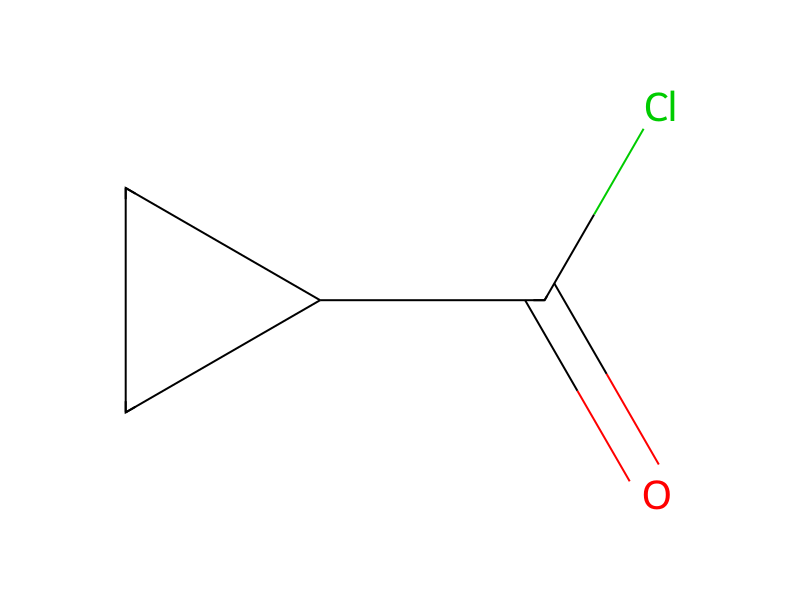

Produkt 1

Reagenzien, Katalysatoren, Lösungsmittel 2


Reaktionsbedingungen
- Temperatur
- 110 °C
Versuchsvorschrift
A mixture comprising 10 g (43.1 mmol) of 2-amino-5-bromo-4-methyl-3-nitropyridine, 6.3 g of 4-dimethylaminopyridine and xylene (50 ml) was heated at 110° C. in a nitrogen atmosphere. 5 g (47.4 mmol) of cyclopropanecarbonyl chloride was dropwise added thereto, followed by further stirring at 110° C. for 2 hours. The reaction mixture was brought to room temperature, followed by the addition of dichloromethane (200 ml) and water (50 ml). The organic phase was separated and the aqueous phase was further extracted with dichloromethane (50 ml). The organic phases were combined and washed with water (50 ml). The resulting organic phase was dried over anhydrous magnesium sulfate and concentrated to give a crude crystal. It was recrystallized from chloroform/ethyl acetate to give 11.4 g of the title compound (yield 88%).
Aufarbeitung
- customwas brought to room temperature
- customThe organic phase was separated
- extractionthe aqueous phase was further extracted with dichloromethane (50 ml)
- washwashed with water (50 ml)
- dry with materialThe resulting organic phase was dried over anhydrous magnesium sulfate
- concentrationconcentrated
- customto give a crude crystal
- customIt was recrystallized from chloroform/ethyl acetate
Quellen und Nachweise
- ORD-Eintrag
- ord-cf58bde311b04b65a9ec57bfac76687f
- Quelldatensatz
- uspto-grants-1996_09
- Patentnummer
- US05554757
Verknüpfte Notizen
Wird geladen…