Phthalonitrile → Dichlorotitanium phthalocyanine
HRID 743917
Reaktionsgleichung

[CH:1]1[CH:6]=[C:5]([C:7]#[N:8])[C:4]([C:9]#[N:10])=[CH:3][CH:2]=1.[Ti:11](Cl)(Cl)([Cl:13])[Cl:12]>ClC1C2C(=CC=CC=2)C=CC=1>[Cl:12][Ti:11][Cl:13].[CH:1]1[CH:2]=[CH:3][C:4]2[C:5](=[C:7]3[N:8]=[C:7]4[N:10]=[C:9]([C:4]5[CH:3]=[CH:2][CH:1]=[CH:6][C:5]=54)[N:10]=[C:9]4[NH:8][C:7]([C:5]5[CH:6]=[CH:1][CH:2]=[CH:3][C:4]=54)=[N:10][C:9]4=[N:8][C:7]([C:5]5[CH:6]=[CH:1][CH:2]=[CH:3][C:4]=54)=[N:10][C:9]=2[NH:8]3)[CH:6]=1Komponenten
4
Edukt 2
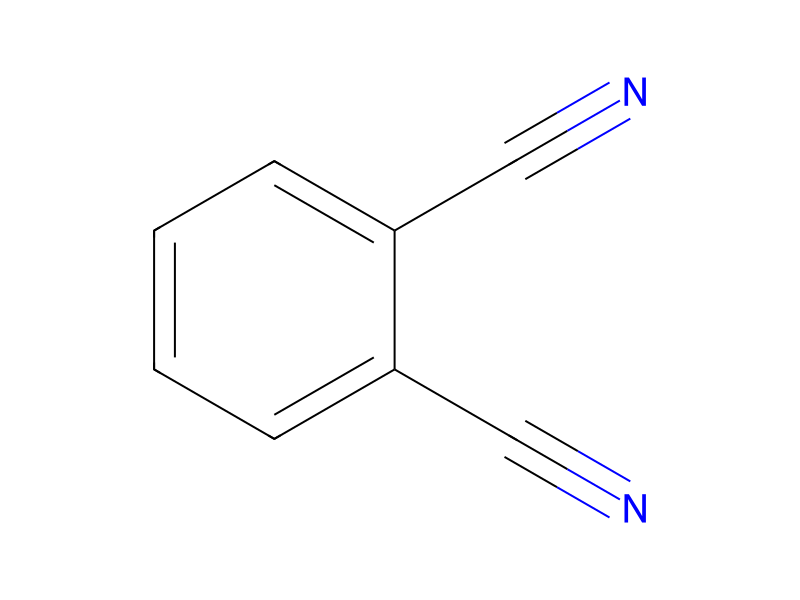

Produkt 1

Reagenzien, Katalysatoren, Lösungsmittel 1

Reaktionsbedingungen
- Temperatur
- 200 °C
Versuchsvorschrift
In 100 g of α-chloronaphthalene, 5.0 g of o-phthalodinitrile and 2.0 g of titanium tetrachloride were mixed, and heated and stirred at 200° C. for 3 hours. Then the mixture was cooled to 50° C. The deposited crystals were collected by filtration to obtain pasty dichlorotitanium phthalocyanine. This paste was washed by agitation in 100 ml of N,N'-dimethylformamide at 100° C. Further the paste was washed twice with methanol at 60° C., and collected by filtration. The paste was further agitated in 100 ml of deionized water at 80° C. for one hour, and collected again by filtration to obtain 4.3 g of crystalline oxytitanium phthalocyanine in blue color. The results of the elemental analysis of the resulting compound were as follows.