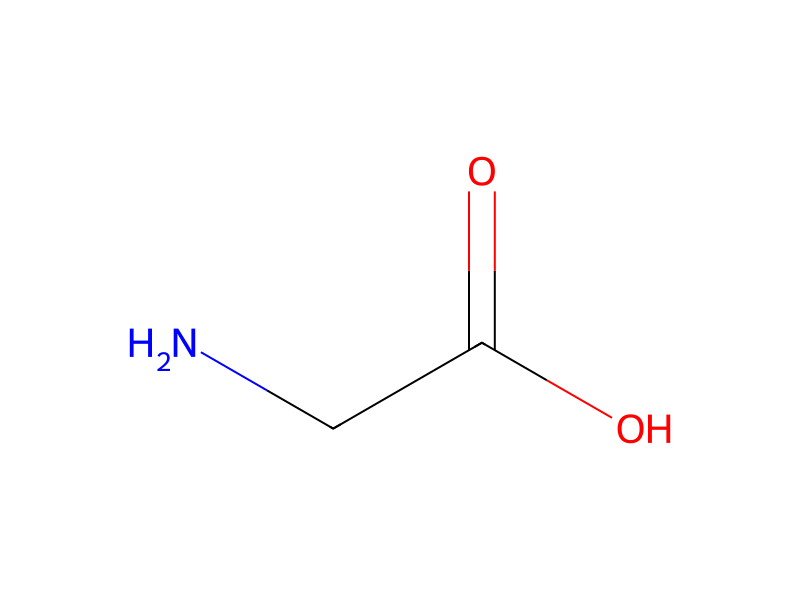
[NH2:1][CH2:2][C:3]([OH:5])=[O:4].[N+:6]([C:9]1[CH:19]=[CH:18][C:12]([CH2:13][O:14][C:15](Cl)=[O:16])=[CH:11][CH:10]=1)([O-:8])=[O:7]>[OH-].[Na+].CCOCC>[N+:6]([C:9]1[CH:10]=[CH:11][C:12]([CH2:13][O:14][C:15]([NH:1][CH2:2][C:3]([OH:5])=[O:4])=[O:16])=[CH:18][CH:19]=1)([O-:8])=[O:7]A 3.75 g portion of glycine was dissolved in 25 ml of 2N sodium hydroxide aqueous solution, and to the resulting solution cooled on an ice bath were simultaneously added in dropwise 10.77 g of p-nitrobenzyloxycarbonyl chloride dissolved in ether and 12.5 ml of 4N sodium hydroxide aqueous solution. After stirring at the same temperature for 2 hours, the reaction solution was washed with ether, the resulting aqueous layer was adjusted to acidic with concentrated hydrochloric acid, and the thus precipitated solid material was collected by filtration, washed with water and then dried to yield 11.98 g of N-(p-nitrobenzyloxycarbonyl)glycine as a white solid.