StartseiteMCPWorkbenchSkills
StartseiteWorkbenchBenachrichtigungenMein Bereich
llms.txt · MCP-AnleitungDatenschutz · Nutzungsbedingungen · Supportv1.8.3
  1. Startseite
  2. /Reaktion

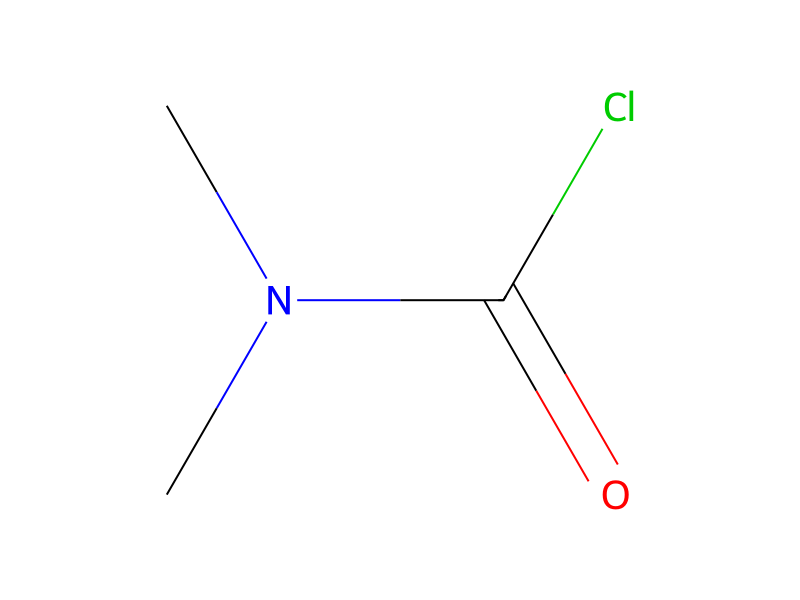
Dimethylcarbamoyl Chloride → 2-Cyano-4-methylpyridine

HRID 748204
Drucken

Reaktionsgleichung

Reaktionsgleichung von HRID 748204
[CH3:1][C:2]1[CH:7]=[CH:6][N+:5]([O-])=[CH:4][CH:3]=1.C[Si]([C:13]#[N:14])(C)C.CN(C)C(Cl)=O>[N+](CC)([O-])=O>[C:13]([C:6]1[CH:7]=[C:2]([CH3:1])[CH:3]=[CH:4][N:5]=1)#[N:14]
KomponentenVersuchsvorschriftAufarbeitungQuellen und NachweiseNotizen zur Reaktion

Komponenten

5

Edukt 3

HCID 6598Dimethylcarbamoyl ChlorideHCID 138574-Picoline N-oxideHCID 82115Trimethylsilyl cyanide

Produkt 1

HCID 887392-Cyano-4-methylpyridineAusbeute 42,1 %

Reagenzien, Katalysatoren, Lösungsmittel 1

HCID 6587NitroethaneLösungsmittel

Versuchsvorschrift

4-Methylpyridine N-oxide (2.0 g, 18.3 mmol) was dissolved in nitroethane (25 ml), and trimethylsilyl cyanide (2.0 g, 20.2 mmol) and N,N-dimethylcarbamoyl chloride (1.7 ml, 18.5 mmol) were added thereto. The reaction mixture was stirred at room temperature for 5 days, concentrated under reduced pressure, combined with saturated aqueous sodium hydrogen carbonate solution and extracted with ethyl acetate. The extract was washed with saturated brine and dried. The solvent was evaporated under reduced pressure. The obtained crystals were collected by filtration, washed with diisopropyl ether and dried to give the titled compound (0.91 g, 42%).

Aufarbeitung

  1. concentrationconcentrated under reduced pressure
  2. extractionextracted with ethyl acetate
  3. washThe extract was washed with saturated brine
  4. customdried
  5. customThe solvent was evaporated under reduced pressure
  6. filtrationThe obtained crystals were collected by filtration
  7. washwashed with diisopropyl ether
  8. customdried

Quellen und Nachweise

ORD-Eintrag
ord-518e5296d25f48b485fe1da0cf57b82c
Quelldatensatz
uspto-grants-2008_07
DOI
10.6084/m9.figshare.5104873.v1
Patentnummer
US07399759B2

Notizen zur Reaktion

Auf dieser SeiteKomponentenVersuchsvorschriftAufarbeitungQuellen und NachweiseNotizen zur Reaktion