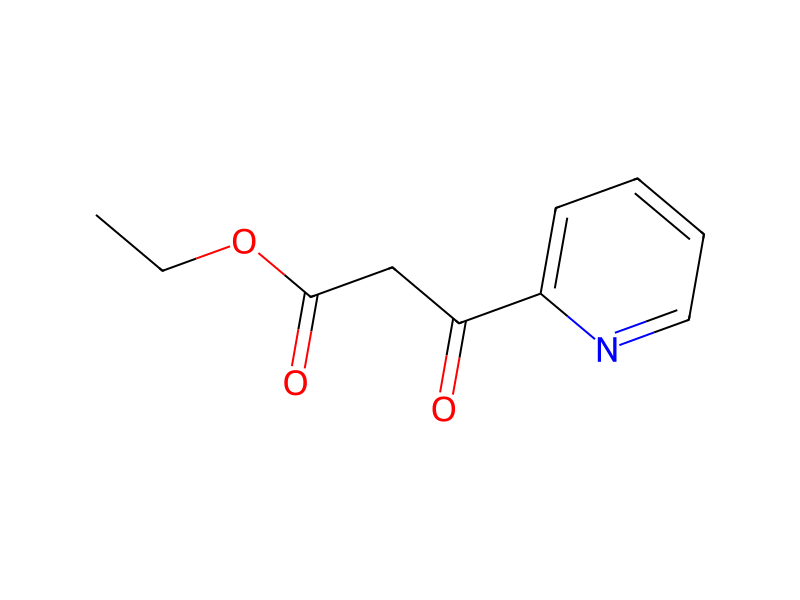
Pyridine → 3-(2-Oxo-pyrrolidin-1-ylimino)-3-pyridin-2-yl-propionic acid ethyl ester
HRID 751259
Reaktionsgleichung

Cl.[NH2:2][N:3]1[CH2:7][CH2:6][CH2:5][C:4]1=[O:8].[CH2:9]([O:11][C:12](=[O:22])[CH2:13][C:14](=O)[C:15]1[CH:20]=[CH:19][CH:18]=[CH:17][N:16]=1)[CH3:10].N1C=CC=CC=1>O>[CH2:9]([O:11][C:12](=[O:22])[CH2:13][C:14](=[N:2][N:3]1[CH2:7][CH2:6][CH2:5][C:4]1=[O:8])[C:15]1[CH:20]=[CH:19][CH:18]=[CH:17][N:16]=1)[CH3:10]Komponenten
5