StartseiteMCPWorkbenchSkills
StartseiteWorkbenchBenachrichtigungenMein Bereich
llms.txt · MCP-AnleitungDatenschutz · Nutzungsbedingungen · Supportv1.8.0
  1. Startseite
  2. /Reaktion

Triethylamine → 5-(4-Isopropylsulfonylphenyl)-3-[5-[4-[1-(methylamino)ethyl]phenyl]-1,3,4-oxadiazol-2-yl]pyrazin-2-amine

HRID 78660
Notizen
Druckvorschau

Reaktionsgleichung

Reaktionsgleichung von HRID 78660
[NH2:1][C:2]1[C:3]([C:20]2[O:24][C:23]([C:25]3[CH:30]=[CH:29][C:28]([C:31](=O)[CH3:32])=[CH:27][CH:26]=3)=[N:22][N:21]=2)=[N:4][C:5]([C:8]2[CH:13]=[CH:12][C:11]([S:14]([CH:17]([CH3:19])[CH3:18])(=[O:16])=[O:15])=[CH:10][CH:9]=2)=[CH:6][N:7]=1.Cl.CN.[CH2:37]([N:39](CC)CC)C.[BH4-].[Na+]>C(O)C.CC(O[Ti](OC(C)C)(OC(C)C)OC(C)C)C>[CH:17]([S:14]([C:11]1[CH:10]=[CH:9][C:8]([C:5]2[N:4]=[C:3]([C:20]3[O:24][C:23]([C:25]4[CH:26]=[CH:27][C:28]([CH:31]([NH:39][CH3:37])[CH3:32])=[CH:29][CH:30]=4)=[N:22][N:21]=3)[C:2]([NH2:1])=[N:7][CH:6]=2)=[CH:13][CH:12]=1)(=[O:16])=[O:15])([CH3:18])[CH3:19]
KomponentenVersuchsvorschriftAufarbeitungQuellen und NachweiseNotizen zur Reaktion

Komponenten

7

Edukt 4

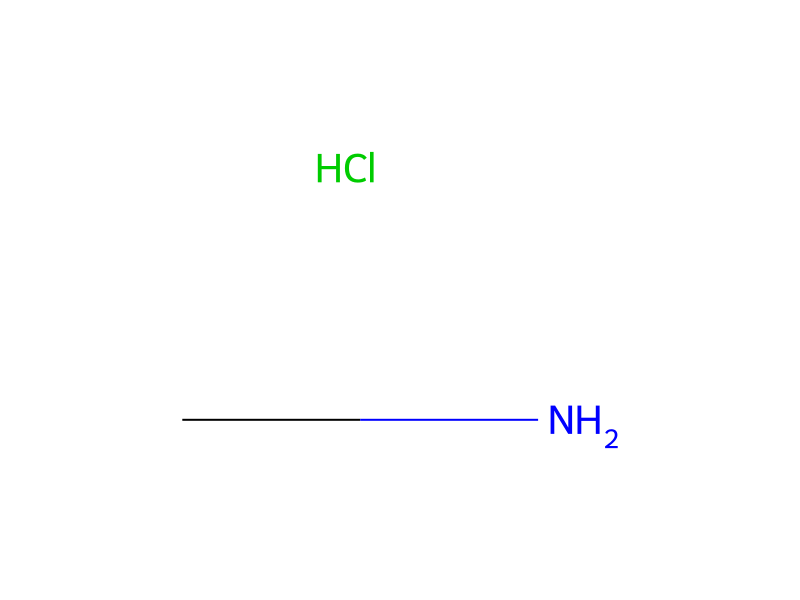
HCID 8471TriethylamineHCID 4311764Sodium borohydrideHCID 6364545Methylamine hydrochlorideHCID 594716731-[4-[5-[3-Amino-6-(4-isopropylsulfonylphenyl)pyrazin-2-yl]-1,3,4-oxadiazol-2-yl]phenyl]ethanone

Produkt 1

HCID 594718625-(4-Isopropylsulfonylphenyl)-3-[5-[4-[1-(methylamino)ethyl]phenyl]-1,3,4-oxadiazol-2-yl]pyrazin-2-amine
Ausbeute 22 %

Reagenzien, Katalysatoren, Lösungsmittel 2

HCID 178460666HCID 178460666, VerbindungKatalysatorHCID 702EthanolLösungsmittel

Versuchsvorschrift

A mixture of 1-[4-[5-[3-amino-6-(4-isopropylsulfonylphenyl)pyrazin-2-yl]-1,3,4-oxadiazol-2-yl]phenyl]ethanone (130 mg, 0.2805 mmol), methylamine hydrochloride (37.88 mg, 0.5610 mmol), Ti(OiPr)4 (159.4 mg, 165.5 μL, 0.5610 mmol) and triethylamine (56.77 mg, 78.20 μL, 0.5610 mmol) was stirred at room temperature in ethanol (2 mL) under nitrogen overnight. The reaction mixture was treated with sodium borohydride (15.92 mg, 16.85 μL, 0.4208 mmol) and stirred at room temperature over weekend and then was quenched with aqueous ammonia (1 mL conc in 4 mL water). The mixture was extracted with dichloromethane and the organic extracts dried over MgSO4 and concentrated in vacuo. The residue was purified by reverse phase preparative HPLC [Waters Sunfire C18, 10 μM, 100 Å column, gradient 10%-95% B (solvent A: 0.05% TFA in water; solvent B: CH3 CN) over 16 minutes at 25 mL/min]. The product fractions were passed through a bicarbonate cartridge and concentrated in vacuo. The solid was triturated with acetonitrile to give the product as a pale yellow solid (27.0 mg, 22%); 1H NMR (400 MHz, DMSO) d 1.20 (d, 6H), 1.28 (d, 3H), 4.48 (m, 1H), 3.69 (q, 1H), 7.72 (d, 2H), 7.97 (d, 2H), 7.98 (v br s, 2H), 8.12 (d, 2H) and 9.07 (s, 1H) ppm; MS (ES+) 479.3

Aufarbeitung

  1. customwas quenched with aqueous ammonia (1 mL conc in 4 mL water)
  2. extractionThe mixture was extracted with dichloromethane
  3. dry with materialthe organic extracts dried over MgSO4
  4. concentrationconcentrated in vacuo
  5. customThe residue was purified by reverse phase preparative HPLC [Waters Sunfire C18, 10 μM, 100 Å column, gradient 10%-95% B (solvent A: 0.05% TFA in water; solvent B: CH3 CN) over 16 minutes at 25 mL/min]
  6. concentrationconcentrated in vacuo
  7. customThe solid was triturated with acetonitrile

Quellen und Nachweise

ORD-Eintrag
ord-75f622920a7e4f258f59438592d7d356
Quelldatensatz
uspto-grants-2014_09
DOI
10.6084/m9.figshare.5104873.v1
Patentnummer
US08841308B2

Notizen zur Reaktion

Wird geladen…

Auf dieser SeiteKomponentenVersuchsvorschriftAufarbeitungQuellen und NachweiseNotizen zur Reaktion