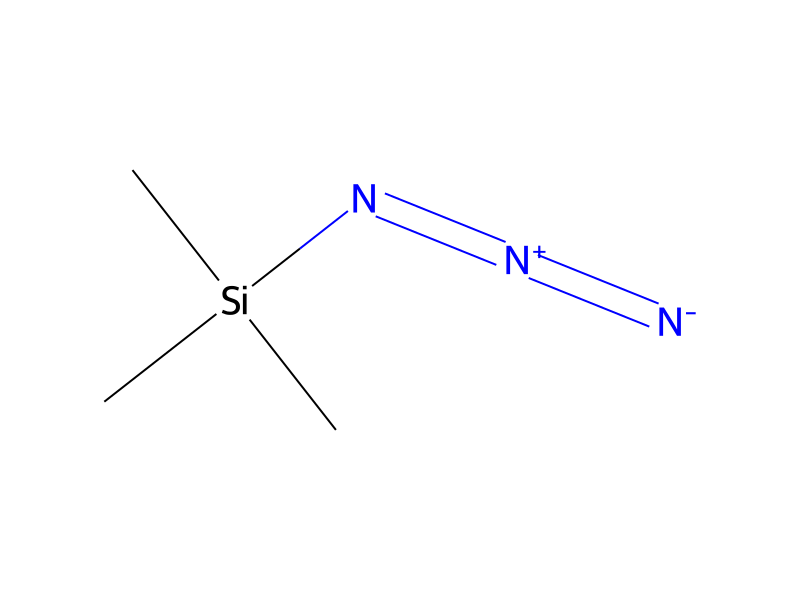
[Cl:1][C:2]1[C:3]([C:17]#[C:18][C:19]2[CH:24]=[CH:23][CH:22]=[CH:21][CH:20]=2)=[C:4]2[C:9](=[CH:10][C:11]=1[Cl:12])[N:8]=[C:7]([O:13][CH3:14])[C:6]([O:15][CH3:16])=[N:5]2.C[Si]([N:29]=[N+:30]=[N-:31])(C)C.C(=O)([O-])O.[Na+]>O>[Cl:1][C:2]1[C:3]([C:17]2[N:29]=[N:30][NH:31][C:18]=2[C:19]2[CH:24]=[CH:23][CH:22]=[CH:21][CH:20]=2)=[C:4]2[C:9](=[CH:10][C:11]=1[Cl:12])[N:8]=[C:7]([O:13][CH3:14])[C:6]([O:15][CH3:16])=[N:5]2A mixture of 6,7-dichloro-2,3-dimethoxy-5-(2-phenylethynyl)quinoxaline (2.0 g, 5.57 mmol) and trimethylsilyl azide (20 mL) was heated at 170° C. in a sealed vessel for 18 hours. After cooling, water (20 mL) was added followed by saturated aqueous sodium hydrogen carbonate solution (50 mL) and the mixture extracted with ethyl acetate (3×50 mL). The combined organic extracts were dried (MgSO4) and concentrated under reduced pressure. The residue was purified by flash chromatography on silica gel, by gradient elution using dichloromethane:methanol (1:0 changing to 98:2, by volume) to afford the title compound (1.3 g, 58%) as a brown foam.
Wird geladen…