Reaktionsgleichung

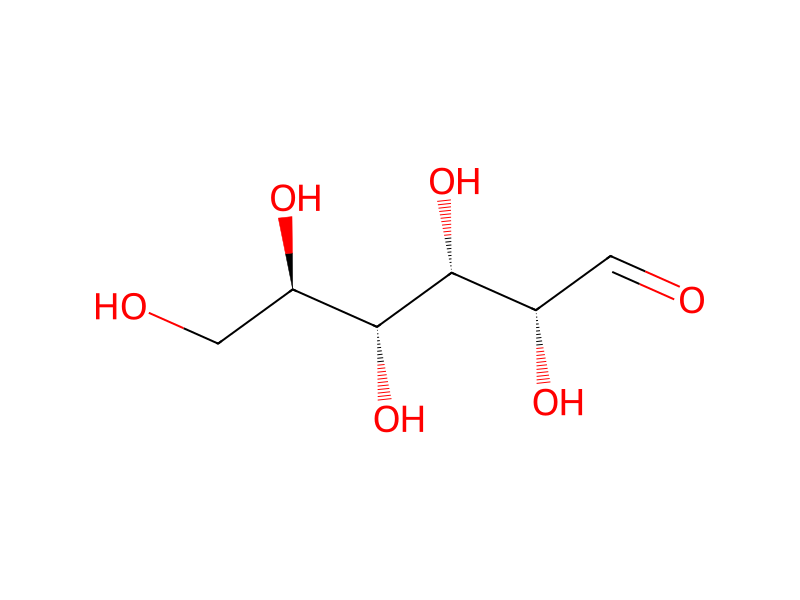
O=C[C@@H]([C@H]([C@@H]([C@@H](CO)O)O)O)O.[O:13]=[C:14]([OH:25])[C@@H:15]([C@H:17]([C@@H:19]([C@@H:21]([CH2:23][OH:24])[OH:22])[OH:20])[OH:18])[OH:16]>>[CH2:23]([OH:24])[C@@H:21]([OH:22])[C@@H:19]([OH:20])[C@H:17]([OH:18])[C:15]([C:14]([OH:25])=[O:13])=[O:16]Komponenten
3


Versuchsvorschrift
It is shown in Examples 7 to 9 that starting from D-glucose it is preferable to start at higher pH to prepare the intermediate, D-gluconic acid, and after equimolar consumption of alkali (sodium hydroxide, potassium hydroxide, sodium carbonate, etc.) a pH drop to 5.0 or below 5.0 is allowed, to obtain high yields of 2-keto-D-gluconic acid.
Aufarbeitung
- customafter equimolar consumption of alkali (sodium hydroxide, potassium hydroxide, sodium carbonate, etc.) a pH drop to 5.0
- customto obtain high
Quellen und Nachweise
- ORD-Eintrag
- ord-76fd5a369aab4c5d899c2d019246c8a1
- Quelldatensatz
- uspto-grants-2000_01
- Patentnummer
- US06018034
Verknüpfte Notizen
Wird geladen…