Reaktionsgleichung

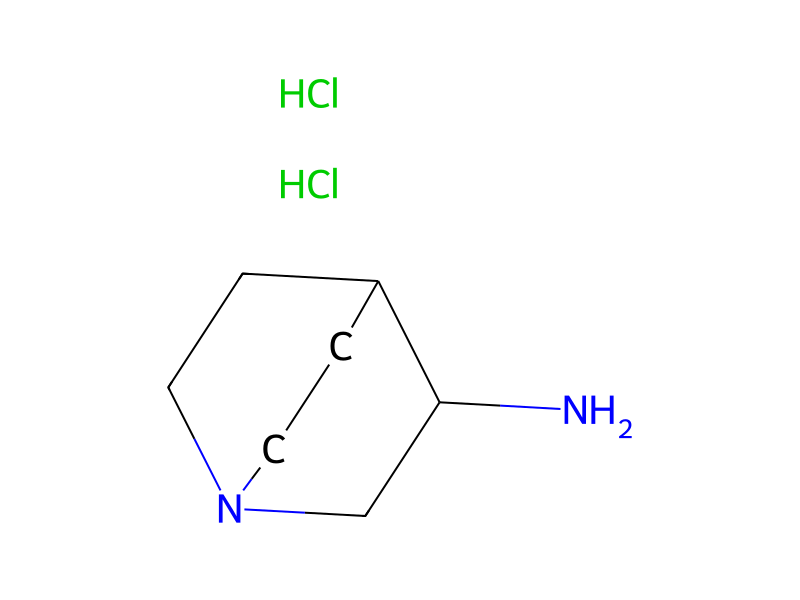
[N:1]1[C:10]2[C:5](=[CH:6][CH:7]=[C:8]([C:11]([OH:13])=O)[CH:9]=2)[CH:4]=[CH:3][CH:2]=1.[ClH:14].Cl.[NH2:16][CH:17]1[CH:22]2[CH2:23][CH2:24][N:19]([CH2:20][CH2:21]2)[CH2:18]1>>[ClH:14].[N:19]12[CH2:24][CH2:23][CH:22]([CH2:21][CH2:20]1)[CH:17]([NH:16][C:11]([C:8]1[CH:9]=[C:10]3[C:5]([CH:4]=[CH:3][CH:2]=[N:1]3)=[CH:6][CH:7]=1)=[O:13])[CH2:18]2Komponenten
3


Versuchsvorschrift
Prepared in analogy to the method for Example 1 starting from 183 mg of quinoline-7-carboxylic acid (Seibert et al. J. Am. Chem. Soc. 1946, 68, 2721) and 200 mg of 3-aminoquinuclidine dihydrochloride. 227 mg (71% yield) of the hydrochloride were obtained.
Quellen und Nachweise
- ORD-Eintrag
- ord-bbedf97ddd5f47c69194e1f8e9fd459c
- Quelldatensatz
- uspto-grants-2007_08
- Patentnummer
- US07256288B2
Verknüpfte Notizen
Wird geladen…