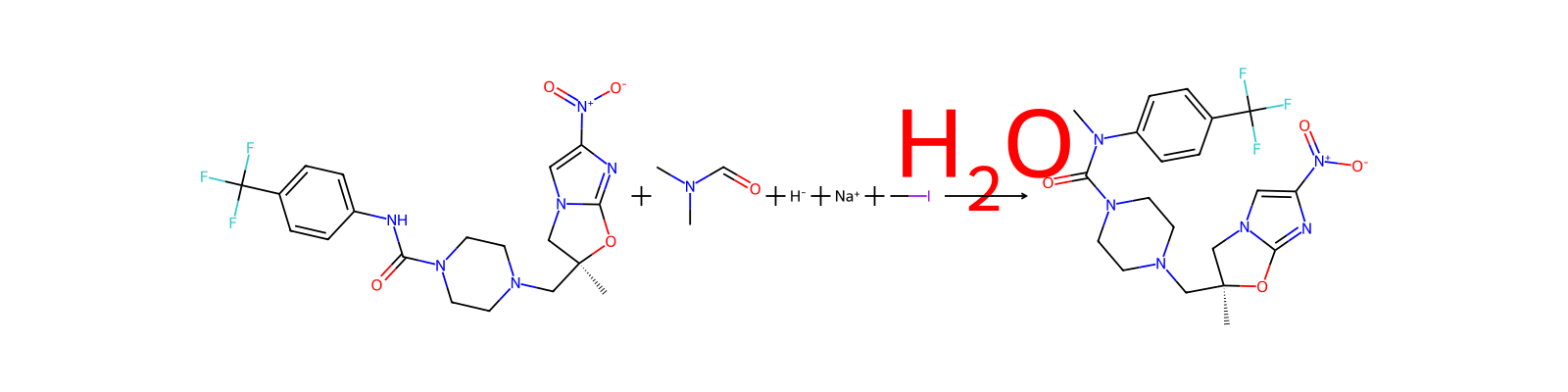
[F:1][C:2]([F:32])([F:31])[C:3]1[CH:8]=[CH:7][C:6]([NH:9][C:10]([N:12]2[CH2:17][CH2:16][N:15]([CH2:18][C@:19]3([CH3:30])[O:23][C:22]4=[N:24][C:25]([N+:27]([O-:29])=[O:28])=[CH:26][N:21]4[CH2:20]3)[CH2:14][CH2:13]2)=[O:11])=[CH:5][CH:4]=1.[CH3:33]N(C=O)C.[H-].[Na+].CI>O>[CH3:33][N:9]([C:6]1[CH:5]=[CH:4][C:3]([C:2]([F:1])([F:31])[F:32])=[CH:8][CH:7]=1)[C:10]([N:12]1[CH2:13][CH2:14][N:15]([CH2:18][C@:19]2([CH3:30])[O:23][C:22]3=[N:24][C:25]([N+:27]([O-:29])=[O:28])=[CH:26][N:21]3[CH2:20]2)[CH2:16][CH2:17]1)=[O:11]A mixture of (S)-4-(2-methyl-6-nitro-2,3-dihydroimidazo[2,1-b]oxazol-2-ylmethyl)piperazine-1-carboxylic acid (4-trifluoromethylphenyl)amide prepared in Example 477 (200 mg, 0.44 mmol), DMF (4 ml), and sodium hydride (26 mg, 0.66 mmol) was stirred at room temperature for 1.5 hours. To the mixture, methyl iodide (0.5 ml, 0.76 mmol) was added followed by stirring at room temperature overnight. To the reaction mixture, water was added, and the mixture was extracted with ethyl acetate. The organic phase was washed with water three times and a saturated saline solution, dried over sodium sulfate and then filtered. The filtrate was concentrated under reduced pressure, and the residue was purified by silica gel column chromatography (methylene chloride/methanol=50/1) to afford (S)-4-(2-methyl-6-nitro-2,3-dihydroimidazo[2,1-b]oxazol-2-ylmethyl)piperazine-1-carboxylic acid N-methyl-N-(4-trifluoromethylphenyl)amide (35 mg, yield 17%) as a white powder.