Reaktionsgleichung

[C:1]1([CH3:10])[CH:6]=[CH:5][CH:4]=[C:3]([C:7](Cl)=[O:8])[CH:2]=1.[Cl:11][C:12]1[CH:17]=[CH:16][C:15]([Cl:18])=[CH:14][CH:13]=1.[Cl-].[Al+3].[Cl-].[Cl-].Cl>CCOCC>[Cl:11][C:12]1[CH:17]=[CH:16][C:15]([Cl:18])=[CH:14][C:13]=1[C:7]([C:3]1[CH:4]=[CH:5][CH:6]=[C:1]([CH3:10])[CH:2]=1)=[O:8]Komponenten
6
Edukt 4


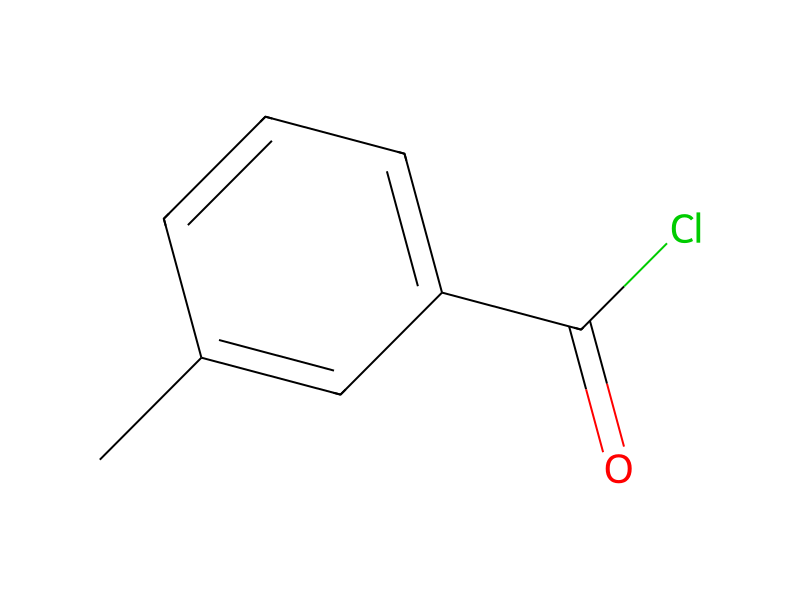

Produkt 1

Reagenzien, Katalysatoren, Lösungsmittel 1

Reaktionsbedingungen
- Temperatur
- 100 °C
Versuchsvorschrift
A mixture of m-toluoyl chloride (22 g, 0.17 mol) and 1,4-dichlorobenzene (120 g, 0.82 mol) was heated to 100° C. in a flask. Aluminum chloride (60 g, 0.45 mol) was added in one portion. Hydrogen chloride started to evolve from the solution. The mixture was heated to 170° C. in 30 min. and stirred at this temperature for 3 hours. The resulting brownish solution was cooled to about 80° C. and poured onto ice. Ether (50 ml) was added. The organic layer was separated and distilled under vacuum after the removal of ether. The residue from distillation was recrystallized twice from hexane to give 20 g of white crystals (53%).
Aufarbeitung
- temperatureThe mixture was heated to 170° C. in 30 min.
- temperatureThe resulting brownish solution was cooled to about 80° C.
- additionpoured onto ice
- customThe organic layer was separated
- distillationdistilled under vacuum
- customafter the removal of ether
- distillationThe residue from distillation
- customwas recrystallized twice from hexane
Quellen und Nachweise
- ORD-Eintrag
- ord-4a70fec8ce134d1087b8b3472f43e366
- Quelldatensatz
- uspto-grants-1998_02
- Patentnummer
- US05721335
Verknüpfte Notizen
Wird geladen…