StartseiteMCPWorkbenchSkills
StartseiteWorkbenchBenachrichtigungenMein Bereich
llms.txt · MCP-AnleitungDatenschutz · Nutzungsbedingungen · Supportv1.8.3
  1. Startseite
  2. /Reaktion

Pyrrolidine → Methyl 4-[4-methoxy-2-methyl-3-(3,3,6,6-tetramethyl-1,8-dioxo-2,3,4,5,6,7,8,9-octahydro-1H-xanthen-9-yl)phenyl]pyrimidine-2-carboxylate

HRID 873547
Drucken

Reaktionsgleichung

Reaktionsgleichung von HRID 873547
[CH3:1][C:2]1([CH3:10])[CH2:9][C:7](=[O:8])[CH2:6][C:4](=[O:5])[CH2:3]1.N1CCC[CH2:12]1.[CH:16]([C:18]1[C:19]([CH3:36])=[C:20]([C:26]2[CH:31]=[CH:30][N:29]=[C:28]([C:32]([O:34][CH3:35])=[O:33])[N:27]=2)[CH:21]=[CH:22][C:23]=1[O:24][CH3:25])=O.O.[C:38]1([CH3:48])[CH:43]=[CH:42][C:41](S(O)(=O)=O)=C[CH:39]=1.[C:49](=[O:52])([O-])O.[Na+]>C(O)C.C(Cl)(Cl)Cl.C(OCC)(=O)C>[CH3:25][O:24][C:23]1[CH:22]=[CH:21][C:20]([C:26]2[CH:31]=[CH:30][N:29]=[C:28]([C:32]([O:34][CH3:35])=[O:33])[N:27]=2)=[C:19]([CH3:36])[C:18]=1[CH:16]1[C:41]2[C:49](=[O:52])[CH2:12][C:38]([CH3:39])([CH3:48])[CH2:43][C:42]=2[O:5][C:4]2[CH2:3][C:2]([CH3:10])([CH3:1])[CH2:9][C:7](=[O:8])[C:6]1=2

KomponentenReaktionsbedingungenVersuchsvorschriftAufarbeitungQuellen und NachweiseNotizen zur Reaktion

Komponenten

9

Edukt 5

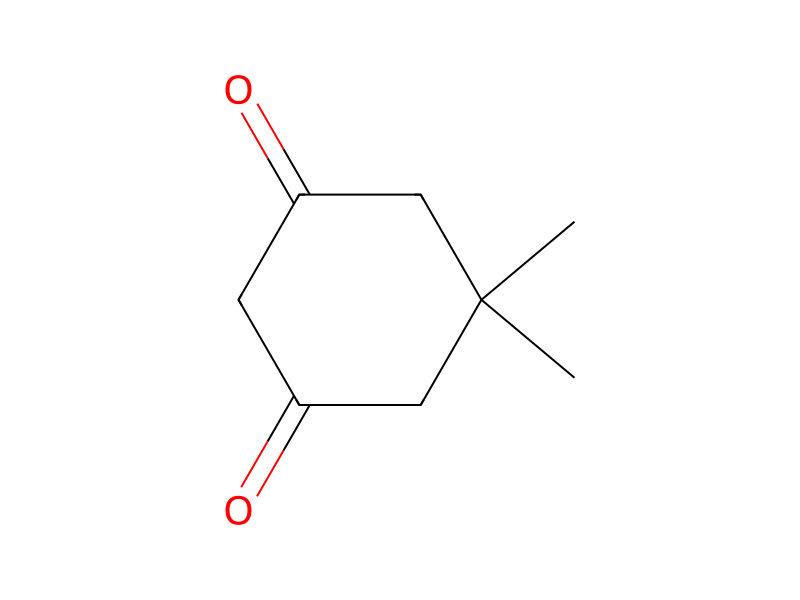
HCID 31268PyrrolidineHCID 31358DimedoneHCID 516892Sodium BicarbonateHCID 521998p-Toluenesulfonic acid monohydrateHCID 117700769Methyl 4-(3-formyl-4-methoxy-2-methylphenyl)pyrimidine-2-carboxylate

Produkt 1

HCID 117700535
Methyl 4-[4-methoxy-2-methyl-3-(3,3,6,6-tetramethyl-1,8-dioxo-2,3,4,5,6,7,8,9-octahydro-1H-xanthen-9-yl)phenyl]pyrimidine-2-carboxylate
Ausbeute 95 %

Reagenzien, Katalysatoren, Lösungsmittel 3

HCID 702EthanolLösungsmittelHCID 6212ChloroformLösungsmittelHCID 8857Ethyl AcetateLösungsmittel

Reaktionsbedingungen

Temperatur
80 °C

Versuchsvorschrift

Dimedone (127 mg, 0.907 mol) and pyrrolidine (34.4 μL, 0.0412 mmol) were added to a suspension of the methyl 4-(3-formyl-4-methoxy-2-methylphenyl)pyrimidine-2-carboxylate obtained in Example 75-2 (118 mg, 0.412 mmol) in ethanol (2.0 mL) at room temperature, and the mixture thus obtained was then stirred at 80° C. for 1.5 hours. Thereafter, the reaction solution was cooled to room temperature, and the solvent was then distilled away under reduced pressure. The residue thus obtained was dissolved in chloroform (2.0 mL), and p-toluenesulfonic acid monohydrate (23.5 mg, 0.124 mmol) was then added to the solution thus obtained at room temperature. The mixture thus obtained was stirred at 70° C. for 1 hour. Thereafter, the reaction solution was cooled to room temperature, and a saturated aqueous solution of sodium hydrogen carbonate was then added to the reaction solution. The mixed solution was extracted with dichloromethane twice, and the organic layer thus obtained was then dried over anhydrous sodium sulfate. After that, the solvent was distilled away under reduced pressure. The residue thus obtained was purified by silica gel column chromatography (hexane:ethyl acetate=1:1 to 0:1, v/v) to obtain the title compound (209 mg, yield: 95%).

Aufarbeitung

  1. customthe mixture thus obtained
  2. temperatureThereafter, the reaction solution was cooled to room temperature
  3. distillationthe solvent was then distilled away under reduced pressure
  4. customThe residue thus obtained
  5. customthus obtained at room temperature
  6. customThe mixture thus obtained
  7. stirringwas stirred at 70° C. for 1 hour
  8. temperatureThereafter, the reaction solution was cooled to room temperature
  9. extractionThe mixed solution was extracted with dichloromethane twice
  10. customthe organic layer thus obtained
  11. dry with materialwas then dried over anhydrous sodium sulfate
  12. distillationAfter that, the solvent was distilled away under reduced pressure
  13. customThe residue thus obtained
  14. customwas purified by silica gel column chromatography (hexane

Quellen und Nachweise

ORD-Eintrag
ord-fe1230d763714f9f9aaa72fa9226d99f
Quelldatensatz
uspto-grants-2015_03
DOI
10.6084/m9.figshare.5104873.v1
Patentnummer
US08975263B2

Notizen zur Reaktion

Auf dieser SeiteKomponentenReaktionsbedingungenVersuchsvorschriftAufarbeitungQuellen und NachweiseNotizen zur Reaktion



