StartseiteMCPWorkbenchSkills
StartseiteWorkbenchBenachrichtigungenMein Bereich
llms.txt · MCP-AnleitungDatenschutz · Nutzungsbedingungen · Supportv1.8.3
  1. Startseite
  2. /Reaktion

Barium nitrate → 1-Amino-3-bromo-4-methylpyridinium nitrate

HRID 874670
Drucken

Reaktionsgleichung

Reaktionsgleichung von HRID 874670
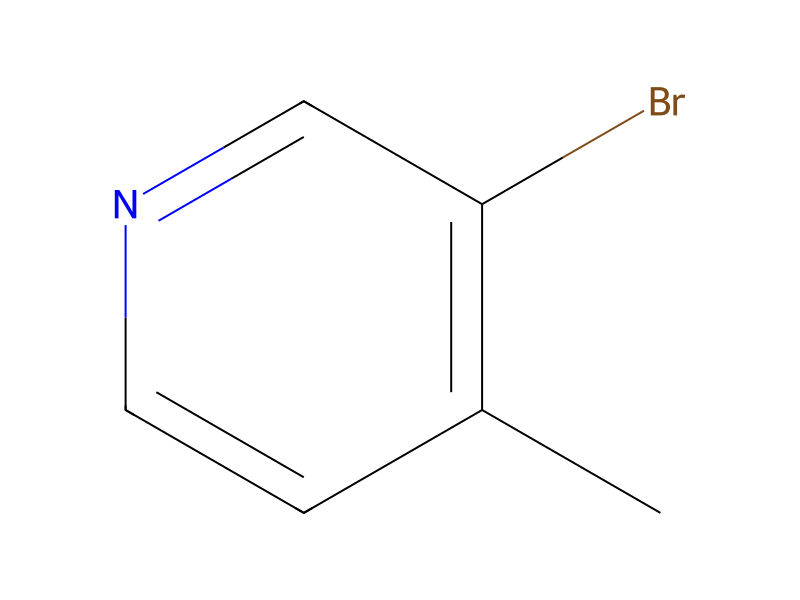
[O-2].[Ba+2].[N+:3]([O-:6])([O-:5])=[O:4].[Ba+2].[N+:8]([O-])([O-])=O.[Br:12][C:13]1[CH:14]=[N:15][CH:16]=[CH:17][C:18]=1[CH3:19]>O>[N+:3]([O-:6])([O-:5])=[O:4].[NH2:8][N+:15]1[CH:16]=[CH:17][C:18]([CH3:19])=[C:13]([Br:12])[CH:14]=1
KomponentenVersuchsvorschriftAufarbeitungQuellen und NachweiseNotizen zur Reaktion

Komponenten

5

Edukt 3

HCID 24798Barium nitrateHCID 8176303-Bromo-4-methylpyridineHCID 9855530Barium Oxide Nanoparticle Dispersion

Produkt 1

HCID 671269021-Amino-3-bromo-4-methylpyridinium nitrateAusbeute 113,3 %

Reagenzien, Katalysatoren, Lösungsmittel 1

HCID 962WaterLösungsmittel2×

Versuchsvorschrift

Barium oxide (950 mg, 90%, 5.56 mmol) were carefully added into 6 ml water in small portions followed by addition of barium nitrate (983 g, 3.76 mmol) and 3-bromo4-methylpyridine (1.72 g, 10 mmol). The resulting suspension was stirred at r.t. and a solution of hydroxylamine O-sulfonic acid (995 mg, 8.36 mmol) in 2 ml water was added drop-wise. The white suspension was stirred at 90° C. for 15 h before cooling down to r.t. The white precipitate was filtered off and washed with water. The aqueous phase was evaporated to dryness to give 1.065 g of 205 as off-white solid (yield: 45.7%) which were directly used for next step without further purification.

Aufarbeitung

  1. stirringThe white suspension was stirred at 90° C. for 15 h
  2. temperaturebefore cooling down to r.t
  3. filtrationThe white precipitate was filtered off
  4. washwashed with water
  5. customThe aqueous phase was evaporated to dryness

Quellen und Nachweise

ORD-Eintrag
ord-d32b6dec3e694281a2f6c3d1dddc64ff
Quelldatensatz
uspto-grants-2015_03
DOI
10.6084/m9.figshare.5104873.v1
Patentnummer
US08980629B2

Notizen zur Reaktion

Auf dieser SeiteKomponentenVersuchsvorschriftAufarbeitungQuellen und NachweiseNotizen zur Reaktion