StartseiteMCPWorkbenchSkills
StartseiteWorkbenchBenachrichtigungenMein Bereich
llms.txt · MCP-AnleitungDatenschutz · Nutzungsbedingungen · Supportv1.8.3
  1. Startseite
  2. /Reaktion

Sodium Hydroxide → 2-(6-Bromobenzo[d]thiazol-2-yl)-N-(2-sulfamoylethyl)acetamide

HRID 877424
Drucken

Reaktionsgleichung

Reaktionsgleichung von HRID 877424
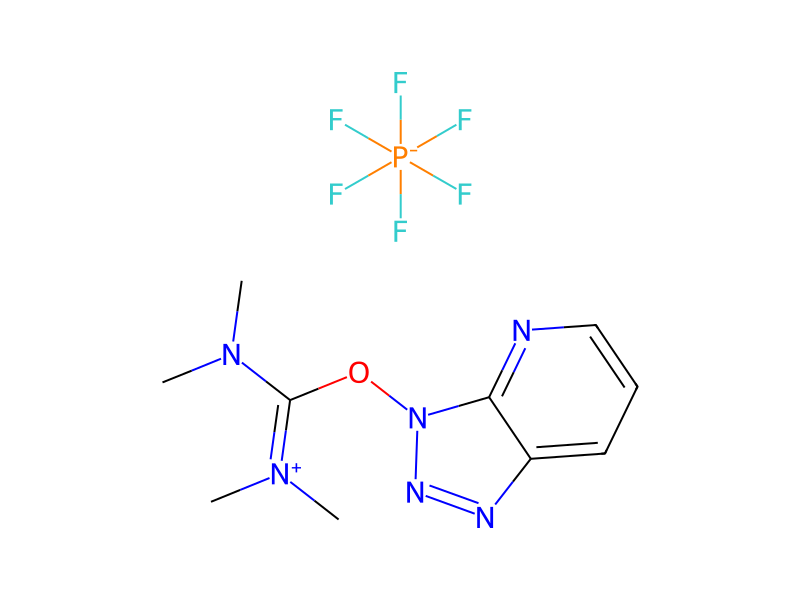
[Br:1][C:2]1[CH:16]=[CH:15][C:5]2[N:6]=[C:7]([CH2:9][C:10]([O:12]CC)=O)[S:8][C:4]=2[CH:3]=1.[OH-].[Na+].Cl.[NH2:20][CH2:21][CH2:22][S:23]([NH2:26])(=[O:25])=[O:24].CN(C(ON1N=NC2C=CC=NC1=2)=[N+](C)C)C.F[P-](F)(F)(F)(F)F>C1COCC1.O>[Br:1][C:2]1[CH:16]=[CH:15][C:5]2[N:6]=[C:7]([CH2:9][C:10]([NH:20][CH2:21][CH2:22][S:23](=[O:25])(=[O:24])[NH2:26])=[O:12])[S:8][C:4]=2[CH:3]=1
KomponentenVersuchsvorschriftAufarbeitungQuellen und NachweiseNotizen zur Reaktion

Komponenten

7

Edukt 4

HCID 14798Sodium HydroxideHCID 30215492-Aminoethanesulphonamide monohydrochlorideHCID 9886157Methanaminium, N-((dimethylamino)(3H-1,2,3-triazolo(4,5-b)pyridin-3-yloxy)methylene)-N-methyl-, hexafluorophosphate(1-) (1:1)HCID 21041509Ethyl 6-bromo-2-benzothiazoleacetate

Produkt 1

HCID 899619482-(6-Bromobenzo[d]thiazol-2-yl)-N-(2-sulfamoylethyl)acetamide
Ausbeute 45 %

Reagenzien, Katalysatoren, Lösungsmittel 2

HCID 962WaterLösungsmittelHCID 8028TetrahydrofuranLösungsmittel

Versuchsvorschrift

Ethyl 2-(6-bromobenzo[d]thiazol-2-yl)acetate (described in WO2011/074560, 250 mg, 0.83 mmol) in THF (4 mL) was treated with sodium hydroxide (1N NaOH, 0.92 mL, 0.92 mmol). After 2 hours, the reaction mixture was concentrated to dryness under reduced pressure, and the residue was co-evaporated with toluene (5 mL), re-dissolved in DMF (4 mL), and treated with 2-aminoethanesulfonamide hydrochloride (201 mg, 1.30 mmol), TEA (1.2 mL, 8.3 mmol) and HATU (475 mg, 1.30 mmol). After 16 hours, the reaction mixture was diluted with water (20 mL), extracted with DCM (3×10 mL), dried over Na2SO4, and concentrated under reduced pressure. The residue was dissolved in DMF/methanol and purified using reverse phase HPLC (Phenomemenx Luna AXIA 5 micron C18, 21.2×100 mm, 30 to 100% B over 15 minutes with 10 minute hold time, solvent A: 90% water/ACN/0.1% TFA, solvent B:90% ACN/water/0.1% TFA, Flow rate 20 mL/min; detector at 254). The pooled fractions were lyophilized to Compound A1a, (170 mg, 45% yield) as a white solid. HPLC: RT=0.75 (LCMS Method O). MS (ES): m/z=379.7 [M+H]+. 1H NMR (400 MHz, DMF-d7) δ 8.40 (d, J=2.0 Hz, 1H), 7.92 (d, J=8.8 Hz, 1H), 7.69 (dd, J=8.8, 2.0 Hz, 1H), 6.97 (s, 2H), 3.82-3.61 (m, 2H), 3.46 (s, 3H), 3.33 (dd, J=7.9, 6.4 Hz, 3H).


Aufarbeitung

  1. concentrationthe reaction mixture was concentrated to dryness under reduced pressure
  2. dissolutionre-dissolved in DMF (4 mL)
  3. waitAfter 16 hours
  4. extractionextracted with DCM (3×10 mL)
  5. dry with materialdried over Na2SO4
  6. concentrationconcentrated under reduced pressure
  7. dissolutionThe residue was dissolved in DMF/methanol
  8. custompurified
  9. customphase HPLC (Phenomemenx Luna AXIA 5 micron C18, 21.2×100 mm, 30 to 100% B over 15 minutes with 10 minute hold time, solvent A: 90% water/ACN/0.1% TFA, solvent B:90% ACN/water/0.1% TFA, Flow rate 20 mL/min; detector at 254)
  10. customRT=0.75 (LCMS Method O)

Quellen und Nachweise

ORD-Eintrag
ord-f5b333792c0b4d05a310fb2fe27b34a2
Quelldatensatz
uspto-grants-2015_03
DOI
10.6084/m9.figshare.5104873.v1
Patentnummer
US08987314B2

Notizen zur Reaktion

Auf dieser SeiteKomponentenVersuchsvorschriftAufarbeitungQuellen und NachweiseNotizen zur Reaktion