StartseiteMCPWorkbenchSkills
StartseiteWorkbenchBenachrichtigungenMein Bereich
llms.txt · MCP-AnleitungDatenschutz · Nutzungsbedingungen · Supportv1.8.0
  1. Startseite
  2. /Reaktion

Dichloromethane → (S)-ethyl 2-tert-butoxy-2-(7-(4-chlorophenyl)-2-(3-fluoro-4-nitrophenyl)-5-methylbenzo[d]thiazol-6-yl)acetate

HRID 879395
Notizen
Druckvorschau

Reaktionsgleichung

Reaktionsgleichung von HRID 879395
Br[C:2]1[CH:7]=[CH:6][C:5]([N+:8]([O-:10])=[O:9])=[C:4]([F:11])[CH:3]=1.B1(B2OC(C)(C)C(C)(C)O2)OC(C)(C)C(C)(C)O1.C(Cl)Cl.CC([O-])=O.[K+].Br[C:39]1[S:40][C:41]2[C:47]([C:48]3[CH:53]=[CH:52][C:51]([Cl:54])=[CH:50][CH:49]=3)=[C:46]([C@H:55]([O:61][C:62]([CH3:65])([CH3:64])[CH3:63])[C:56]([O:58][CH2:59][CH3:60])=[O:57])[C:45]([CH3:66])=[CH:44][C:42]=2[N:43]=1.C([O-])([O-])=O.[K+].[K+]>O1CCOCC1.CCOC(C)=O.C1C=CC(P(C2C=CC=CC=2)[C-]2C=CC=C2)=CC=1.C1C=CC(P(C2C=CC=CC=2)[C-]2C=CC=C2)=CC=1.Cl[Pd]Cl.[Fe+2].C1C=CC([P]([Pd]([P](C2C=CC=CC=2)(C2C=CC=CC=2)C2C=CC=CC=2)([P](C2C=CC=CC=2)(C2C=CC=CC=2)C2C=CC=CC=2)[P](C2C=CC=CC=2)(C2C=CC=CC=2)C2C=CC=CC=2)(C2C=CC=CC=2)C2C=CC=CC=2)=CC=1>[C:62]([O:61][C@@H:55]([C:46]1[C:45]([CH3:66])=[CH:44][C:42]2[N:43]=[C:39]([C:2]3[CH:7]=[CH:6][C:5]([N+:8]([O-:10])=[O:9])=[C:4]([F:11])[CH:3]=3)[S:40][C:41]=2[C:47]=1[C:48]1[CH:49]=[CH:50][C:51]([Cl:54])=[CH:52][CH:53]=1)[C:56]([O:58][CH2:59][CH3:60])=[O:57])([CH3:63])([CH3:64])[CH3:65]
KomponentenReaktionsbedingungenVersuchsvorschriftAufarbeitungQuellen und NachweiseNotizen zur Reaktion

Komponenten

11

Edukt 6

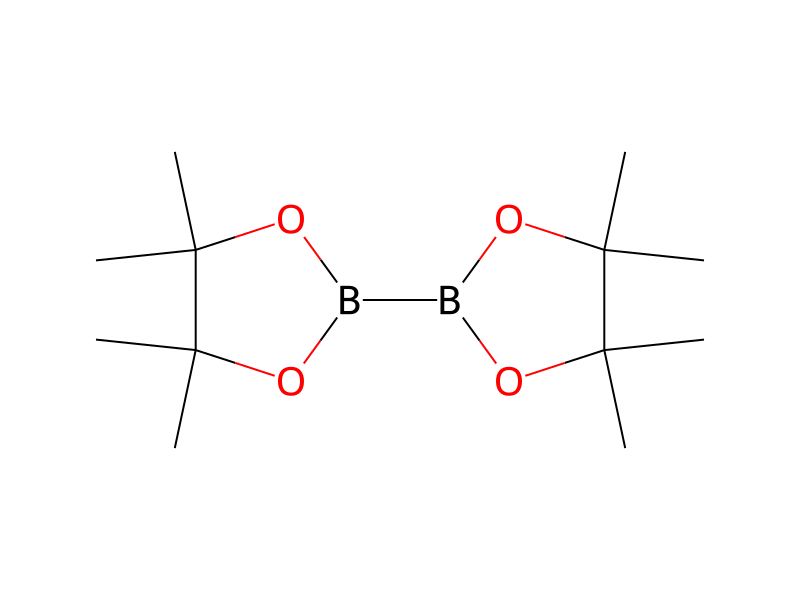
HCID 6344DichloromethaneHCID 11430Potassium CarbonateHCID 517044Potassium AcetateHCID 2733548Bis(pinacolato)diboraneHCID 27833624-Bromo-2-fluoro-1-nitrobenzeneHCID 86700141(S)-ethyl 2-(2-bromo-7-(4-chlorophenyl)-5-methylbenzo[d]thiazol-6-yl)-2-tert-butoxyacetate

Produkt

1
HCID 86700202(S)-ethyl 2-tert-butoxy-2-(7-(4-chlorophenyl)-2-(3-fluoro-4-nitrophenyl)-5-methylbenzo[d]thiazol-6-yl)acetate

Reagenzien, Katalysatoren, Lösungsmittel 4

HCID 44119782Bis(cyclopenta-1,4-dien-1-yl(diphenyl)phosphane);dichloropalladium;iron(2+)KatalysatorHCID 178418397HCID 178418397, VerbindungKatalysatorHCID 8857Ethyl AcetateLösungsmittelHCID 312751,4-DioxaneLösungsmittel

Reaktionsbedingungen

Temperatur
100 °C

Versuchsvorschrift

A microwave vial was charged with 4-bromo-2-fluoro-1-nitrobenzene (690 mg, 3.14 mmol), bis(pinacolato)diboron (946 mg, 3.73 mmol), PdCl2(dppf).CH2Cl2 (242 mg, 0.30 mmol), then KOAc (926 mg, 9.44 mmol). The vial was flushed with argon, diluted with dioxane (11 mL), sealed, then heated to 100° C. for 1 hour. The reaction mixture was allowed to cool to room temperature and then a portion of this cooled solution (6.1 mL, 1.74 mmol) was added to a vial that was charged with (S)-ethyl 2-(2-bromo-7-(4-chlorophenyl)-5-methylbenzo[d]thiazol-6-yl)-2-tert-butoxyacetate (437 mg, 0.88 mmol) and Pd(PPh3)4 (102 mg, 0.09 mmol). The mixture was diluted with dioxane (2 mL) and to this was added 2M aqueous K2CO3 (1.50 mL, 3.00 mmol). The vial was sealed, heated to 100° C. for 1 hour, and then allowed to cool to room temperature. The mixture was diluted with EtOAc, dried over Na2SO4, filtered, and concentrated in vacuo. The crude residue was purified by silica gel column chromatography (5-30% EtOAc/Hex gradient) to afford the desired product. LCMS-ESI+: calc'd C28H27ClFN2O5S: 557.1 (M+H+); Found: 557.1 (M+H+).


Aufarbeitung

  1. customThe vial was flushed with argon
  2. additiondiluted with dioxane (11 mL)
  3. customsealed
  4. temperatureto cool to room temperature
  5. customThe vial was sealed
  6. temperatureheated to 100° C. for 1 hour
  7. temperatureto cool to room temperature
  8. dry with materialdried over Na2SO4
  9. filtrationfiltered
  10. concentrationconcentrated in vacuo
  11. customThe crude residue was purified by silica gel column chromatography (5-30% EtOAc/Hex gradient)

Quellen und Nachweise

ORD-Eintrag
ord-7248beceff5e49edafe8b6379855f613
Quelldatensatz
uspto-grants-2015_03
DOI
10.6084/m9.figshare.5104873.v1
Patentnummer
US08987250B2

Notizen zur Reaktion

Wird geladen…

Auf dieser SeiteKomponentenReaktionsbedingungenVersuchsvorschriftAufarbeitungQuellen und NachweiseNotizen zur Reaktion