StartseiteMCPWorkbenchSkills
StartseiteWorkbenchBenachrichtigungenMein Bereich
llms.txt · MCP-AnleitungDatenschutz · Nutzungsbedingungen · Supportv1.8.3
  1. Startseite
  2. /Reaktion

Diisopropylethylamine → 1-(5-bromo-3,4-dihydroisoquinolin-2(1H)-yl)-2-(4-methoxy-7-(3-methyl-1H-1,2,4-triazol-1-yl)-1H-pyrrolo[2,3-c]pyridin-3-yl)ethane-1,2-dione

HRID 885042
Drucken

Reaktionsgleichung

Reaktionsgleichung von HRID 885042
[CH3:1][O:2][C:3]1[CH:8]=[N:7][C:6]([N:9]2[CH:13]=[N:12][C:11]([CH3:14])=[N:10]2)=[C:5]2[NH:15][CH:16]=[C:17]([C:18](=[O:22])[C:19]([OH:21])=O)[C:4]=12.[Br:23][C:24]1[CH:33]=[CH:32][CH:31]=[C:30]2[C:25]=1[CH2:26][CH2:27][NH:28][CH2:29]2.[B-](F)(F)(F)F.CN(C(ON1N=NC2C1=CC=CC=2)=[N+](C)C)C.CCN(C(C)C)C(C)C>CN(C=O)C>[Br:23][C:24]1[CH:33]=[CH:32][CH:31]=[C:30]2[C:25]=1[CH2:26][CH2:27][N:28]([C:19](=[O:21])[C:18]([C:17]1[C:4]3[C:5](=[C:6]([N:9]4[CH:13]=[N:12][C:11]([CH3:14])=[N:10]4)[N:7]=[CH:8][C:3]=3[O:2][CH3:1])[NH:15][CH:16]=1)=[O:22])[CH2:29]2

KomponentenVersuchsvorschriftAufarbeitungQuellen und NachweiseNotizen zur Reaktion

Komponenten

6

Edukt 4

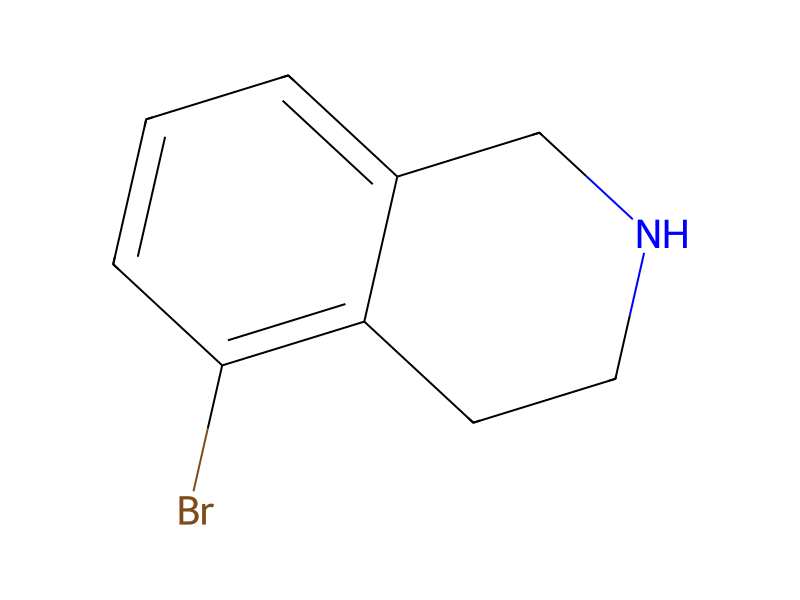
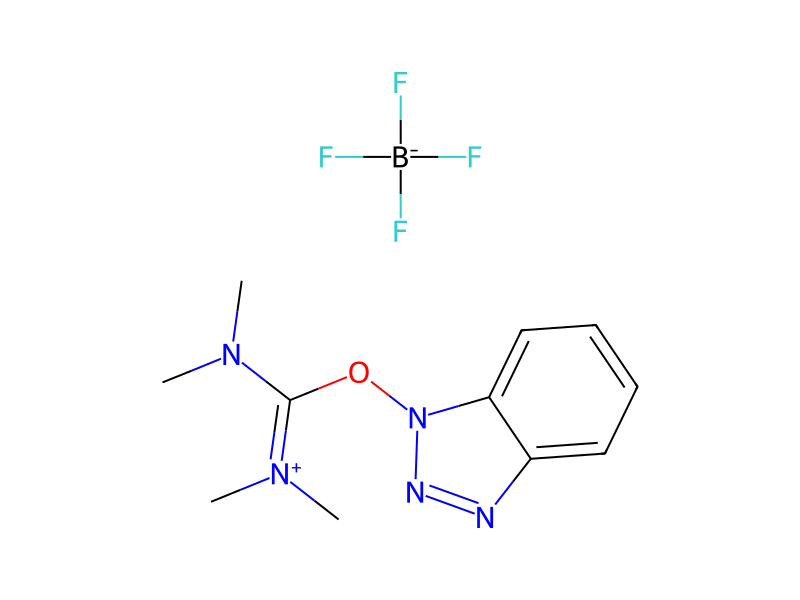
HCID 81531DiisopropylethylamineHCID 2733207O-(Benzotriazol-1-yl)-N,N,N',N'-tetramethyluronium tetrafluoroborateHCID 128231995-Bromo-1,2,3,4-tetrahydroisoquinolineHCID 596815922-(4-methoxy-7-(3-methyl-1H-1,2,4-triazol-1-yl)-1H-pyrrolo[2,3-c]pyridin-3-yl)-2-oxoacetic acid

Produkt 1

HCID 58026068
1-(5-bromo-3,4-dihydroisoquinolin-2(1H)-yl)-2-(4-methoxy-7-(3-methyl-1H-1,2,4-triazol-1-yl)-1H-pyrrolo[2,3-c]pyridin-3-yl)ethane-1,2-dione
Ausbeute 88,3 %

Reagenzien, Katalysatoren, Lösungsmittel 1

HCID 6228DimethylformamideLösungsmittel

Versuchsvorschrift

A 20 mL vial was charged with 2-(4-methoxy-7-(3-methyl-1H-1,2,4-triazol-1-yl)-1H-pyrrolo[2,3-c]pyridin-3-yl)-2-oxoacetic acid (0.1 g, 0.332 mmol), 5-bromo-1,2,3,4-tetrahydroisoquinoline (0.083 g, 0.332 mmol), o-benzotriazol-1-yl-N,N,N′,N′-tetramethyluronium tetrafluoroborate (0.133 g, 0.415 mmol), Hunig's Base (0.580 mL, 3.32 mmol), and DMF (3 mL). The vial was sealed and stirred at rt. After stirring the mixture for 70.5 h, the reaction was quenched with water. The solids that formed were collected by filtration. The mother liquor was concentrated under reduced pressure, and a second batch of solids was collected by recrystallizing from MeOH and water. The expected product, 1-(5-bromo-3,4-dihydroisoquinolin-2(1H)-yl)-2-(4-methoxy-7-(3-methyl-1H-1,2,4-triazol-1-yl)-1H-pyrrolo[2,3-c]pyridin-3-yl)ethane-1,2-dione (0.145 g, 0.293 mmol, 88% yield), was isolated as an off-white solid. LC/MS: m/z 495 (M+H)+, 497.02 (M+3H)+1.935 min (method 1). 1H NMR (500 MHz, DMSO-d6) δ ppm 12.42 (s, 1H) 9.22-9.27 (m, 1H) 8.18-8.31 (m, 1H) 7.84 (s, 1H) 7.09-7.59 (m, 3H) 4.59-4.87 (m, 2H) 3.67-3.95 (m, 5H) 2.73-2.96 (m, 2H) 2.47-2.52 (m, 3H).

Aufarbeitung

  1. customThe vial was sealed
  2. stirringAfter stirring the mixture for 70.5 h
  3. customthe reaction was quenched with water
  4. customThe solids that formed
  5. filtrationwere collected by filtration
  6. concentrationThe mother liquor was concentrated under reduced pressure
  7. customa second batch of solids was collected
  8. customby recrystallizing from MeOH and water

Quellen und Nachweise

ORD-Eintrag
ord-19aa82f7ab4f406899acb09e378e3610
Quelldatensatz
uspto-grants-2012_08
DOI
10.6084/m9.figshare.5104873.v1
Patentnummer
US08242124B2

Notizen zur Reaktion

Auf dieser SeiteKomponentenVersuchsvorschriftAufarbeitungQuellen und NachweiseNotizen zur Reaktion