StartseiteMCPWorkbenchSkills
StartseiteWorkbenchBenachrichtigungenMein Bereich
llms.txt · MCP-AnleitungDatenschutz · Nutzungsbedingungen · Supportv1.8.3
  1. Startseite
  2. /Reaktion

Diisopropylamine → 7-bromo-5-fluoro-1H-indole-2-carboxylic Acid 3-methoxy-benzylamide

HRID 892091
Drucken

Reaktionsgleichung

Reaktionsgleichung von HRID 892091
[Br:1][C:2]1[CH:3]=[C:4]([F:14])[CH:5]=[C:6]2[C:10]=1[NH:9][C:8]([C:11]([OH:13])=O)=[CH:7]2.[CH3:15][O:16]NCC1C=CC=CC=1.C1CN([P+](ON2N=N[C:44]3[CH:45]=[CH:46][CH:47]=[CH:48][C:43]2=3)(N2CCCC2)N2CCCC2)CC1.F[P-](F)(F)(F)(F)F.[CH:58]([NH:61]C(C)C)(C)C>C(OCC)(=O)C>[CH3:15][O:16][C:48]1[CH:43]=[C:44]([CH:45]=[CH:46][CH:47]=1)[CH2:58][NH:61][C:11]([C:8]1[NH:9][C:10]2[C:6]([CH:7]=1)=[CH:5][C:4]([F:14])=[CH:3][C:2]=2[Br:1])=[O:13]
KomponentenReaktionsbedingungenVersuchsvorschriftAufarbeitungQuellen und NachweiseNotizen zur Reaktion

Komponenten

6

Edukt 4

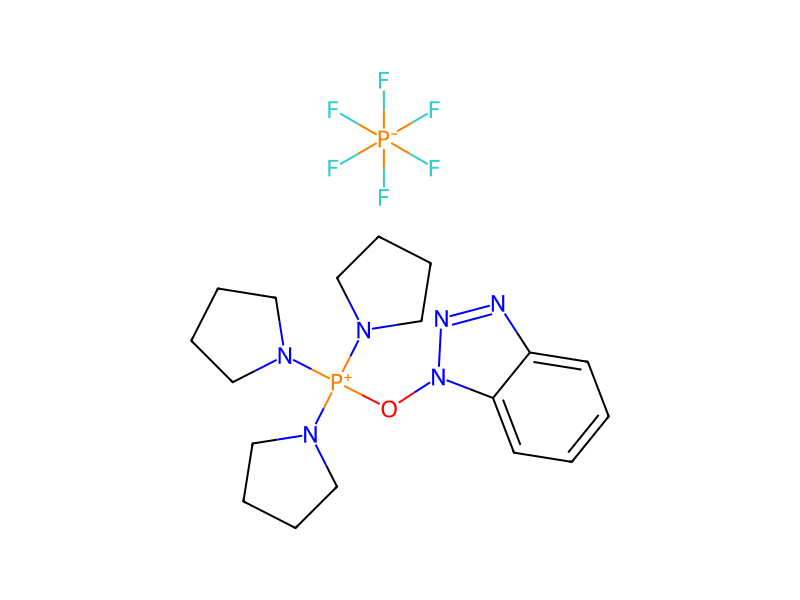
HCID 7912DiisopropylamineHCID 2724699PyBOPHCID 11815413Benzyl(methoxy)amineHCID 219043557-bromo-5-fluoro-1H-indole-2-carboxylic acid

Produkt 1

HCID 210144567-bromo-5-fluoro-1H-indole-2-carboxylic Acid 3-methoxy-benzylamideAusbeute 81 %

Reagenzien, Katalysatoren, Lösungsmittel 1

HCID 8857Ethyl AcetateLösungsmittel

Reaktionsbedingungen

Temperatur
0 °C

Versuchsvorschrift

To a round bottom flask that has been fire dried, flushed with a continuous stream of argon, and equipped with a stir bean, DMF (4.8 ml) was added. To this stirring solution 5 (600 mg, 2.33 mmol), was combined with methoxybenzylamine (328 μL, 2.56 mmol), and PyBOP (1.33 g, 2.56 mmol). This solution was then cooled to a temperature of 0 degrees C. After 2 minutes diisopropylamine (1.7 ml, 9.67 mmol) was added and the entire solution was allowed to stir at room temperature overnight. The reaction was then diluted with roughly 60 ml of ethyl acetate and extracted 3× with saturated sodium bicarbonate, and 3× with 1M HCl in appropriate volumes to remove any unreacted starting materials. The ethyl acetate layer was isolated and dried over sodium sulfate. The ethyl acetate was removed using a rotary evaporator to yield a brownish film on the sides of the flask. Hexanes were added to the flask and refluxed. A solid then formed on the sides of the flask, and the hexanes were removed via rotary evaporator to give 709.0 mg of 6 (81% yield). 1H NMR (400 MHz, DMSO-d6) δ 11.537 (bs, 1H), δ 9.092 (t, J=5.6 Hz, 1H), δ 7.49 (dd, J=9.4 Hz, J=2.4 Hz 1H), δ (dd, J=8.8 Hz, J=2 Hz 1H), δ 7.268-7.228 (m, 2H), δ 6.91 (d, J=6.8 Hz, 2H), δ 6.82 (d, J=8.2 Hz, 1H), δ 4.48 (d, J=6 Hz, 2H), δ 3.729 (s, 3H). 7-bromo-5-fluoro-1H-indole-2-carboxylic acid 3-hydroxy-benzylamide (7)


Aufarbeitung

  1. customTo a round bottom flask that has been
  2. customfire dried
  3. customflushed with a continuous stream of argon
  4. customequipped with a stir bean, DMF (4.8 ml)
  5. additionwas added
  6. extractionextracted 3× with saturated sodium bicarbonate, and 3× with 1M HCl in appropriate volumes
  7. customto remove
  8. customThe ethyl acetate layer was isolated
  9. dry with materialdried over sodium sulfate
  10. customThe ethyl acetate was removed
  11. customa rotary evaporator
  12. customto yield a brownish film on the sides of the flask
  13. temperaturerefluxed
  14. customA solid then formed on the sides of the flask
  15. customthe hexanes were removed via rotary evaporator

Quellen und Nachweise

ORD-Eintrag
ord-77f9bd24a4424e518eb35085410c3d7b
Quelldatensatz
uspto-grants-2006_02
DOI
10.6084/m9.figshare.5104873.v1
Patentnummer
US07005445B2

Notizen zur Reaktion

Auf dieser SeiteKomponentenReaktionsbedingungenVersuchsvorschriftAufarbeitungQuellen und NachweiseNotizen zur Reaktion