1,4-Dibromobutane → Diethyl 5-(1-cyanocyclopentyl)benzene-1,3-dioate
Reaktionsgleichung

[C:1]([CH2:3][C:4]1[CH:5]=[C:6]([C:15]([O:17][CH2:18][CH3:19])=[O:16])[CH:7]=[C:8]([C:10]([O:12][CH2:13][CH3:14])=[O:11])[CH:9]=1)#[N:2].C[Si]([N-][Si](C)(C)C)(C)C.[K+].Br[CH2:31][CH2:32][CH2:33][CH2:34]Br>C1COCC1>[C:1]([C:3]1([C:4]2[CH:9]=[C:8]([C:10]([O:12][CH2:13][CH3:14])=[O:11])[CH:7]=[C:6]([C:15]([O:17][CH2:18][CH3:19])=[O:16])[CH:5]=2)[CH2:34][CH2:33][CH2:32][CH2:31]1)#[N:2]Komponenten
5
Edukt 3
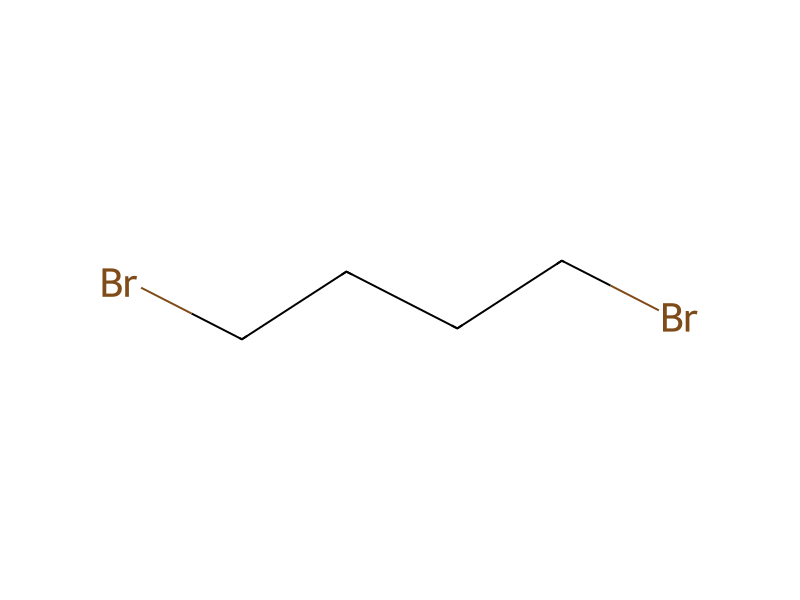
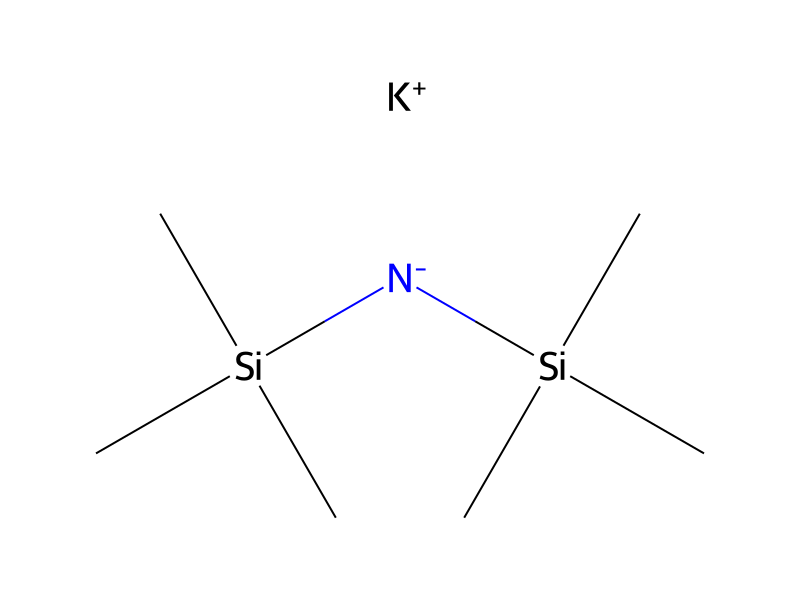

Produkt 1

Reagenzien, Katalysatoren, Lösungsmittel 1

Versuchsvorschrift
To a solution of diethyl 5-(cyanomethyl)benzene-1,3-dioate (500 mg, 1.9 mmol) in 18.6 mL THF was added potassium bis(trimethylsilyl)amide (1.1 g, 5.7 mmol) and the reaction was stirred at rt for 5 min. 1,4-Dibromobutane (0.25 mL, 2.1 mmol) was added, the mixture was stirred for 45 min and then quenched with 1N HCl. Ethyl acetate was added, the layers separated and the organic layer was washed with water and brine. Drying, solvent evaporation and flash chromatography (silica gel, 0-15% EtOAc/hexanes) gave diethyl 5-(1-cyanocyclopentyl)benzene-1,3-dioate. 1H NMR (400 MHz, CDCl3) δ 8.63 (m, 1H), 8.31 (m, 2H), 4.43 (q, J=7.1 Hz, 4H), 2.56 (m, 2H), 2.14-1.99 (m, 6H), 1.43 (t, J=7.1 Hz, 6H).
Aufarbeitung
- stirringthe mixture was stirred for 45 min
- customquenched with 1N HCl
- additionEthyl acetate was added
- customthe layers separated
- washthe organic layer was washed with water and brine
- customDrying
- customsolvent evaporation and flash chromatography (silica gel, 0-15% EtOAc/hexanes)
Quellen und Nachweise
- ORD-Eintrag
- ord-bb72fc4e9607484a98dd475c32ece0c3
- Quelldatensatz
- uspto-grants-2008_04
- Patentnummer
- US07354942B2
Notizen zur Reaktion
Wird geladen…