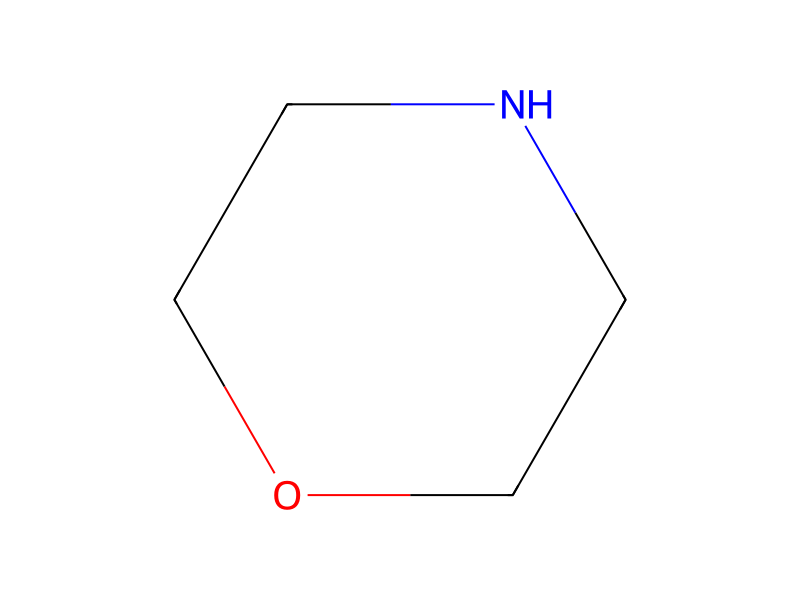
Morpholine → (6,7-Dimethoxy-1-morpholin-4-yl-isoquinolin-4-yl)-acetic acid ethyl ester
HRID 900706
Reaktionsgleichung

[NH:1]1[CH2:6][CH2:5][O:4][CH2:3][CH2:2]1.[CH2:7]([O:9][C:10](=[O:27])[CH2:11][C:12]1[C:21]2[C:16](=[CH:17][C:18]([O:24][CH3:25])=[C:19]([O:22][CH3:23])[CH:20]=2)[C:15](Cl)=[N:14][CH:13]=1)[CH3:8]>C1(C)C=CC=CC=1>[CH2:7]([O:9][C:10](=[O:27])[CH2:11][C:12]1[C:21]2[C:16](=[CH:17][C:18]([O:24][CH3:25])=[C:19]([O:22][CH3:23])[CH:20]=2)[C:15]([N:1]2[CH2:6][CH2:5][O:4][CH2:3][CH2:2]2)=[N:14][CH:13]=1)[CH3:8]Komponenten
4
Edukt 2

Produkt 1

Reagenzien, Katalysatoren, Lösungsmittel 1

Versuchsvorschrift
Excess morpholine is added to a suspension of (1-chloro-6,7-dimethoxy-isoquinolin-4-yl)-acetic acid ethyl ester (0.200 g, 0.65 mmol) in toluene (1 ml) and the mixture heated to reflux until the starting material is consumed. After evaporation, the residue is partitioned between water and dichloromethane, the organic phase is dried over magnesium sulfate and evaporated to afford (6,7-dimethoxy-1-morpholin-4-yl-isoquinolin-4-yl)-acetic acid ethyl ester [MH]+ 361. The crude ester (0.240 g, 0.66 mmol) is dissolved in ethanol (20 ml), treated with 2M sodium hydroxide (3 ml) and stirred at room temperature overnight. After adjustment to pH 1 with concentrated hydrochloric acid, the solvent is evaporated and the crude acid used directly for formation of the xanthine derivative.