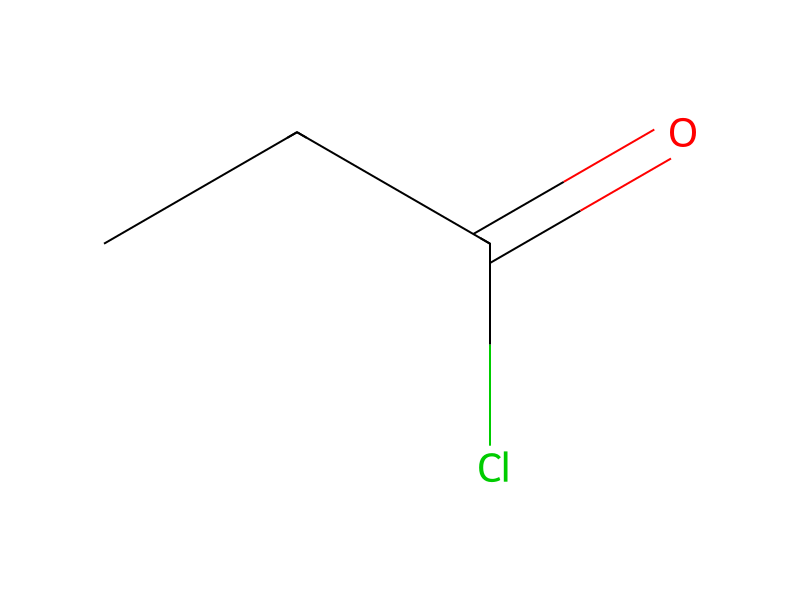
Cl.[NH2:2][C:3]1[CH:4]=[N:5][C:6]2[C:11]([C:12]=1[OH:13])=[CH:10][CH:9]=[C:8]([O:14][CH2:15][C:16]1[CH:21]=[CH:20][CH:19]=[CH:18][CH:17]=1)[CH:7]=2.C(N(CC)CC)C.[C:29](Cl)(=[O:32])[CH2:30][CH3:31]>ClCCl>[CH2:15]([O:14][C:8]1[CH:7]=[C:6]2[C:11]([C:12]([OH:13])=[C:3]([NH:2][C:29](=[O:32])[CH2:30][CH3:31])[CH:4]=[N:5]2)=[CH:10][CH:9]=1)[C:16]1[CH:17]=[CH:18][CH:19]=[CH:20][CH:21]=1To a stirred solution of 3-amino-7-benzyloxyquinolin-4-ol hydrochloride (40.4 g, 133.4 mmol), and triethylamine (2.5 eq., 33.8 g, 333.6 mmol) in dichloromethane (1000 mL) at room temperature, was slowly added propionyl chloride (1.1 eq., 13.6 g, 146.8 mmol). After 6 hours the reaction was quenched with water (250 ml). The reaction mixture was transferred to a separatory funnel and the layers were separated. The dichloromethane layer was concentrated to provide 41.5 g of N-(7-benzyloxy-4-hydroxyquinolin-3-yl)propionamide as a pale tan crystalline solid. MS (ACPI) m/z=323 (M+H)+. This material was carried on without further purification to the next step.