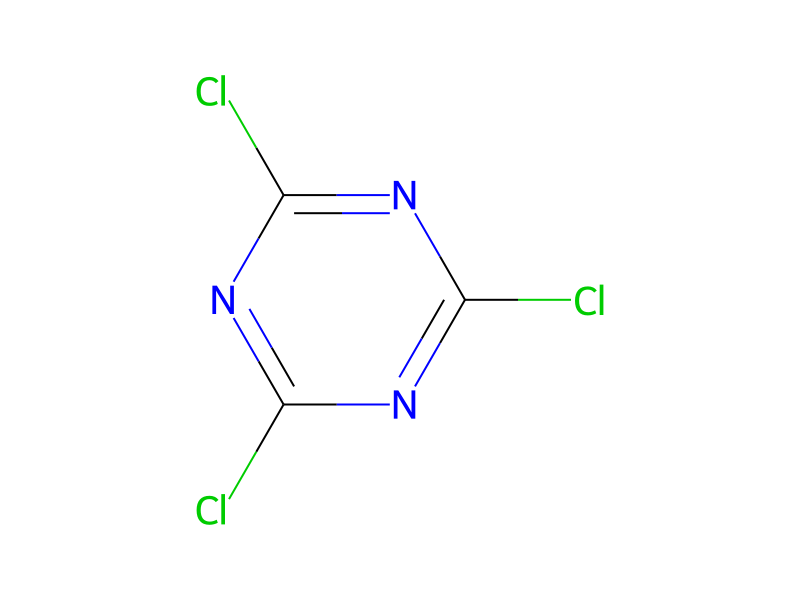
[N:1]1[C:8](Cl)=[N:7][C:5](Cl)=[N:4][C:2]=1Cl.[F:10][C:11]1C=C(C=CC=1N)OC.CC[N:22]([CH:26]([CH3:28])[CH3:27])C(C)C.[CH:29]1([NH2:36])[CH2:35][CH2:34][CH2:33][CH2:32][CH2:31][CH2:30]1.[CH3:37][N:38]([CH3:42])[CH2:39][CH2:40][NH2:41].[C:43]([O:46][CH2:47][CH3:48])(=O)C>CC#N>[CH:29]1([NH:36][C:2]2[N:4]=[C:5]([NH:41][CH2:40][CH2:39][N:38]([CH3:42])[CH3:37])[N:7]=[C:8]([NH:22][C:26]3[CH:27]=[CH:48][C:47]([O:46][CH3:43])=[C:11]([F:10])[CH:28]=3)[N:1]=2)[CH2:35][CH2:34][CH2:33][CH2:32][CH2:31][CH2:30]1Cyanuric chloride (1.84 g, 10 mmol) in CH3CN (20 mL) was cooled to about −10° C. was added 3-fluoro-p-anisidine (1.41 g, 10 mmol) followed by DIEA (1.8 mL, 10 mmol). The reaction was stirred for about 45 min then at room temperature for about 45 min under an N2 atmosphere. Cycloheptylamine (1.26 mL, 10 mmol) was added followed by DIEA (1.8 mL, 10 mmol) and the reaction was stirred at room temperature overnight. N,N-dimethylethylenediamine (1.1 mL, 10 mmol) was added followed by DIEA (1.8 mL, 10 mmol) and the mixture was heated at reflux under N2 overnight. The reaction was diluted with ethyl acetate, washed with brine, and dried over anhydrous K2CO3. The material (1.178 g) was purified by silica gel column chromatography to afford a solid 150 (1.178 g, 28%), mp 73-76° C.; HPLC: Inertsil ODS-3V C18, 40:30:30 [KH2PO4 (0.01 M, pH 3.2): CH3OH:CH3CN], 264 nm, Rt 10.8 min, 95.1% purity; MS (ESI): m/z 418 (M+H, 100), 373 (11.9), 322 (7.8), 277 (6.8), 162 (3.6).