StartseiteMCPWorkbenchSkills
StartseiteWorkbenchBenachrichtigungenMein Bereich
llms.txt · MCP-AnleitungDatenschutz · Nutzungsbedingungen · Supportv1.8.0
  1. Startseite
  2. /Reaktion

Methyl iodide → 3,5-Dichloro-4-methylpyridine

HRID 920
Notizen
Druckvorschau

Reaktionsgleichung

Reaktionsgleichung von HRID 920
[Cl:1][C:2]1[CH:3]=[N:4][CH:5]=[C:6]([Cl:8])[CH:7]=1.[Li+].[CH3:10]C([N-]C(C)C)C.IC.C(=O)([O-])O.[Na+]>C1COCC1.ClCCl>[Cl:1][C:2]1[CH:3]=[N:4][CH:5]=[C:6]([Cl:8])[C:7]=1[CH3:10]
KomponentenVersuchsvorschriftAufarbeitungQuellen und NachweiseNotizen zur Reaktion

Komponenten

7

Edukt 4

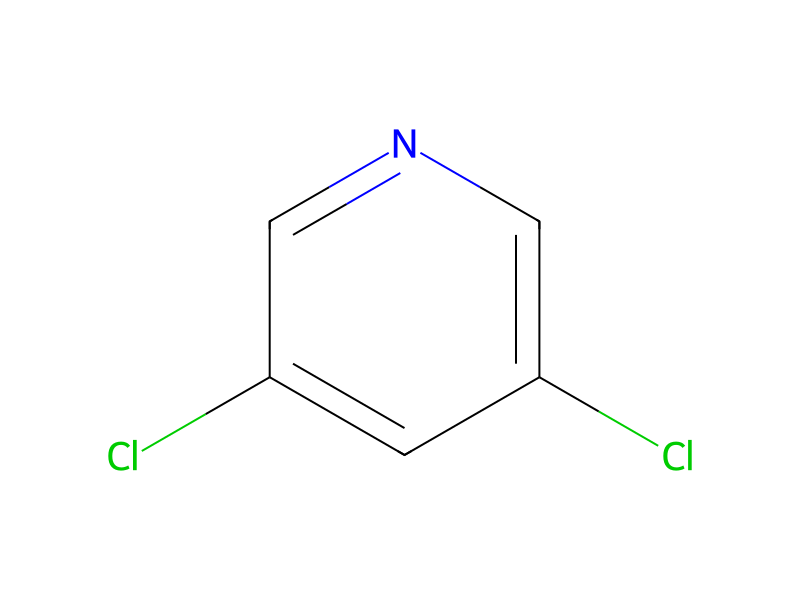
HCID 6328Methyl iodideHCID 171533,5-DichloropyridineHCID 516892Sodium BicarbonateHCID 2724682Lithium diisopropylamide

Produkt 1

HCID 109538273,5-Dichloro-4-methylpyridineAusbeute 53 %

Reagenzien, Katalysatoren, Lösungsmittel 2

HCID 6344
Dichloromethane
Lösungsmittel
HCID 8028TetrahydrofuranLösungsmittel2×

Versuchsvorschrift

3,5-Dichloropyridine (2.04 g, 13.5 mmol) in THF (5 ml) was added dropwise to a solution of LDA [prepared from diisopropylamine (1.9 ml, 13.5 mmol) and n-butyllithium (1.6M, 8.4 ml, 13.5 mmol)] in THF (25 ml) at -70° C. After stirring at this temperature for 5 min, iodomethane (0.85 ml, 13.5 mmol) was added and the reaction mixture stirred for a further 1.5 h at -70° C. Saturated sodium hydrogen carbonate solution (20 ml) and dichloromethane (20 ml) was added and the organic phase separated, dried (MgSO4), and concentrated in vacuo. The residue was subjected to chromatography (SiO2 ; Et2O-hexane, 1:3) to afford the title compound (1.16 g) as a pale yellow solid; δH (CDCl3) 2.46 (3H, s, Me), and 8.36 (2H, s, pyridine H2, H6).


Aufarbeitung

  1. stirringthe reaction mixture stirred for a further 1.5 h at -70° C
  2. customthe organic phase separated
  3. dry with materialdried (MgSO4)
  4. concentrationconcentrated in vacuo

Quellen und Nachweise

ORD-Eintrag
ord-ec4f0b3532d0429bb5eeb02f388b1e94
Quelldatensatz
uspto-grants-1998_03
DOI
10.6084/m9.figshare.5104873.v1
Patentnummer
US05723460

Notizen zur Reaktion

Wird geladen…

Auf dieser SeiteKomponentenVersuchsvorschriftAufarbeitungQuellen und NachweiseNotizen zur Reaktion