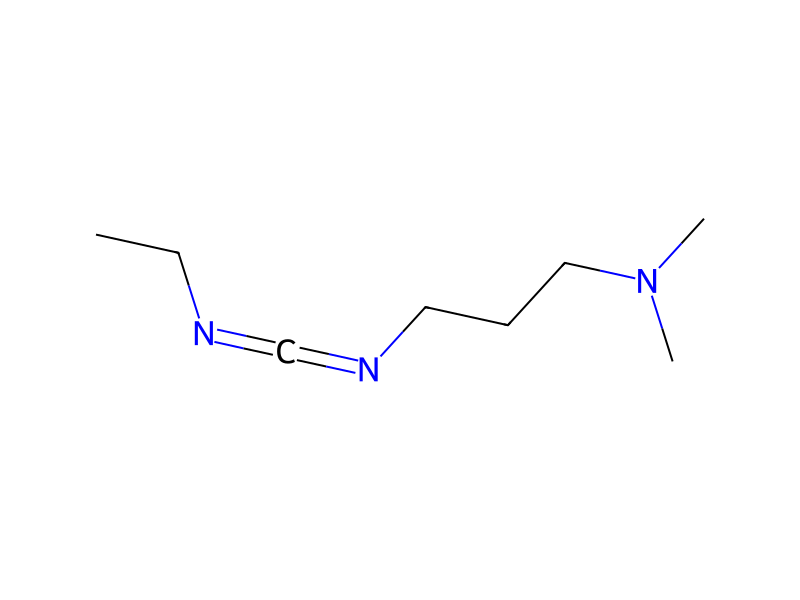
[CH3:1][NH:2][C:3]1[C:8]([NH2:9])=[CH:7][CH:6]=[C:5]([C:10]([F:13])([F:12])[F:11])[N:4]=1.[CH2:14]([S:16][C:17]1[CH:25]=[CH:24][CH:23]=[CH:22][C:18]=1[C:19](O)=O)[CH3:15].CCN=C=NCCCN(C)C.N1C=CC=CC=1>O>[CH2:14]([S:16][C:17]1[CH:25]=[CH:24][CH:23]=[CH:22][C:18]=1[C:19]1[N:2]([CH3:1])[C:3]2=[N:4][C:5]([C:10]([F:11])([F:12])[F:13])=[CH:6][CH:7]=[C:8]2[N:9]=1)[CH3:15]A mixture of N2-methyl-6-trifluoromethylpyridin-2,3-diamine (0.96 g), 2-ethylsulfanylbenzoic acid (1.01 g), WSC (1.06 g), and pyridine (5 ml) was stirred under reflux for 3 hours. Into the reaction mixture cooled to room temperature, water was poured, and extracted with ethyl acetate. The organic layer was dried over sodium sulfate, and concentrated under reduced pressure. To the resulting residue, a mixture of tripotassium phosphate (2.65 g) and 1-propanol (10 ml) was added, and stirred under reflux for 4 hours. Into the reaction mixture cooled to room temperature, water was poured, and extracted with ethyl acetate. The organic layer was dried over sodium sulfate, and concentrated under reduced pressure. The resulting residue was subjected to silica gel column chromatography to give 0.98 g of 2-(2-ethylsulfanylphenyl)-3-methyl-5-trifluoromethyl-3H-imidazo[4,5-b]pyridine (hereinafter referred to as Present Compound 151).