StartseiteMCPWorkbenchSkills
StartseiteWorkbenchBenachrichtigungenMein Bereich
llms.txt · MCP-AnleitungDatenschutz · Nutzungsbedingungen · Supportv1.8.3
  1. Startseite
  2. /Reaktion

3,4,5,6-Tetrahydrophthalic anhydride → 3-(3-bromo-4-fluorophenyl)-3-methoxy-4,5,6,7-tetrahydroisobenzofuran-1(3H)-one

HRID 925085
Drucken

Reaktionsgleichung

Reaktionsgleichung von HRID 925085
[Br:1][C:2]1[CH:7]=[C:6](I)[CH:5]=[CH:4][C:3]=1[F:9].[CH:10]([Mg]Cl)(C)C.[C:15]1(=[O:25])[O:20][C:18](=[O:19])[C:17]2[CH2:21][CH2:22][CH2:23][CH2:24][C:16]1=2.[Cl-].[NH4+].S([O-])([O-])(=O)=O.[Mg+2].S(Cl)(Cl)=O>O1CCCC1.CO>[Br:1][C:2]1[CH:7]=[C:6]([C:18]2([O:19][CH3:10])[C:17]3[CH2:21][CH2:22][CH2:23][CH2:24][C:16]=3[C:15](=[O:25])[O:20]2)[CH:5]=[CH:4][C:3]=1[F:9]
KomponentenReaktionsbedingungenVersuchsvorschriftAufarbeitungQuellen und NachweiseNotizen zur Reaktion

Komponenten

9

Edukt 6

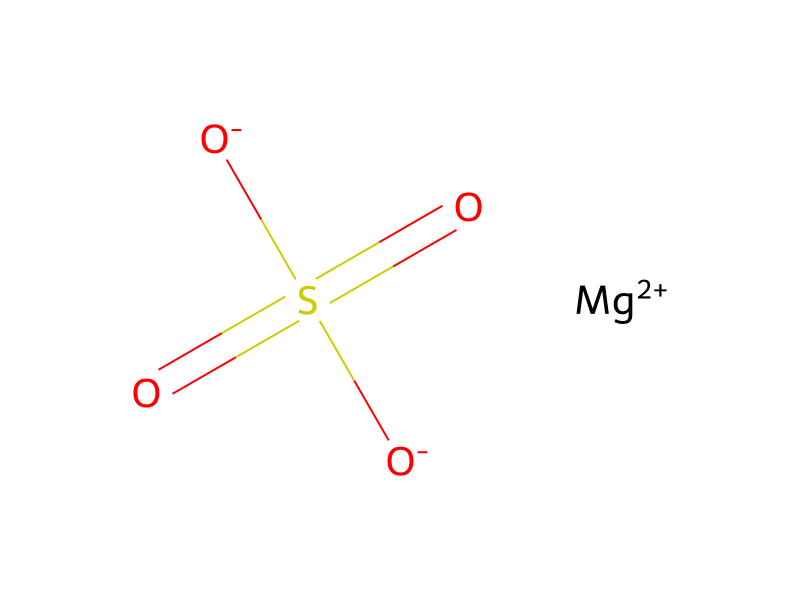
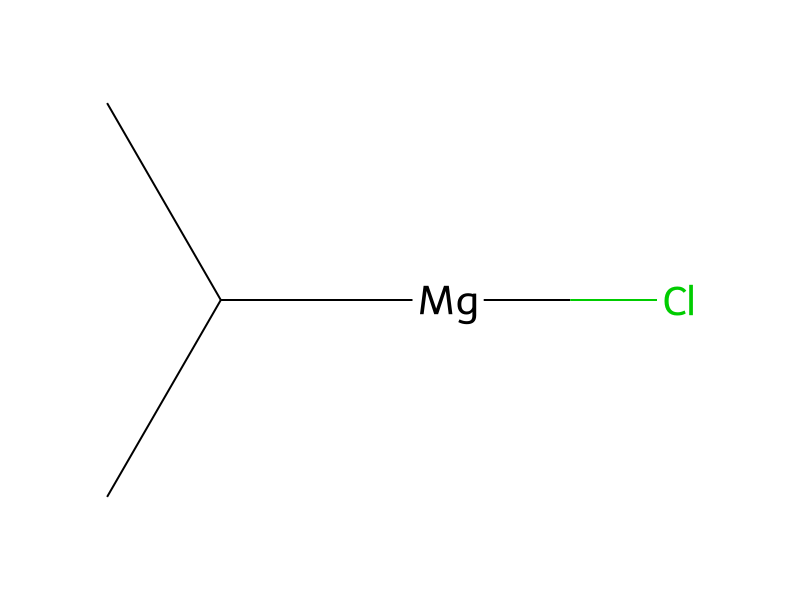
HCID 124753,4,5,6-Tetrahydrophthalic anhydrideHCID 24083Sulfuric acid magnesium salt (1:1)HCID 24386Thionyl Chloride2×HCID 25517Ammonium ChlorideHCID 27569802-Bromo-1-fluoro-4-iodobenzeneHCID 178418918HCID 178418918, Verbindung

Produkt 1

HCID 690467493-(3-bromo-4-fluorophenyl)-3-methoxy-4,5,6,7-tetrahydroisobenzofuran-1(3H)-one

Reagenzien, Katalysatoren, Lösungsmittel 2

HCID 887MethanolLösungsmittel2×HCID 8028TetrahydrofuranLösungsmittel2×

Reaktionsbedingungen

Temperatur
0 °C

Versuchsvorschrift

To a solution of 2-bromo-1-fluoro-4-iodobenzene (13.23 g, 44 mmol) in anhydrous tetrahydrofuran (30 mL) was added isopropylmagnesium chloride (2.0 M solution in tetrahydrofuran, 24.18 mL, 48.4 mmol) at −20° C. After the addition, the reaction mixture was stirred at 0° C. for 3 hours, and was added to a solution of 3,4,5,6-tetrahydrophthalic anhydride (6.08 g, 40 mmol) in anhydrous tetrahydrofuran (60 mL) at −78° C. The mixture was stirred for 2 hours, and a saturated aqueous ammonium chloride solution was added to the reaction mixture, which then was stirred at room temperature for 30 minutes. Anhydrous magnesium sulfate was added to the reaction mixture, and the mixture was filtered. The filtrate was concentrated. Thionyl chloride (10.4 mL, 142 mol) was added dropwise to methanol (40 mL) at −10° C., and the solution was stirred at 0° C. for 30 minutes. To the thionyl chloride solution was then added the residue from the filtrate in anhydrous methanol (15 mL). The reaction mixture was stirred at room temperature overnight, and was concentrated. The residue was dissolved in methylene chloride (40 mL), and was treated with triethylamine (5.58 mL) at 0° C. for 1 hour. Water was added, and the mixture was washed with sodium bicarbonate, brine and water. The organic phase was dried over magnesium sulfate, filtered and concentrated. The residue was separated by flash chromatography (10-35% gradient ethyl acetate in hexane) to provide the title compound. MS (DCI/NH3) m/z 341, 343 (M+H)+.

Aufarbeitung

  1. additionAfter the addition
  2. stirringThe mixture was stirred for 2 hours
  3. stirringthen was stirred at room temperature for 30 minutes
  4. filtrationthe mixture was filtered
  5. concentrationThe filtrate was concentrated
  6. stirringthe solution was stirred at 0° C. for 30 minutes
  7. stirringThe reaction mixture was stirred at room temperature overnight
  8. concentrationwas concentrated
  9. dissolutionThe residue was dissolved in methylene chloride (40 mL)
  10. additionwas treated with triethylamine (5.58 mL) at 0° C. for 1 hour
  11. additionWater was added
  12. washthe mixture was washed with sodium bicarbonate, brine and water
  13. dry with materialThe organic phase was dried over magnesium sulfate
  14. filtrationfiltered
  15. concentrationconcentrated
  16. customThe residue was separated by flash chromatography (10-35% gradient ethyl acetate in hexane)

Quellen und Nachweise

ORD-Eintrag
ord-29276a4827d34bef9f1fa84545e7de19
Quelldatensatz
uspto-grants-2016_03
DOI
10.6084/m9.figshare.5104873.v1
Patentnummer
US09283222B2

Notizen zur Reaktion

Auf dieser SeiteKomponentenReaktionsbedingungenVersuchsvorschriftAufarbeitungQuellen und NachweiseNotizen zur Reaktion