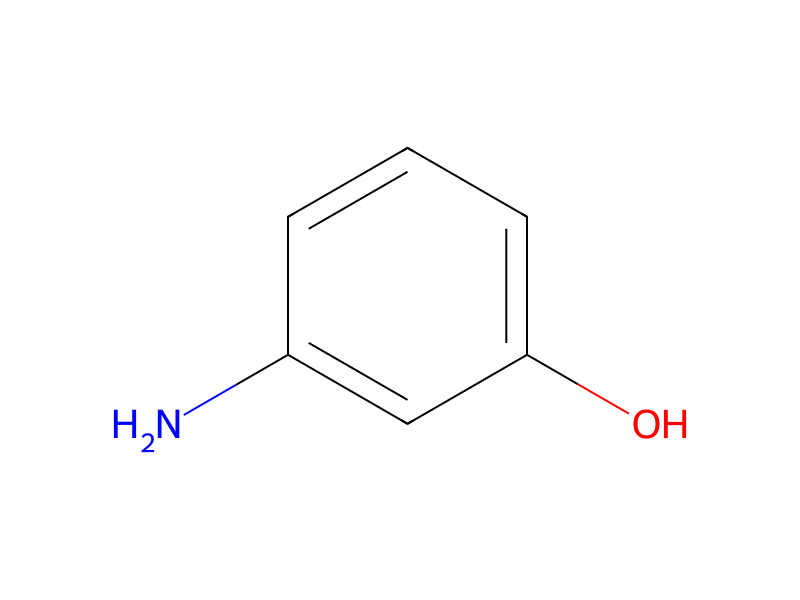
[NH2:1][C:2]1[CH:3]=[C:4]([OH:8])[CH:5]=[CH:6][CH:7]=1.[Br:9][C:10]1[C:11]([NH:17][CH2:18][CH2:19][CH2:20][CH2:21][OH:22])=[N:12][C:13](Cl)=[N:14][CH:15]=1.Cl>C(#N)C.O1CCOCC1>[Br:9][C:10]1[C:11]([NH:17][CH2:18][CH2:19][CH2:20][CH2:21][OH:22])=[N:12][C:13]([NH:1][C:2]2[CH:3]=[C:4]([OH:8])[CH:5]=[CH:6][CH:7]=2)=[N:14][CH:15]=1A reaction mixture of 327 mg (3.0 mmol) of 3-aminophenol and 864 mg (3.1 mmol) of 4-(5-bromo-2-chloro-pyrimidin-4-ylamino)-butan-1-ol in 9 ml of acetonitrile is mixed with 0.75 ml of a 4 M solution of hydrochloric acid in dioxane, and it is stirred under reflux overnight. After the cooling, the reaction mixture is filtered, and the filtrate is completely concentrated by evaporation. The oil that is obtained is recrystallized from ethyl acetate/ethanol. The solid is filtered off and then dissolved in water. By adding triethylamine, the solution is made basic and extracted with ethyl acetate (2×). The combined organic phases are dried (Na2SO4), filtered and concentrated by evaporation. 444 mg (1.2 mmol, corresponding to 40% of theory) of the product is obtained.