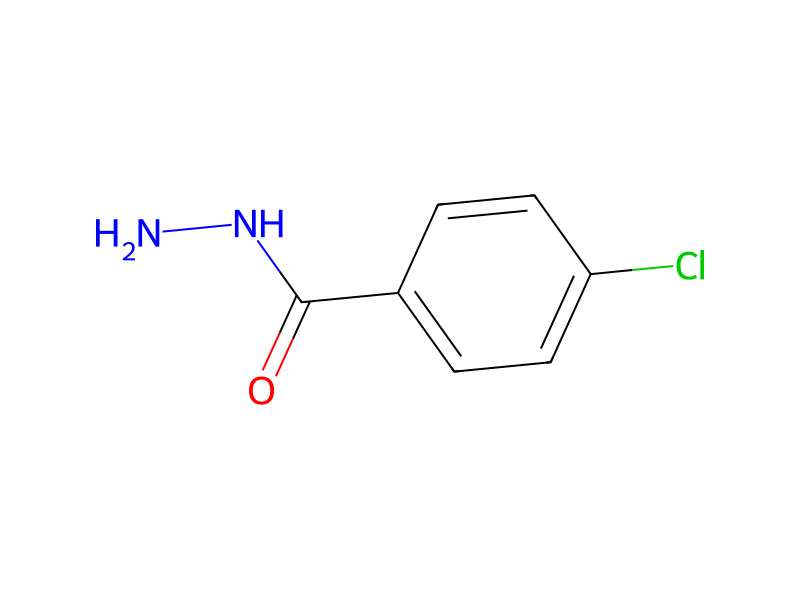
To a suspension of 4-chlorobenzhydrazide (98.5 g, 0.05 mole) in tetrahydrofuran (100 ml) at room temperature ethylisocyanate (4.2 g, 0.05 mole) was added slowly with magnetic stirring. The reaction was slightly exothermic and the reaction mixture turned to a thick paste. Stirring was continued an additional 30 min after which the solid was collected by suction-filtration and washed with a small amount of tetrahydrofuran and dried to provide 11.6 g (96.6% yield), of 1-(4-chlorobenzoyl)-4-ethyl semicarbazide as a white solid, m.p. 242°-243° C. The above semicarbazide (10 g, 0.0414 mole) was dissolved in 1N sodium hydroxide solution (100 ml) and was refluxed with stirring for 16 hr. The solution was cooled down to about 10° C. by an ice bath and was neutralized by conc. hydrogen chloride until pH 2. The resultant white solid was collected by suction-filtration and washed with water to give 8.65 g (93.5% yield) of 3-(4-chlorophenyl)-4-ethyl-1,2,4-triazolin-5-one as a white solid. m.p. 190°-197° C. A proton NMR spectrum was consistent with the desired structure.