Reaktionsgleichung
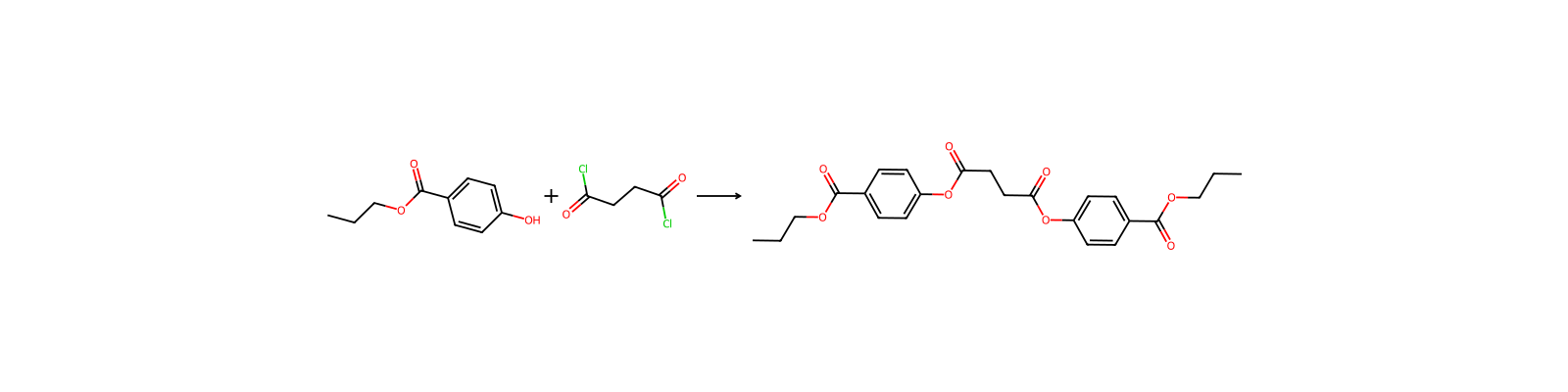
[OH:1][C:2]1[CH:13]=[CH:12][C:5]([C:6]([O:8][CH2:9][CH2:10][CH3:11])=[O:7])=[CH:4][CH:3]=1.[C:14](Cl)(=[O:20])[CH2:15][CH2:16][C:17](Cl)=[O:18]>>[CH2:9]([O:8][C:6]([C:5]1[CH:4]=[CH:3][C:2]([O:1][C:14](=[O:20])[CH2:15][CH2:16][C:17]([O:1][C:2]2[CH:3]=[CH:4][C:5]([C:6]([O:8][CH2:9][CH2:10][CH3:11])=[O:7])=[CH:12][CH:13]=2)=[O:18])=[CH:13][CH:12]=1)=[O:7])[CH2:10][CH3:11]Komponenten
3


Versuchsvorschrift
A similar procedure to Example 1 is carried out by using 7.8 g of propyl p-hydroxybenzoate and 18 g of succinic acid dichloride to yield di(p-propyloxycarbonylphenyl)succinate, m.p 122°-123.5° C., as white crystals.
Quellen und Nachweise
- ORD-Eintrag
- ord-818fcc7a08e0479b923f3e8f698a56f3
- Quelldatensatz
- uspto-grants-1987_12
- Patentnummer
- US04713474
Verknüpfte Notizen
Wird geladen…