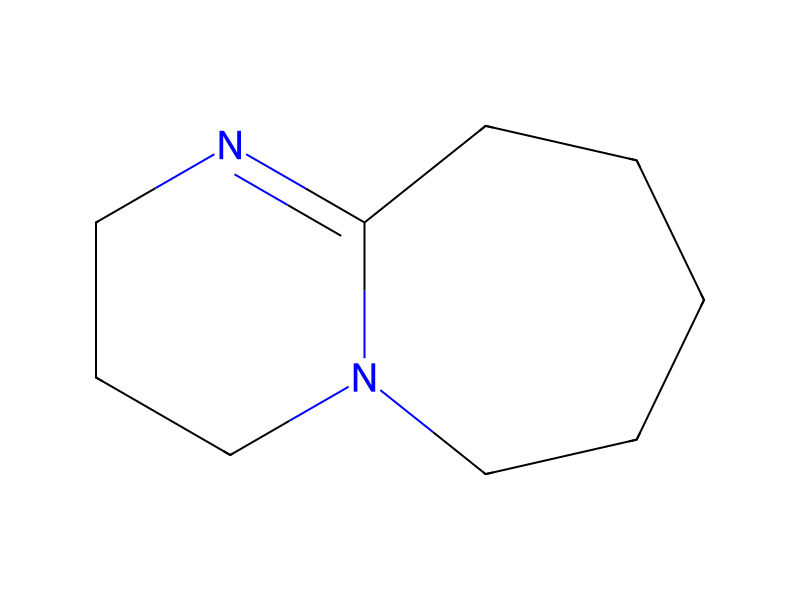
C1(C)C=CC(S([CH:10]([N+:18]#[C-:19])[C:11]2[CH:16]=[CH:15][C:14]([F:17])=[CH:13][CH:12]=2)(=O)=O)=CC=1.[N:21]1[CH:26]=[CH:25][C:24]([CH:27]=[N:28][CH:29]2[CH2:37][CH:36]3[N:32]([CH2:33][CH2:34][CH2:35]3)[CH2:31][CH2:30]2)=[CH:23][CH:22]=1.C1CCN2C(=NCCC2)CC1>ClCCl>[F:17][C:14]1[CH:13]=[CH:12][C:11]([C:10]2[N:18]=[CH:19][N:28]([CH:29]3[CH2:37][CH:36]4[N:32]([CH2:33][CH2:34][CH2:35]4)[CH2:31][CH2:30]3)[C:27]=2[C:24]2[CH:23]=[CH:22][N:21]=[CH:26][CH:25]=2)=[CH:16][CH:15]=1α-(p-Toluenesulfonyl)-4-fluorobenzylisocyanide (10.1 g, 34.9 mmol) and (±)-7-(4-pyridylmethyleneamino)-1,2,3,5,6,7,8,8a-octahydroindolizine (8.0 g (34.9 mmol), prepared as described in 2)) were dissolved in dichloromethane (150 ml). To the solution was added 1,8-diazabicyclo[5.4.0]-7-undecene (5.22 ml, 34.9 mmol), and the resulting mixture was stirred at room temperature for 2 hours. At the end of this time, the reaction mixture was concentrated by evaporation under reduced pressure. To the residue was added a saturated aqueous solution of sodium hydrogencarbonate and this was extracted with ethyl acetate. The organic layer was washed with water, dried over anhydrous sodium sulfate and the solvent was removed by distillation under reduced pressure. The residue was purified by column chromatography through silica gel (eluent, ethyl acetate:methanol:isopropylamine=20:1:1), to give the title compound (1.87 g) as a pale yellow powder (yield 14%).