StartseiteMCPWorkbenchSkills
StartseiteWorkbenchBenachrichtigungenMein Bereich
llms.txt · MCP-AnleitungDatenschutz · Nutzungsbedingungen · Supportv1.8.3
  1. Startseite
  2. /Reaktion

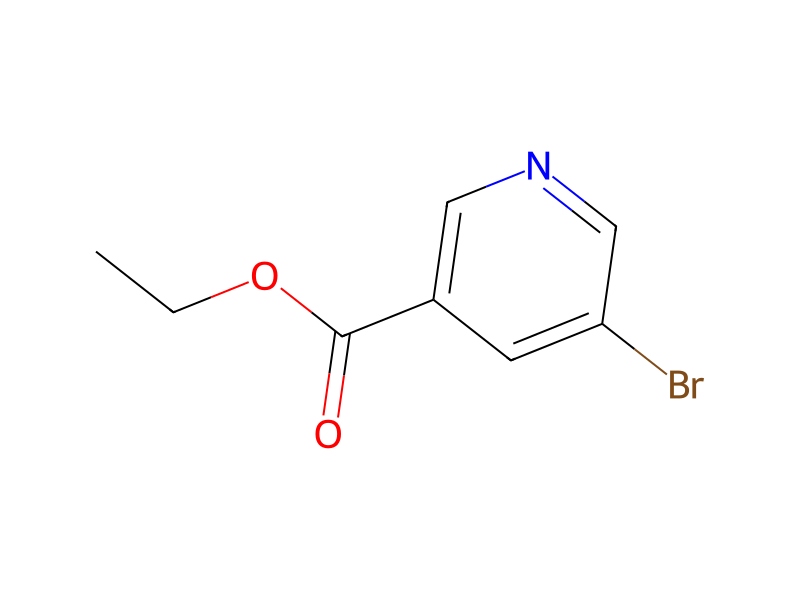
Ethyl 5-bromopyridine-3-carboxylate → Ethyl 5-(2,6-difluorophenyl)nicotinate

HRID 989172
Drucken

Reaktionsgleichung

Reaktionsgleichung von HRID 989172
[F:1][C:2]1[CH:7]=[CH:6][CH:5]=[C:4]([F:8])[C:3]=1[Sn](CCCC)(CCCC)CCCC.Br[C:23]1[CH:24]=[N:25][CH:26]=[C:27]([CH:33]=1)[C:28]([O:30][CH2:31][CH3:32])=[O:29]>C1(C)C(C)=CC=CC=1.[Pd].C1(P(C2C=CC=CC=2)C2C=CC=CC=2)C=CC=CC=1.C1(P(C2C=CC=CC=2)C2C=CC=CC=2)C=CC=CC=1.C1(P(C2C=CC=CC=2)C2C=CC=CC=2)C=CC=CC=1.C1(P(C2C=CC=CC=2)C2C=CC=CC=2)C=CC=CC=1>[F:8][C:4]1[CH:5]=[CH:6][CH:7]=[C:2]([F:1])[C:3]=1[C:23]1[CH:24]=[N:25][CH:26]=[C:27]([CH:33]=1)[C:28]([O:30][CH2:31][CH3:32])=[O:29]
KomponentenVersuchsvorschriftAufarbeitungQuellen und NachweiseNotizen zur Reaktion

Komponenten

5

Edukt 2

HCID 140785Ethyl 5-bromopyridine-3-carboxylateHCID 18005066HCID 18005066, Verbindung

Produkt 1

HCID 18005196Ethyl 5-(2,6-difluorophenyl)nicotinateAusbeute 84 %

Reagenzien, Katalysatoren, Lösungsmittel 2

HCID 11979704Tetrakis(triphenylphosphine)palladiumKatalysatorHCID 7237
O-Xylene
Lösungsmittel

Versuchsvorschrift

A mixture of (2,6-difluorophenyl)tributyltin (1.18 g, 2.9 mol), ethyl 5-bromonicotinate (0.69 g, 3 mmol) and tetrakis (triphenylphosphine) palladium (0) (0.10 g) in xylene (10 mL) was heated under reflux for 24 h, then cooled, filtered and evaporated. The residue was chromatographed on silica gel eluted with 20% ethyl acetate/petrol to give the title compound (0.64 g, 84%).

Aufarbeitung

  1. temperaturewas heated
  2. temperatureunder reflux for 24 h
  3. temperaturecooled
  4. filtrationfiltered
  5. customevaporated
  6. customThe residue was chromatographed on silica gel
  7. washeluted with 20% ethyl acetate/petrol

Quellen und Nachweise

ORD-Eintrag
ord-bcc7cb4b096c42e9b8d14927df1ea757
Quelldatensatz
uspto-grants-2003_10
DOI
10.6084/m9.figshare.5104873.v1
Patentnummer
US06638953B2

Notizen zur Reaktion

Auf dieser SeiteKomponentenVersuchsvorschriftAufarbeitungQuellen und NachweiseNotizen zur Reaktion