Reaktionsgleichung

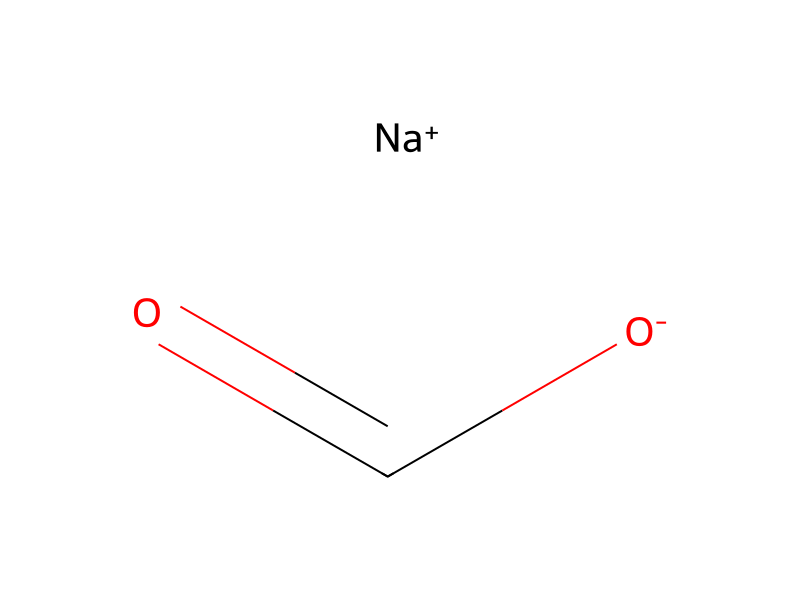
[F:1][C:2]([F:13])([F:12])[O:3][C:4]1[CH:11]=[CH:10][C:7]([CH:8]=[O:9])=[CH:6][CH:5]=1.C([O-])=O.[Na+]>[Pd](Cl)Cl.C1(P(C2C=CC=CC=2)C2C=CC=CC=2)C=CC=CC=1.C1(P(C2C=CC=CC=2)C2C=CC=CC=2)C=CC=CC=1.CN(C=O)C>[F:1][C:2]([F:12])([F:13])[O:3][C:4]1[CH:11]=[CH:10][C:7]([CH2:8][OH:9])=[CH:6][CH:5]=1Komponenten
5
Edukt 2

Produkt 1

Reagenzien, Katalysatoren, Lösungsmittel 2


Reaktionsbedingungen
- Temperatur
- 110 °C
Versuchsvorschrift
8.55 g of 4-trifluoromethoxybenzaldehyde, 0.63 g of bis(triphenylphosphine) palladium dichloride and 6.12 g of sodium formate were placed in a flask fitted with a reflux condenser, 45 ml of DMF were added and the mixture was stirred and heated at 110° C. The course of the reaction was monitored by means of GC. After conversion was complete (GC monitoring), the reaction mixture was allowed to cool to 21° C. and the catalyst was separated off by filtration through silica gel. The filter was rinsed with methyl tert-butyl ether and the filtrate washed with 3×100 ml of water in order to remove the DMF. This gave 6.0 g (69% of theory) of 4-trifluoromethoxybenzyl alcohol.
Aufarbeitung
- customfitted with a reflux condenser
- temperatureto cool to 21° C.
- customthe catalyst was separated off by filtration through silica gel
- washThe filter was rinsed with methyl tert-butyl ether
- washthe filtrate washed with 3×100 ml of water in order
- customto remove the DMF
Quellen und Nachweise
- ORD-Eintrag
- ord-b679be3d4e484e96b9d1d463d6c43255
- Quelldatensatz
- uspto-grants-2002_10
- Patentnummer
- US06462242B1
Verknüpfte Notizen
Wird geladen…