

Basic information
- Standard SMILES
O=C(O)c1ccccn1- InChIKey
SIOXPEMLGUPBBT-UHFFFAOYSA-N- Molecular formula
- C6H5NO2
- Average molar mass
- 123.11 g/mol
- Monoisotopic mass
- 123.0320284
Overview
Picolinic acid is a pyridinemonocarboxylic acid in which the carboxy group is located at position 2. It is an intermediate in the metabolism of tryptophan. It has a role as a MALDI matrix material and a human metabolite. It is a conjugate acid of a picolinate.
Names & identifiers
- Preferred name
- Picolinic acid
- IUPAC
- pyridine-2-carboxylic acid
- English name
- nikogamol
- Molecular formula
- C6H5NO2
- Molecular weight
- 123.1094
Names & synonyms
picolinic acid98-98-6Pyridine-2-carboxylic acid2-Pyridinecarboxylic acid2-Carboxypyridineo-Pyridinecarboxylic acidAcide picoliquealpha-Pyridinecarboxylic acid2-pyridine carboxylic acidDTXSID7031903QZV2W997JQDTXCID5011903
Show more names
nikogamol
CHEBI:28747RefChem:863115202-719-72-Picolinic acidalpha-Picolinic acidPYRIDINECARBOXYLIC ACIDPyridine-carboxylique-2MFCD00006293
Database identifiers
- CAS
32075-31-3、88161-53-9、98-98-6- PubChem CID
- 1018
- DTXSID
DTXSID7031903- ChEMBL
CHEMBL72628- ChEBI
CHEBI:28747- UNII
- QZV2W997JQ
- EC Number
- 202-719-7
- Nikkaji
- J45.682I、J452.014I
Properties
Computed structural properties
- XLogP
- 0.8
- Topological polar surface area
- 50.2 Ų
- Hydrogen bond donors
- 1
- Hydrogen bond acceptors
- 3
- Rotatable bonds
- 1
- Heavy atoms
- 9
- Formal charge
- 0
- Complexity
- 114
Experimental & physicochemical properties
Chemical ClassesNitrogen Compounds -> Pyridines
DrugsPharmaceuticals -> Listed in ZINC15
SpringerMaterials PropertiesChemical shift
LogP
0.72
-1.0
Solubility
960 mg/mL at 20 °C
>18.5 [ug/mL] (The mean of the results at pH 7.4)
Melting Point
136.5 °C
136.5 °C
Vapor Pressure0.00789 [mmHg]
Physical Description
White or off-white crystalline powder; [MSDSonline]
Solid
Dissociation Constants0.99
Safety & regulation
GHS classification
GHS Classification
Danger
H302 (93.9%): Harmful if swallowed [Warning Acute toxicity, oral]
P261, P264, P264+P265, P270, P271, P280, P301+P317, P302+P352, P304+P340, P305+P351+P338, P305+P354+P338, P317, P319, P321, P330, P332+P317, P337+P317, P362+P364, P403+P233, P405, and P501 (click each P-code to see the statement)
Aggregated GHS information provided per 179 reports by companies from 14 notifications to the ECHA C&L Inventory. Each notification may be associated with multiple companies.
Hazard information
Regulatory Information
Chemical: 2-Pyridinecarboxylic acid
Status: Active Update: 03-07-2018 https://echa.europa.eu/registration-dossier/-/registered-dossier/24100
2-Pyridinecarboxylic acid: Does not have an individual approval but may be used under an appropriate group standard
Other Safety InformationEvaluation - Chemicals that are unlikely to require further regulation to manage risks to human health
Hazards SummaryAn eye irritant; [eChemPortal: ERMA] An irritant; [MSDSonline] See Pyridine.
Hazard Classes and CategoriesAcute Tox. 4 (93.9%)
Safety & protection
Protective Action Criteria (PAC)
1.2 [mg/m3]
13 [mg/m3]
78 [mg/m3]
Chemistry & industry
Pharmacology
Pharmacodynamics
PCL-016 or Picolinic acid drug substance is a pyridine carboxylate metabolite of tryptophan. It acts as an anti-infective and immunomodulator through its role in zinc transport. ZFPs are involved in viral replication and packaging as well as normal cell homeostatic functions. Picolinic acid has been shown to be an anti-viral in vitro and in vivo.
Mechanism of ActionAs a therapeutic agent, the molecule works by binding to zinc finger proteins (ZFPs) in a way that changes their structures and disrupts zinc binding, inhibiting function.
MeSH Pharmacological Classification
Organic chemicals that form two or more coordination links with an iron ion. Once coordination has occurred, the complex formed is called a chelate. The iron-binding porphyrin group of hemoglobin is an example of a metal chelate found in biological systems.
Tissue LocationsProstate
Uses & manufacturing
Uses
Iron-chelating agent that inhibits DNA synthesis; may interfere with iron-dependent production of stable free organic radical which is essential for ribonucleotide reductase formation of deoxyribonucleotides. [ChemIDplus]
Synthetic Polymer MALDI Matrix Compounds
General Manufacturing Information2-Pyridinecarboxylic acid: ACTIVE
Suppliers50 total
国药集团化学试剂有限公司86-21-63210123 · [email protected]
梯希爱(上海)化成工业发展有限公司021-67121386 · [email protected]
上海阿拉丁生化科技股份有限公司400-6206333 13167063860 · [email protected]
上海泰矶林实业有限公司02150630626 17717886015 · [email protected]
INTATRADE GmbH+49 3493/605464 · [email protected]
常州科益化工有限公司519-81882581 18602584369 · [email protected]
北京安司莫森技术有限公司010-82954736 13391601435 · [email protected]
韶远科技(上海)有限公司021-50795510 4000665055 · [email protected]
科瑞迪化学400-821-5857 021-64326257 · [email protected]
上海将来实业股份有限公司400-0066400 13621662912 · [email protected]
上海迈瑞尔生化科技有限公司4006356688 18621169109 · [email protected]
阿法埃莎(中国)化学有限公司400-6106006 · [email protected]
石家庄斯迪亚诺精细化工有限公司0311-89250318 13582355795 · [email protected]
上海恩诺生物科技有限公司+86 (21) 6435-5022
上海瀚鸿科技股份有限公司021-54306202 13764082696 · [email protected]
上海柯维化学技术有限公司021-64609169 18901607656 · [email protected]
上海相辉医药科技有限公司13761987713 · [email protected]
上海景颜化工科技有限公司13817811078 · [email protected]
嘉兴市艾森化工有限公司0573-85285100 18627885956 · [email protected]
Pure Chemistry Scientific Inc.001-857-928-2050 or 1-888-588-9418 · [email protected]
上海隆盛化工有限公司58099637 13585536065 · [email protected]
凯试(上海)科技有限公司021-50135380 · [email protected]
安徽德信佳生物医药有限公司0531-82375818 15064153060 · [email protected]
上海攀鸿化工科技有限公司021-56491756 13512199871 · [email protected]
孝感深远化工有限公司15527621225; 15527621225 · [email protected]
山东西亚化学有限公司13355009207 13355009207 · [email protected]
玛雅试剂+86 (573) 82222445 (0)18006601000 452520369 · [email protected]
四川库利南科技有限公司400-1166-196 18981987031 · [email protected]
天津希恩思生化科技有限公司400 638 7771 · [email protected]
南京斯贝源医药科技有限公司+86-25-68710855, +86-25-68710897 · [email protected]
南京维奥化工有限公司Please Send Email 18652950785 · [email protected]
河南多贝化工有限公司0370-2785118 17550508557 · [email protected]
斯百全化学(上海)有限公司021-021-021-67601398-809-809-809 15221380277 · [email protected]
济南邦德化工技术有限公司86-531-88280989 · [email protected]
艾科试剂4008-755-333 18080918076 · [email protected]
上海思域化工科技有限公司86-21-34053660 · [email protected]
赛默飞世尔科技(中国)有限公司800-810-5118 · [email protected]
北京伊诺凯科技有限公司400-810-7969 010-59572699 · [email protected]
上海特伯化学科技有限公司+86-21-60341587 · [email protected]
南京诺利斯医药科技有限公司13901585132 · [email protected]
上海健超生物科技有限公司150-2103-5486 18017383231 · [email protected]
TCI AMERICA800-4238616 · [email protected]
TOKYO CHEMICAL INDUSTRY CO., LTD.03-36680489 · [email protected]
TCI Europe320-37350700 · [email protected]
上海贤鼎生物科技有限公司4009209199 · [email protected]
深圳振强药物研发有限公司0755-66853366 13670046396 · [email protected]
上海卓锐化工有限公司021-69180038
深圳康特腾科技有限公司86-0755-86635001 · [email protected]
越林试剂021-62960152 · [email protected]
上海睿升化工科技有限公司+86-021-50935922
Additional notes
DefinitionChEBI: Picolinic acid is a pyridinemonocarboxylic acid in which the carboxy group is located at position 2. It is an intermediate in the metabolism of tryptophan. It has a role as a MALDI matrix material and a human metabolite. It is a conjugate acid of a picolinate.
Related reactions
511 records


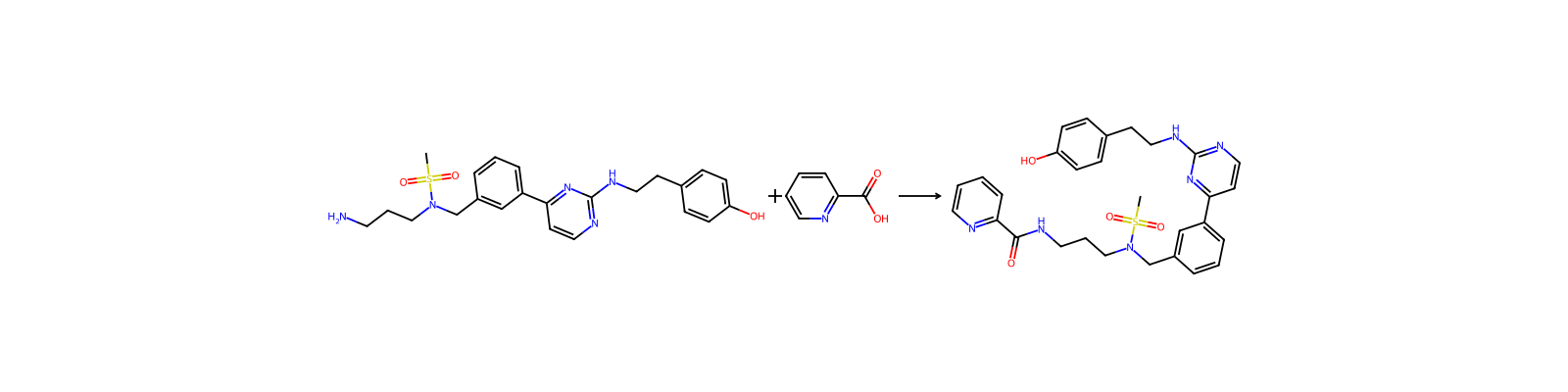


Linked notes
Loading…