
HRID 108023As product

32685-16-8O=C(NO)c1ccccc1VDEUYMSGMPQMIK-UHFFFAOYSA-NRhombic crystals or light beige solid. (NTP, 1992)
32685-16-8、495-18-1DTXSID7025421CHEMBL16300Safety information is for reference only and does not replace the supplier’s Safety Data Sheet (SDS), applicable regulations, or professional assessment.
Warning
H315 (100%): Causes skin irritation [Warning Skin corrosion/irritation]
P203, P261, P264, P264+P265, P271, P280, P302+P352, P304+P340, P305+P351+P338, P318, P319, P321, P332+P317, P337+P317, P362+P364, P403+P233, P405, and P501 (click each P-code to see the statement)
Aggregated GHS information provided per 33 reports by companies from 3 notifications to the ECHA C&L Inventory. Each notification may be associated with multiple companies.
Chemical: Benzamide, N-hydroxy-
REACH registered substance: N-hydroxybenzamide (EC: 207-797-6)
Benzamide, N-hydroxy-: Does not have an individual approval but may be used under an appropriate group standard
N-HYDROXYBENZAMIDE is an amide. Amides/imides react with azo and diazo compounds to generate toxic gases. Flammable gases are formed by the reaction of organic amides/imides with strong reducing agents. Amides are very weak bases (weaker than water). Imides are less basic yet and in fact react with strong bases to form salts. That is, they can react as acids. Mixing amides with dehydrating agents such as P2O5 or SOCl2 generates the corresponding nitrile. The combustion of these compounds generates mixed oxides of nitrogen (NOx).
UsesBenzhydroxamic acid is used as precursor in the synthesis of novel mono-anionic and di-anionic hydroxamato complexes by reacting with BiPh3 and Bi(O(t)Bu)3, which has anti-bacterial activity against helicobacter pylori. It is used in the photometric determination of trace amounts of vanadium in alloy steels by making mixed-ligand vanadium chelates with ammonium thiocyanate. It is also involved in the palladium catalyzed synthesis of benzisoxazolones.
UsesBenzhydroxamic acid may be employed for the Pd-catalyzed synthesis of benzisoxazolones.
General DescriptionRhombic crystals or light beige solid.
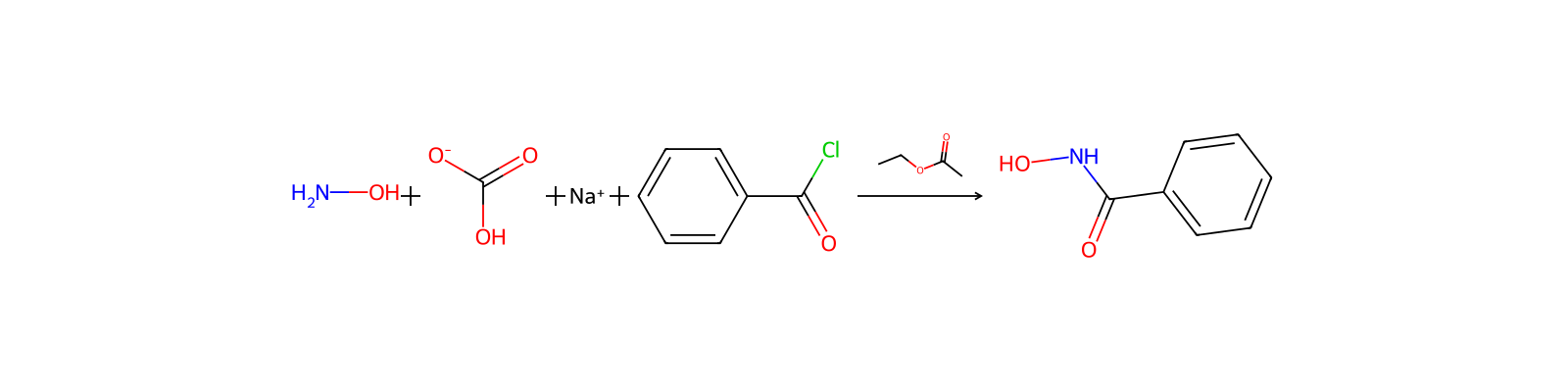
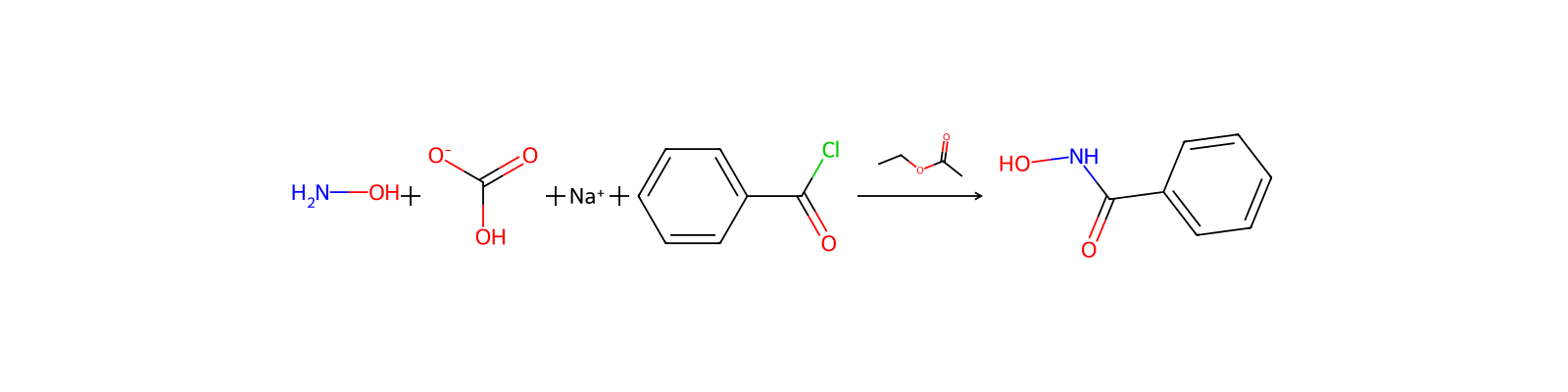
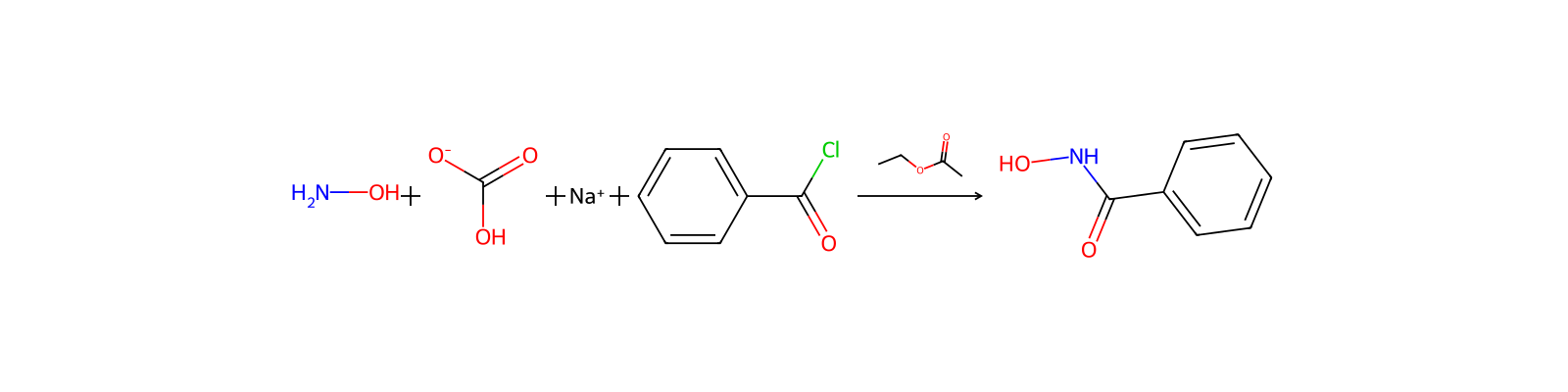
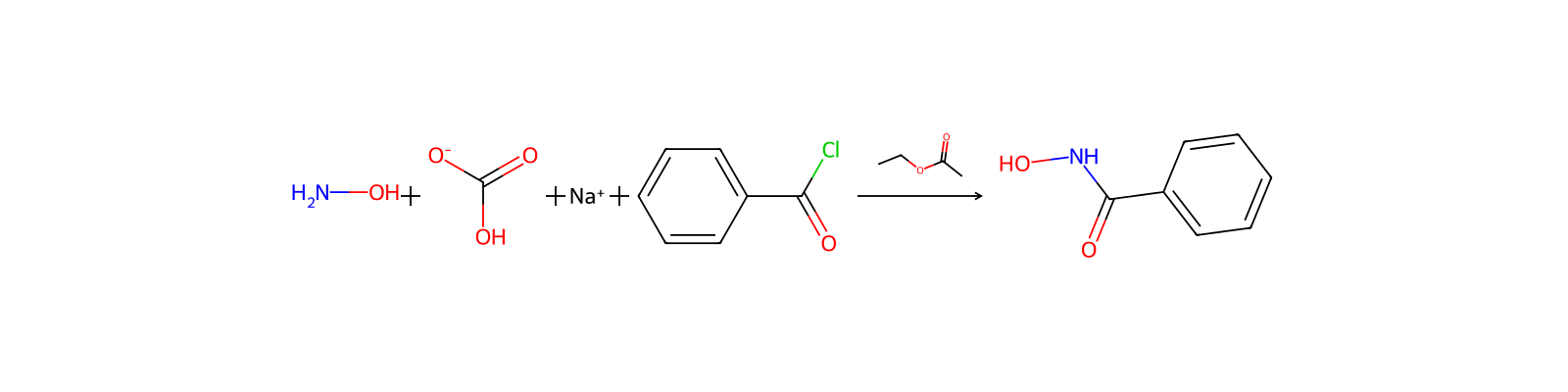
PreparationTo a rapidly stirred suspension of 19.6 gm (0.35 mole) of powdered anhydrous potassium hydroxide in 120 ml of pyridine, maintained at 0-5°C, is a added a solution of 13.9 gm (0.2 mole) of hydroxylamine hydrochloride in 100 ml of pyridine. While maintaining the reaction temperature at 0-5°C, 15 gm (0.1 mole) of ethyl benzoate is added. Vigorous stirring is continued at room temperature for 6 hr. Then the solids are filtered off. The solids are washed with cold water to remove inorganic coproducts. The remainder, recrystallized from aqueous ethanol, represents a 94% yield of potassium benzohydroxamate. This salt is triturated with cold 0.01 TV hydrochloric acid. From this mixture, by the usual procedures, 12.5 gm (91% overall) of benzohydroxamic acid is isolated, m.p. 131°C (from aqueous alcohol).


EYES: First check the victim for contact lenses and remove if present. Flush victim's eyes with water or normal saline solution for 20 to 30 minutes while simultaneously calling a hospital or poison control center. Do not put any ointments, oils, or medication in the victim's eyes without specific instructions from a physician. IMMEDIATELY transport the victim after flushing eyes to a hospital even if no symptoms (such as redness or irritation) develop.
SMALL SPILLS AND LEAKAGE: If you spill this chemical, you should dampen the solid spill material with water, then transfer the dampened material to a suitable container. Use absorbent paper dampened with water to pick up any remaining material. Seal your contaminated clothing and the absorbent paper in a vapor-tight plastic bag for eventual disposal. Wash all contaminated surfaces with a soap and water solution. Do not reenter the contaminated area until the Safety Officer (or other responsible person) has verified that the area has been properly cleaned.
RECOMMENDED RESPIRATOR: Where the neat test chemical is weighed and diluted, wear a NIOSH-approved half face respirator equipped with an organic vapor/acid gas cartridge (specific for organic vapors, HCl, acid gas and SO2) with a dust/mist filter. (NTP, 1992)