
Basic information
- CAS
505-29-3- Standard SMILES
C1CSCCS1- InChIKey
LOZWAPSEEHRYPG-UHFFFAOYSA-N- Molecular formula
- C4H8S2
- Average molar mass
- 120.2 g/mol
- Monoisotopic mass
- 120.00674226
Overview
1,4-dithiane is a dithiane that is cyclohexane in which the -CH2- units at positions 1 and 2 have been replaced by sulfur atoms.
Names & identifiers
- Preferred name
- 1,4-Dithiane
- IUPAC
- 1,4-dithiane
- English name
- 1,4-Dithiane
- Molecular formula
- C4H8S2
- Molecular weight
- 120.24
Names & synonyms
1,4-DITHIANE505-29-3p-Dithiane1,4-DithiacyclohexaneDiethylene disulfidep-Dithanep-Dithiin, tetrahydro-DTXSID3024077NSC-24178CHEBI:5403274B1T5A0DTXCID304077
Show more names
FEMA 38311,4-DITHIANE 98%1,4-dithioalkane1 4-DITHIANE 97+%diethylenedisulfideDIETHYLENEDISULPHIDE
FEMA NO. 3831RefChem:73347208-007-2para-Dithiane1,4-Dithiin, tetrahydro-1,4-dithian[1,4]dithianeCCRIS 3240
Database identifiers
- CAS
505-29-3- PubChem CID
- 10452
- DTXSID
DTXSID3024077- ChEMBL
CHEMBL3183037- ChEBI
CHEBI:540- UNII
- 3274B1T5A0
- EC Number
- 208-007-2
- Nikkaji
- J6.222G
Properties
Computed structural properties
- XLogP
- 1.3
- Topological polar surface area
- 50.6 Ų
- Hydrogen bond donors
- 0
- Hydrogen bond acceptors
- 2
- Rotatable bonds
- 0
- Heavy atoms
- 6
- Formal charge
- 0
- Complexity
- 26.5
Experimental & physicochemical properties
Chemical ClassesOther Classes -> Sulfur Compounds
SpringerMaterials PropertiesBoiling point
PesticidesPesticide -> EPA IRIS
LogP
log Kow = 0.77
0.77
Food AdditivesFLAVORING AGENT OR ADJUVANT -> FDA Substance added to food
Flavoring AgentsEU Flavoring substances
Color/FormWhite crystals
Solubility
Soluble in ethanol, ether, carbon tetrachloride, acetic acid and carbon disulfide.
In water, 3,000 mg/L at 25 °C
3 mg/mL at 25 °C
slightly soluble in hot water;soluble in hot alcohol, oil
(in ethanol)
Boiling Point
115.6 °C at 60 mm Hg
199.00 to 200.00 °C. @ 760.00 mm Hg
199-200 °C
DecompositionWhen heated to decomposition it emits toxic vapors of /sulfur oxides/.
Melting Point
112.3 °C
112 - 113 °C
Vapor Pressure
1.57 [mmHg]
0.80 mm Hg at 25 °C
Physicochemical properties
- Melting point
- 107 · 107-113 °C (lit.)
- Boiling point
- 200 °C · 200 °C (lit.)
- Density
- 1.062 · 1.062 (estimate)
- refractive index
- 1.5981 · 1.5981 (estimate)
- FEMA
- 3831 · 3831 | 1,4-DITHIANE
- FLAVIS Number
- 15.066 · 15.066 | 1,4-Dithiane
- storage temp.
- 2 · 2-8°C
- solubility
- Chloroform (Sparingly), DMSO (Slightly)
- form
- solid
- Odor
- 0.1 % · at 0.10 % in propylene glycol. sulfurous solvent garlic onion pyridine
- Appearance
- White to off-white Solid
- Odor Type
- seafood
- Specific Heat Capacity
- 0.91 J/ · Cp(gas): 0.91 J/(g·K), at 25℃
- JECFA Number
- 456 · 456
- Henry's Law Constant
- 2.4 · 2.4×10-1 mol/(m3Pa) at 25℃, Duchowicz et al. (2020)
- Stability
- Stable. Incompatible with strong oxidizing agents. Probably combustible.
- InChI
- 1S/C4H8S2/c1-2-6-4-3-5-1/h1-4H2
- InChIKey
- LOZWAPSEEHRYPG-UHFFFAOYSA-N
- SMILES
- C1CSCCS1
- LogP
- 1.12 · 1.12
- CAS DataBase Reference
- 505 · 505-29-3(CAS DataBase Reference)
- Substances Added to Food (formerly EAFUS)
- 1 · 1,4-DITHIANE
- EWG's Food Scores
- 1 · 1
- FDA UNII
- 3274 B1T5A0 · 3274B1T5A0
- NIST Chemistry Reference
- 1 · 1,4-Dithiane(505-29-3)
- EPA Substance Registry System
- 1 · 1,4-Dithiane (505-29-3)
- UNSPSC Code
- 12352100 · 12352100
- NACRES
- 22 · NA.22
- Symbol(GHS)
- 7 · GHS07
- Signal word
- Warning
- Hazard statements
- 315 · H315-H319-H335
- Precautionary statements
- 261 · P261-P264-P271-P280-P302+P352-P305+P351+P338
- target organs
- Respiratory system
- PPE
- 95 · dust mask type N95 (US), Eyeshields, Gloves
- Hazard Codes
- Xi
- Risk Statements
- 36 · 36/37/38
- Safety Statements
- 26 · 26-36
- RIDADR
- 3335 · UN 3335
- WGK Germany
- 2 · 2
- RTECS
- 5069000 · JO5069000
- TSCA
- TSCA listed
- Storage Class
- 11 · 11 - Combustible Solids
- Hazard Classifications
- 2 Skin · Eye Irrit. 2Skin Irrit. 2STOT SE 3
- Hazardous Substances Data
- 505 · 505-29-3(Hazardous Substances Data)
Safety & regulation
GHS classification
GHS Classification
Warning
H315 (100%): Causes skin irritation [Warning Skin corrosion/irritation]
P261, P264, P264+P265, P271, P280, P302+P352, P304+P340, P305+P351+P338, P319, P321, P332+P317, P337+P317, P362+P364, P403+P233, P405, and P501 (click each P-code to see the statement)
Aggregated GHS information provided per 77 reports by companies from 4 notifications to the ECHA C&L Inventory. Each notification may be associated with multiple companies.
Hazard information
Regulatory Information1,4-Dithiane: Does not have an individual approval but may be used under an appropriate group standard
Hazards Summary
A contaminant of mustard gas; Occupational exposure may occur where mustard gas has been used or stored; Causes ataxia, lacrimation, and crusts on eyes and nose in acute lethal studies of rats; Anatomic changes to nose, liver, and kidneys observed in 90-day gavage study of rats; [HSDB] Safe when used as a flavoring agent in food; [JECFA] Causes changes in bladder and spleen weight in 90-day intermittent oral studies of rats; [RTECS]
Hazard Classes and CategoriesSkin Irrit. 2 (100%)
Safety & protection
Disposal Methods
SRP: The most favorable course of action is to use an alternative chemical product with less inherent propensity for occupational exposure or environmental contamination. Recycle any unused portion of the material for its approved use or return it to the manufacturer or supplier. Ultimate disposal of the chemical must consider: the material's impact on air quality; potential migration in soil or water; effects on animal, aquatic, and plant life; and conformance with environmental and public health regulations.
Toxicology
Target OrgansNervous
Ecotoxicity ValuesEC50 Daphnia magna (Water flea; intoxication, immobilization) 23.2 mg/L/24 hr /formulated product/ /Conditions of bioassay not specified in source examined/
Environmental Fate
TERRESTRIAL FATE: Based on a classification scheme(1), a Koc value of 63(2), indicates that 1,4-dithiane is expected to have high mobility in soil(SRC). Volatilization of 1,4-dithiane from moist soil surfaces is expected to be an important fate process(SRC) given an estimated Henry's Law constant of 4.2X10⁻⁵ atm-cu m/mole(SRC), derived from its vapor pressure, 0.8 mm Hg(3), and water solubility, 3,000 mg/l(3). 1,4-Dithiane is not expected to volatilize from dry soil surfaces(SRC) based upon its vapor pressure(3). No biodegradation data were located for 1,4-dithiane(SRC,2006); however, its detection in environmental samples long after the release of mustard gas suggests it may persist in the environment(3).
AQUATIC FATE: Based on a classification scheme(1), a Koc value of 63(2), indicates that 1,4-dithiane is not expected to adsorb to suspended solids and sediment(SRC). Volatilization from water surfaces is expected(3) based upon an estimated Henry's Law constant of 4.2X10⁻⁵ atm-cu m/mole(SRC), derived from its vapor pressure, 0.8 mm Hg(4), and water solubility, 3,000 mg/l(4). Using this Henry's Law constant and an estimation method(3), volatilization half-lives for a model river and model lake are 16 hours and 11 days, respectively(SRC). According to a classification scheme(5), an estimated BCF of 3(SRC), from a log Kow of 0.77(4) and a regression-derived equation(6), suggests the potential for bioconcentration in aquatic organisms is low(SRC). No biodegradation data were located for 1,4-dithiane(SRC,2006); however, its detection in environmental samples long after the release of mustard gas suggests it may persist in the environment(4).
ATMOSPHERIC FATE: According to a model of gas/particle partitioning of semivolatile organic compounds in the atmosphere(1), 1,4-dithiane, which has a vapor pressure of 0.80 mm Hg at 25 °C (2), is expected to exist solely as a vapor in the ambient atmosphere. Vapor-phase 1,4-dithiane is degraded in the atmosphere by reaction with photochemically-produced hydroxyl radicals(SRC); the half-life for this reaction in air is estimated to be 10 hours(SRC), calculated from its rate constant of 3.9X10⁻¹¹ cu cm/molecule-sec at 25 °C(SRC) that was derived using a structure estimation method(3).
Adverse EffectsNeurotoxin - Other CNS neurotoxin
EPA IRIS Information
1,4-Dithiane
Nervous
1 x 10 ^-2 mg/kg-day
Soil Adsorption/MobilityThe Koc value of 1,4-dithiane was reported as 63(1) in an unspecified soil. According to a classification scheme(2), this Koc value suggests that 1,4-dithiane is expected to have high mobility in soil(SRC).
Artificial Pollution Sources
1,4-Dithiane's production and use as an organic synthesis reagent(1) may result in its release to the environment through various waste streams(SRC). 1,4-Dithiane has also been identified as an impurity and thermal decomposition product of mustard gas(2).
Environmental BiodegradationAEROBIC: No biodegradation data were located for 1,4-dithiane(SRC,2006); however, its detection in environmental samples long after the release of mustard gas suggests it is persistent in the environment(1).
Sediment/Soil Concentrations
SOIL: 1,4-Dithiane was identified, not quantified, in soil samples, sheep wool, and a bomb casing in November 1988, from a region of Iraq near the Turkish and Iranian border(1). 1,4-Dithiane was identified, not quantified, in soil samples from Fort McClellan, Alabama(2).
Environmental Bioconcentration
An estimated BCF of 3 was calculated for 1,4-dithiane (SRC), using a log Kow of 0.77(1) and a regression-derived equation(2). According to a classification scheme(3), this BCF suggests the potential for bioconcentration in aquatic organisms is low(SRC).
Volatilization from Water/Soil
The Henry's Law constant for 1,4-dithiane is estimated as 4.2X10⁻⁵ atm-cu m/mole(SRC), from its vapor pressure of 0.80 mm Hg and water solubility of 3,000 mg/L(1). This Henry's Law constant indicates that 1,4-dithiane is expected to volatilize from water surfaces(2). Based on this Henry's Law constant, the volatilization half-life from a model river (1 m deep, flowing 1 m/sec, wind velocity of 3 m/sec)(2) is estimated as 16 hours(SRC). The volatilization half-life from a model lake (1 m deep, flowing 0.05 m/sec, wind velocity of 0.5 m/sec)(2) is estimated as 11 days(SRC). 1,4-Dithiane is not expected to volatilize from dry soil surfaces(SRC) based upon its vapor pressure(1).
Non-Human Toxicity Excerpts
/LABORATORY ANIMALS: Acute Exposure/ At acutely lethal levels other signs and symptoms observed in rats/: ataxia, lacrimation, lethargy, crusty eyes and nose; gastrointestinal, lung, and liver (females only).
/LABORATORY ANIMALS: Subchronic or Prechronic Exposure/ In a 90-day study, CD strain rats were dosed with 1,4-dithiane by daily gavage at 0, 105, 210, and 420 mg/kg/day (30 rats/sex/dose) in order to calculate a suggested drinking water criterion. No overt toxicity, treatment-related mortality, or ophthalmologic changes were found. Treatment-related decreases were found in female amylase, sorbitol dehydrogenase, and reticulocyte count, and in LDH 1 in both sexes, in LDH 3 in the males, and in LDH 5 in both sexes. Treatment-related increases were found in female liver and in male kidney and male thymus weight. A treatment-related decrease in female brain weight was also found. Significant changes in organ weight of dosed animals compared to control organ weight were observed at the 105 mg/kg/day dose in the spleen of both sexes, female brain, and the male kidneys. Three organs showed compound-related anatomic changes: nose, liver, and kidney. Anisotrophic crystals of undetermined chemical composition were deposited in the olfactory nasal mucosa of both sexes. These crystals were not composed of 1,4-dithiane because 1,4-dithiane is very soluble in ethanol and would not have been present after the slide preparation process. The crystals were present in similar amounts in both sexes of the high and intermediate dose groups. In the low dose group, however, the crystals were present in greater amounts in the females. Crystals were not observed in the control animals. The other treatment-related anatomic abnormalities were eosinophilic cytoplasmic granulation of the convoluted renal tubule cells in the high dose males and minimal hypertrophy of the centrilobular region of the liver in the high dose females. The animal no-observed-effect-level was 105 mg/kg/day. This study reports a novel form of toxicity (deposition of anisotrophic crystals in the olfactory mucosa) from 1,4-dithiane administered by gavage. The chemical composition of the crystals and the absorption, distribution, metabolism, and excretion of 1,4-dithiane are unknown at present.
/GENOTOXICITY/ 1,3-Dithiane and 1,4-dithiane are the sulfur-containing Maillard reaction products (MRPs) which have been found in boiled beef extracts. In this study the genotoxicity of these products was examined using the Salmonella/microsomal test and the CHO/SCE assay. 1,3-Dithiane showed a potent direct-acting mutagenicity toward S. typhimurium TA 98 and TA 100, but 1,4-dithiane had a lower mutagenicity toward both tester strains. Both compounds were shown to be non-mutagenic with hepatic metabolic activation with the exception of 1,3-dithiane toward strain TA 100. To compare the mutagenic potential of 1,3-dithiane and 1,4-dithiane with other types of MRPs, 24 MRPs were examined for their mutagenicity to S. typhimurium TA 98 and TA 100 in the presence or absence of S9 mix. 2,6-Dimethylpyrazine, furan, 2-acetylpyrrole, and thiazole were shown to be mutagenic. However, these four MRPs exhibited a lower mutagenicity in TA 98 than 1,3-dithiane and 1,4-dithiane. Furthermore, SCE frequencies in CHO cells were very significantly induced by 1,3-dithiane in the absence of S9 mix, but the SCE-inducing capability of 1,3-dithiane was reduced or even disappeared with metabolic activation. 1,4-Dithiane did not significantly induce SCE frequencies in the presence or absence of S9 mix. Thus, we concluded that 1,3-dithiane was a potent mutagenic MRP in the Salmonella/microsomal test, whereas it was a weak SCE inducer in the CHO/SCE assay.
Safety data
- PPE
- dust mask type N95 (US), Eyeshields, Gloves
- wgk
- 2
- tsca
- TSCA listed
- rtecs
- JO5069000
- ridadr
- UN 3335
- risk_code
- 36/37/38
- Signal word
- Warning
- Symbol(GHS)
- GHS07
- hazard_code
- Xi
- safety_code
- 26-36
- Storage Class
- 11 - Combustible Solids
- target organs
- Respiratory system
- Hazard statements
- H315-H319-H335
- Hazard Classifications
- Eye Irrit. 2Skin Irrit. 2STOT SE 3
- Precautionary statements
- P261-P264-P271-P280-P302+P352-P305+P351+P338
- Hazardous Substances Data
- 505-29-3(Hazardous Substances Data)
Chemistry & industry
Pharmacology
Cellular LocationsCytoplasm
Uses & manufacturing
Uses
Associated with production and storage of munitions; [ChemIDplus] Used in organic synthesis; [HSDB] Used as flavoring agent; [JECFA]
Used in organic synthesis
Methods of ManufacturingInteraction of dichloroethyl sulfide with sodium or potassium sulfide.
Use Classification
Flavouring Agent -> FLAVOURING_AGENT -> JECFA Functional Classes
Flavoring Agents -> JECFA Flavorings Index
Flavouring Agent -> FLAVOURING_AGENT -> JECFA Functional Classes
Flavouring Agent -> FLAVOURING_AGENT -> JECFA Functional Classes
General Manufacturing Information
1,4-Dithiane: ACTIVE
A common degradation product of HD (purified form of sulfur mustard) that persists in the environment.
Applications
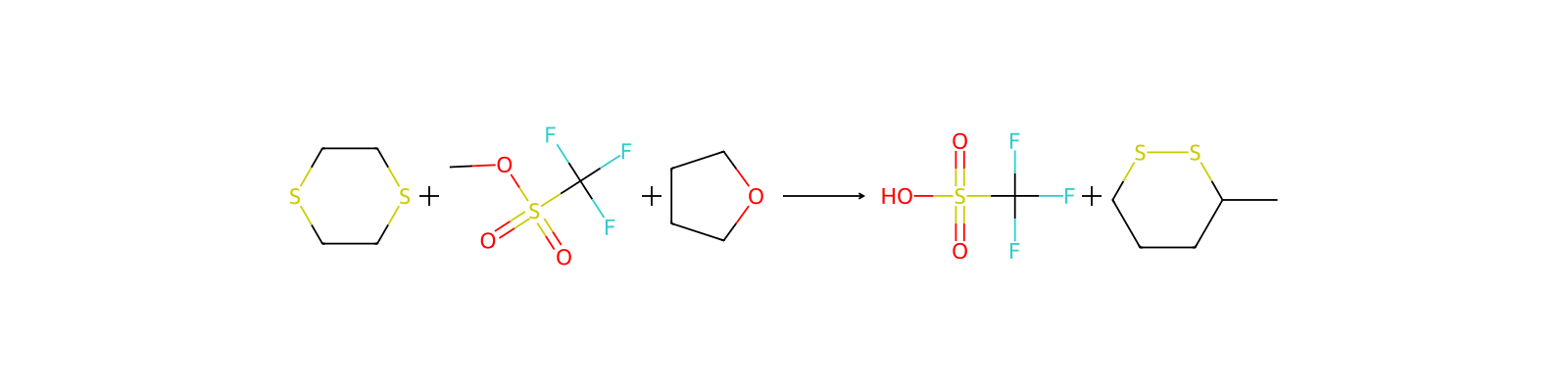
Uses1,4-Dithiane has been studied to be used as a way for more efficient rechargeable iron-air and nickel-iron batteries through small addition of organo-sulur compounds to metal electrodes.
Upstream & downstream products
Upstream raw materials
Downstream products
Suppliers79 total
南京凯美西化工有限公司02558748998 18951874644 · [email protected]
陕西缔都新材料有限公司81124267 17392282731 · [email protected]
Hebei baicao biology science and technology co., ltd+86-19131911055 17824879454 · [email protected]
上海麦克林生化科技股份有限公司021-50706066 15221275939 · [email protected]
河南赢创生物科技有限公司16650615803 · [email protected]
杭州奥得科技有限公司0571-88772972-0 15057128248 · [email protected]
武汉欣扬瑞和化学科技有限公司153-07155313 15307155313 · [email protected]
上海毕得医药科技股份有限公司400-1647117 13681763483 · [email protected]
Baoji Guokang Healthchem co.,ltd+8615604608665 15604608665 · [email protected]
Dayang Chem (Hangzhou) Co.,Ltd.+86-0571-88938639 17705817739 · [email protected]
广东百科试剂有限公司13532366769 13686183698 · [email protected]
Syntechem Co.,Ltd[email protected]
北京东华力拓科技发展有限公司010-88425576 · [email protected]
安耐吉化学&3A(安徽泽升科技股份有限公司)400-0056266 · [email protected]
JINING XINHE CHEMICAL CO., LTD+8615318402391 · [email protected]
上海相辉医药科技有限公司13761987713; 13761987713 · [email protected]
上海稳同科技有限公司02151600108 13062666369 · [email protected]
山东西亚化学有限公司13355009207 13355009207 · [email protected]
天津希恩思生化科技有限公司400 638 7771 · [email protected]
ZHEJIANG JIUZHOU CHEM CO., LTD+86-0576225566889 +86-13454675544 · [email protected];[email protected];[email protected]
上海遐瑞医药科技有限公司+86 21 61551611
PT CHEM GROUP LIMITED+86-85511178; +86-85511178 · [email protected]
上海毕得医药科技股份有限公司400-164-7117 18317119277 · [email protected]
南京大唐医药科技有限公司025-84341491 13951930983 · [email protected]
上海石洋化工有限公司021-56795766 · [email protected]
重庆星灿医药科技有限公司13594048950 19923294409 · [email protected]
上海鑫圭生物科技有限公司15121041756 · [email protected]
Sigma-Aldrich西格玛奥德里奇(上海)贸易有限公司021-61415566 800-8193336 · [email protected]
南兴化工(江苏)有限公司0512-66387035 18662433356 · [email protected]
常州安奈凯医药科技有限公司+86-0519-8359-8696 · [email protected]
武汉峰耀同辉化学制品有限公司027-87466205 15377579727 · [email protected]
HANGZHOU LEAP CHEM CO., LTD.+86-571-87711850 +86-15355479329 · [email protected]
苏州星北医药科技有限公司0512-0512-68437753 13861119411 · [email protected]
艾吉析科技(上海)有限公司17721401538;17717235263 17721401538 · [email protected]
上海阿拉丁生化科技股份有限公司6206333 13167063860 · [email protected]
陕西缔都医药化工有限公司+86-29-81139210 +86-17392587031 · [email protected]
南京艾比克斯生化科技有限公司025-87193546 18652950785 · [email protected]
上海源叶生物科技有限公司13636370518 · [email protected]
上海颖心实验室设备有限公司021-021-59178156 15300768757 · [email protected]
成都康巴斯生物科技有限公司18582381569 · [email protected]
Shaanxi Dideu New Materials Co. Ltd18192503167 · [email protected]
Shanghai Acmec Biochemical Technology Co., Ltd.+86-18621343501 · [email protected]
盼得(上海)国际贸易有限公司80159919 18662931292 · [email protected]
Xuzhou B&C Chemical Technology Co., Ltd+86-400-0516-021 +86-15190678838 · [email protected]
河南威梯希化工科技有限公司0371-53732842 13383863444 · [email protected]
杭州洁汉化工有限公司+86-571-86217390; +8618058761490 · [email protected]
Shanghai Daken Advanced Materials Co.,Ltd+86-2158073036 · [email protected]
江苏艾康生物医药研发有限公司025-58859352 15955137747 · [email protected]
武汉峰耀同辉化学制品有限公司027-87466105 15377573527 · [email protected]
上海皓鸿生物医药科技有限公司400-8210725 400821072 · [email protected]
Additional notes
DefinitionChEBI: A dithiane that is cyclohexane in which the -CH2- units at positions 1 and 2 have been replaced by sulfur atoms.
Related reactions
1 records
Compound notes
Loading…