
Basic information
- CAS
524-38-9- Standard SMILES
O=C1c2ccccc2C(=O)N1O- InChIKey
CFMZSMGAMPBRBE-UHFFFAOYSA-N- Molecular formula
- C8H5NO3
- Average molar mass
- 163.13 g/mol
- Monoisotopic mass
- 163.02694302
Overview
causes contact dermititis
Names & identifiers
- Preferred name
- N-Hydroxyphthalimide
- IUPAC
- 2-hydroxyisoindole-1,3-dione
- English name
- N-Hydroxyphthalimide
- Molecular formula
- C8H5NO3
- Molecular weight
- 163.13
Names & synonyms
N-HYDROXYPHTHALIMIDE524-38-92-Hydroxyphthalimide1H-Isoindole-1,3(2H)-dione, 2-hydroxy-Phthalimide, N-hydroxy-BXI99M81X0NSC-770F 802DTXSID7060170RefChem:830142DTXCID1041188208-358-1
Show more names
nhpihydroxyphthalimideHOPHTN-Hydrophthalimide
2-hydroxyisoindoline-1,3-dione2-Hydroxy-1H-isoindole-1,3(2H)-dione2-hydroxyisoindole-1,3-dioneMFCD000058912-hydroxy-2,3-dihydro-1H-isoindole-1,3-dione2-oxidanylisoindole-1,3-dioneCHEMBL2760572-hydroxy-isoindole-1,3-dione
Database identifiers
- CAS
524-38-9- PubChem CID
- 10665
- DTXSID
DTXSID7060170- ChEMBL
CHEMBL276057- UNII
- BXI99M81X0
- EC Number
- 208-358-1
- Nikkaji
- J26.847J
Properties
Computed structural properties
- XLogP
- 0.8
- Topological polar surface area
- 57.6 Ų
- Hydrogen bond donors
- 1
- Hydrogen bond acceptors
- 3
- Rotatable bonds
- 0
- Heavy atoms
- 12
- Formal charge
- 0
- Complexity
- 214
Experimental & physicochemical properties
Chemical ClassesNitrogen Compounds -> Other Nitrogen Rings
SpringerMaterials PropertiesNuclear quadrupole resonance spectroscopy
Physical DescriptionYellowish or colorless solid; [Merck Index] White or off-white crystalline powder; [Alfa Aesar MSDS]
Ionization Efficiency
Negative
-0.43
10.5
Agilent XCT
Electrospray ionization
ammonia (10nM)
Physicochemical properties
- Melting point
- 233 °C · 233 °C (dec.) (lit.)
- Boiling point
- 290.19 °C · 290.19°C (rough estimate)
- Density
- 1.64 g/cm3 · 1.64 g/cm3
- vapor pressure
- 0 Pa · 0Pa at 25℃
- refractive index
- 1.551 · 1.5510 (estimate)
- storage temp.
- Keep in dark place,Sealed in dry,Room Temperature
- solubility
- DMSO (Slightly), Methanol (Slightly)
- form
- Powder
- pka
- 6.1 · 6.10±0.20(Predicted)
- color
- Yellow
- Water Solubility
- Slightly soluble in water.
- Merck
- 14 · 14,4838
- BRN
- 131208 · 131208
- Major Application
- peptide synthesis
- InChI
- 1S/C8H5NO3/c10-7-5-3-1-2-4-6(5)8(11)9(7)12/h1-4,12H
- InChIKey
- CFMZSMGAMPBRBE-UHFFFAOYSA-N
- SMILES
- ON1C(=O)c2ccccc2C1=O
- LogP
- 0.14 · 0.14
- CAS DataBase Reference
- 524 · 524-38-9(CAS DataBase Reference)
- FDA UNII
- 99 M81X0 · BXI99M81X0
- EPA Substance Registry System
- 1 H-Isoindole-1,3 · 1H-Isoindole-1,3(2H)-dione, 2-hydroxy- (524-38-9)
- UNSPSC Code
- 12352005 · 12352005
- NACRES
- 22 · NA.22
- Symbol(GHS)
- 7 · GHS07
- Signal word
- Warning
- Hazard statements
- 335 · H335-H315-H319
- Precautionary statements
- 264 · P264-P280-P302+P352+P332+P313+P362+P364-P305+P351+P338+P337+P313-P261-P280a-P304+P340-P305+P351+P338-P405-P501a
- PPE
- 95 · dust mask type N95 (US), Eyeshields, Gloves
- Hazard Codes
- Xi
- Risk Statements
- 36 · 36/37/38
- Safety Statements
- 26 · 26-36-37/39
- WGK Germany
- 3 · 3
- RTECS
- 5200000 · TI5200000
- TSCA
- TSCA listed
- HazardClass
- IRRITANT
- HS Code
- 29251995 · 29251995
- Storage Class
- 11 · 11 - Combustible Solids
- REACH Registrations
- Active
Safety & regulation
GHS classification
GHS Classification
Warning
H315 (100%): Causes skin irritation [Warning Skin corrosion/irritation]
P261, P264, P264+P265, P271, P280, P302+P352, P304+P340, P305+P351+P338, P319, P321, P332+P317, P337+P317, P362+P364, P403+P233, P405, and P501 (click each P-code to see the statement)
Aggregated GHS information provided per 152 reports by companies from 6 notifications to the ECHA C&L Inventory. Each notification may be associated with multiple companies.
Hazard information
Regulatory Information
Chemical: 1H-Isoindole-1,3(2H)-dione, 2-hydroxy-
Status: Cease Manufacture Update: 24-03-2017 https://echa.europa.eu/registration-dossier/-/registered-dossier/19261
1H-Isoindole-1,3(2H)-dione, 2-hydroxy-: Does not have an individual approval but may be used under an appropriate group standard
Hazards SummaryIntravenous LD50 (mouse) = 178 mg/kg; [RTECS] Causes contact dermatitis. [ChemIDplus] A skin and strong eye irritant; [Alfa Aesar MSDS] See N-Aminophthalimide.
Hazard Classes and CategoriesSkin Irrit. 2 (100%)
Toxicology
Adverse EffectsSkin Sensitizer - An agent that can induce an allergic reaction in the skin.
Safety data
- PPE
- dust mask type N95 (US), Eyeshields, Gloves
- wgk
- 3
- tsca
- TSCA listed
- rtecs
- TI5200000
- hs_code
- 29251995
- risk_code
- 36/37/38
- Signal word
- Warning
- Symbol(GHS)
- GHS07
- hazard_code
- Xi
- safety_code
- 26-36-37/39
- hazard_class
- IRRITANT
- Storage Class
- 11 - Combustible Solids
- Hazard statements
- H335-H315-H319
- REACH Registrations
- Active
- Precautionary statements
- P264-P280-P302+P352+P332+P313+P362+P364-P305+P351+P338+P337+P313-P261-P280a-P304+P340-P305+P351+P338-P405-P501a
Chemistry & industry
Uses & manufacturing
UsesUsed as a catalyst for oxidation reactions; [Merck Index]
General Manufacturing Information1H-Isoindole-1,3(2H)-dione, 2-hydroxy-: ACTIVE
Applications
UsesCatalyst for oxidation reactions.
UsesAerobic oxidation of various alcohols has been accomplished by using a new catalytic system, N-hydroxyphthalimide (NHPI) combined with Co (acac). A practical catalytic method to convert alkylbenzenes into the corresponding carboxylic acids under atmospheric dioxygen at ambient temperature using a combined catalytic system consisting of N-hydroxyphthalimide (NHPI) and Co (OAc) 2 was developed. Novel catalysis by N-hydroxyphthalimide in the oxidation of organic substrates by molecular oxygen was described. Free radical functionalization of organic compounds catalyzed by N-hydroxyphthalimide. Purely organic and catalytic systems of anthraquinones and N-hydroxyphthalimide efficiently promote oxygenation of hydrocarbons with dioxygen under mild conditions. Hydroxylation of polycyclic alkanes with molecular oxygen catalyzed by N-hydroxyphthalimide (NHPI) combined with was transition metal salts.
UsesN-Hydroxyphthalimide,additives in to DCC method of peptide synthesis used to improve yield of optically pure product.
Upstream & downstream products
Upstream raw materials
Downstream products
Suppliers100 total
国药集团化学试剂有限公司86-21-63210123 · [email protected]
梯希爱(上海)化成工业发展有限公司021-67121386 · [email protected]
衢州润东化工有限公司0570-8789886 18892685668 · [email protected]
湖北永阔科技有限公司027-59223108 15972152991 · [email protected]
上海阿拉丁生化科技股份有限公司400-6206333 13167063860 · [email protected]
江苏联润化工有限公司0517-85322222 17625179812 · [email protected]
爱斯特(成都)生物制药股份有限公司+86-28-85122536 85324413 · [email protected]
韶远科技(上海)有限公司021-50795510 4000665055 · [email protected]
科瑞迪化学400-821-5857 021-64326257 · [email protected]
上海将来实业股份有限公司400-0066400 13621662912 · [email protected]
Syntechem Co.,Ltd[email protected]
上海迈瑞尔生化科技有限公司4006356688 18621169109 · [email protected]
武汉易泰科技有限公司上海分公司18930552037 · [email protected]
天津中信凯泰化工有限公司022-66880623 · [email protected]
阿法埃莎(中国)化学有限公司400-6106006 · [email protected]
上海德默医药科技有限公司400-021-7337 2355568890 · [email protected]
安耐吉化学&3A(安徽泽升科技股份有限公司)400-0056266 · [email protected]
吴江市稣科医药发展有限公司+86-512-6320-2019
上海瀚鸿科技股份有限公司021-54306202 13764082696 · [email protected]
上海相辉医药科技有限公司13761987713 · [email protected]
上海景颜化工科技有限公司13817811078 · [email protected]
嘉兴市艾森化工有限公司0573-85285100 18627885956 · [email protected]
Pure Chemistry Scientific Inc.001-857-928-2050 or 1-888-588-9418 · [email protected]
合肥天健化工有限公司551-65418679 15856988503;15837135945 · [email protected]
孝感深远化工有限公司15527621225; 15527621225 · [email protected]
山东西亚化学有限公司13355009207 13355009207 · [email protected]
玛雅试剂+86 (573) 82222445 (0)18006601000 452520369 · [email protected]
四川库利南科技有限公司400-1166-196 18981987031 · [email protected]
天津希恩思生化科技有限公司400 638 7771 · [email protected]
湖南汇百侍生物科技有限公司0731-85526065 13308475853 · [email protected]
河南多贝化工有限公司0370-2785118 17550508557 · [email protected]
北京泰亚杰科技有限公司021-33690831-8001 13552411790;18616022633 · [email protected]
艾科试剂4008-755-333 18080918076 · [email protected]
上海思域化工科技有限公司86-21-34053660 · [email protected]
赛默飞世尔科技(中国)有限公司800-810-5118 · [email protected]
Wuhan NCE Biomedical Co.,Ltd.4000-027-021 |24 +86-13986109188 | +86-15623472865 | +81-08033611988
南京诺利斯医药科技有限公司13901585132 · [email protected]
江苏艾康生物医药研发有限公司025-66113011 13913916777 · [email protected]
上海健超生物科技有限公司150-2103-5486 18017383231 · [email protected]
TCI AMERICA800-4238616 · [email protected]
TOKYO CHEMICAL INDUSTRY CO., LTD.03-36680489 · [email protected]
TCI Europe320-37350700 · [email protected]
上海贤鼎生物科技有限公司4009209199 · [email protected]
深圳康特腾科技有限公司86-0755-86635001 · [email protected]
Shanghai Witofly Chemical Co.,Ltd[email protected]
越林试剂021-62960152 · [email protected]
上海皋翔化工有限公司021-57816257 18930243658 · [email protected]
北京环宇世纪化学科技有限公司hysj_bj.com
上海将来实业股份有限公司400-0066400 13621662912 · [email protected]
上海将来实业股份有限公司021-61552785 · [email protected]
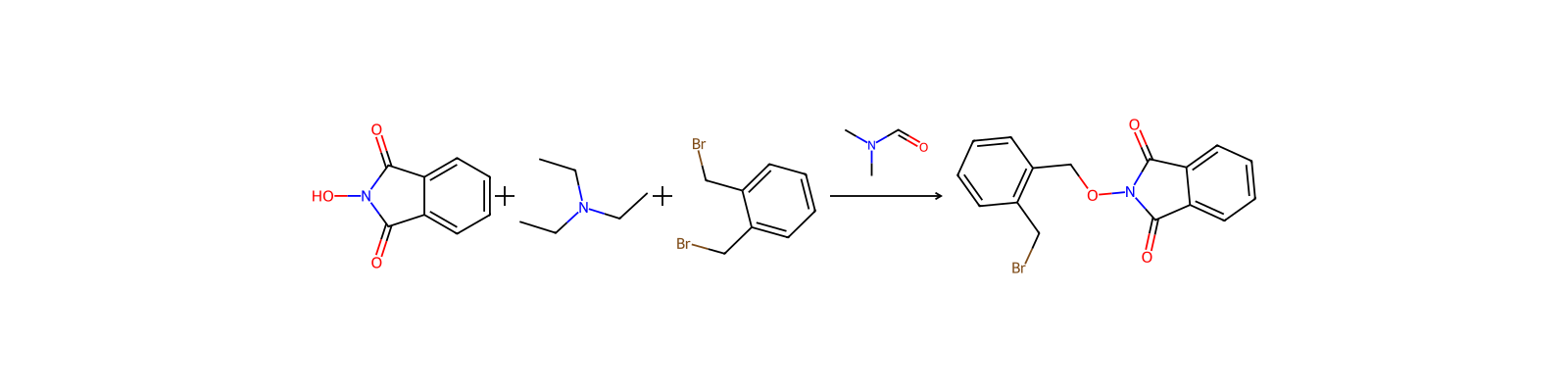
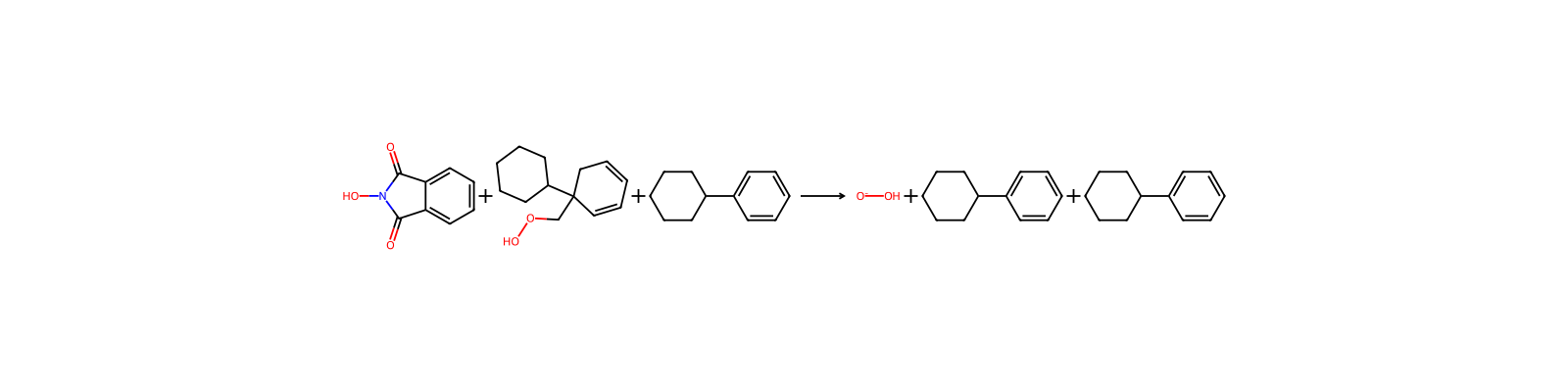
Related reactions
3,754 records




Compound notes
Loading…