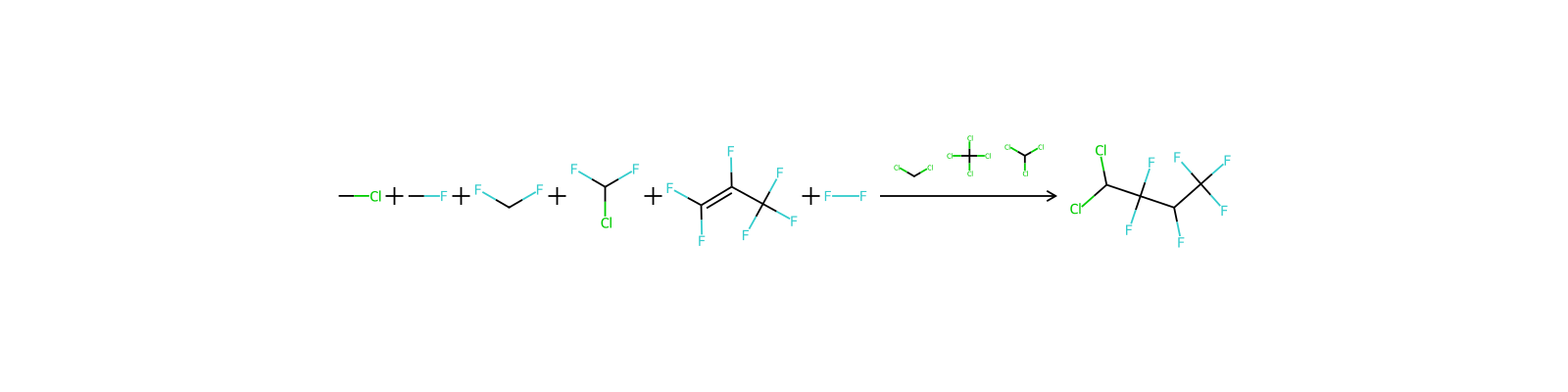

Basic information
- Standard SMILES
CF- InChIKey
NBVXSUQYWXRMNV-UHFFFAOYSA-N- Molecular formula
- CH3F
- Average molar mass
- 34.033 g/mol
- Monoisotopic mass
- 34.02187826
Names & identifiers
- Preferred name
- Fluoromethane
- IUPAC
- fluoromethane
- English name
- Methyl fluoride
- Molecular formula
- CH3F
- Molecular weight
- 34.03
Names & synonyms
FLUOROMETHANEMethyl fluoride593-53-3Freon 41HFC-41UN245454A9X6F0CMHFC 41DTXSID6060474CHEBI:28826UN-2454RefChem:599427
Show more names
R41F41R 41FC-41HFC41A gasFron-41freon41
DTXCID4042593209-796-6Methane, fluoro-CH3FFluormethanMethylfluoridMonofluormethanMFCD00039282
Database identifiers
- CAS
13453-52-6、3889-75-6、593-53-3- PubChem CID
- 11638
- DTXSID
DTXSID6060474- ChEMBL
CHEMBL116838- ChEBI
CHEBI:28826- UNII
- 54A9X6F0CM
- EC Number
- 209-796-6
- Nikkaji
- J1.245.458I、J2.696D、J298.853D
Properties
Computed structural properties
- XLogP
- 0.6
- Topological polar surface area
- 0 Ų
- Hydrogen bond donors
- 0
- Hydrogen bond acceptors
- 1
- Rotatable bonds
- 0
- Heavy atoms
- 2
- Formal charge
- 0
- Complexity
- 2
Experimental & physicochemical properties
Density0.557 @25 °C
Boiling Point-78.4 °C @760 [mm Hg]
Melting Point-143.3 °C
Vapor Pressure750 [mm Hg] @-78.599999999999994 °C
Physical Description
Methyl fluoride (or fluoromethane) is a colorless flammable gas which is heavier than air. It has an agreeable ether-like odor. It is narcotic in high concentrations. It burns with evolution of hydrogen fluoride. The flame is colorless, similar to alcohol. Under prolonged exposure to fire or intense heat the containers may rupture violently and rocket.
CBI
Gas with a pleasant ether-like odor; [Merck Index] Colorless gas; [Hawley] Colorless gas with a sweet odor; [MSDSonline]
Kovats Retention Index
217
173
Physicochemical properties
- Melting point
- -115 °C · -115°C
- Boiling point
- -79 °C · -79°C
- Density
- 0 · 0,877 g/cm3
- vapor pressure
- 1965 · 1965-5874kPa at 0-15℃
- refractive index
- 1.174 · 1.1740
- Water Solubility
- 1.787 g/L · 1.787g/L(29.9 ºC)
- Specific Heat Capacity
- 1.1 J/ · Cp(gas): 1.1 J/(g·K), at 25℃
- Henry's Law Constant
- 6.1 · 6.1×10-4 mol/(m3Pa) at 25℃, Burkholder et al. (2019)
- Stability
- Stable. Extremely flammable. Incompatible with strong oxidizing agents.
- LogP
- 0.51 at · 0.51 at 20℃ and pH7
- CAS DataBase Reference
- 593 · 593-53-3(CAS DataBase Reference)
- FDA UNII
- 54 A9X6F0CM · 54A9X6F0CM
- EPA Substance Registry System
- -41 · HFC-41 (593-53-3)
- Symbol(GHS)
- 2 · GHS02,GHS04
- Signal word
- Danger
- Hazard statements
- 220 · H220-H280
- Precautionary statements
- 210 · P210-P377-P381-P403
- Hazard Codes
- F,F+
- Risk Statements
- 12 · 12
- Safety Statements
- 16 · 16-33
- RIDADR
- 2454 · UN 2454 (METHYL FLUORIDE (REFRIGERANT GAS R 41))
- Hazard Note
- Flammable
- TSCA
- TSCA listed
- HazardClass
- 2.1 · 2.1
- HS Code
- 2903430010 · 2903430010
- REACH Registrations
- Active
Safety & regulation
GHS classification
GHS Classification
Danger
H220 (99.2%): Extremely flammable gas [Danger Flammable gases];H280 (99.2%): Contains gas under pressure; may explode if heated [Warning Gases under pressure]
P203, P210, P222, P280, P377, P381, P403, and P410+P403 (click each P-code to see the statement)
Aggregated GHS information provided per 129 reports by companies from 5 notifications to the ECHA C&L Inventory. Each notification may be associated with multiple companies.;Information may vary between notifications depending on impurities, additives, and other factors. The percentage value in parenthesis indicates the notified classification ratio from companies that provide hazard codes. Only hazard codes with percentage values above 10% are shown. For more detailed information, please visit ECHA C&L website.
Hazard information
Regulatory Information
Methane, fluoro- is listed on the EPA's Chemical Data Reporting (CDR) system. Manufacturers and importers of Methane, fluoro- are required to report information about their production and use of this chemical to the EPA under the Toxic Substances Control Act (TSCA). (40 eCFR Part 711)
Status: Active Update: 05-01-2022 https://echa.europa.eu/registration-dossier/-/registered-dossier/21114
Fluoromethane: HSNO Approval: HSR001007 Approved with controls
The New Jersey Worker and Community Right to Know Act requires public and private employers to provide information about hazardous substances at their workplaces. (N.J.S.A. 34:5A-1 et. seq.)
DOT LabelFlammable Gas
Fire Hazards
Excerpt from ERG Guide 115 [Gases - Flammable (Including Refrigerated Liquids)]:;EXTREMELY FLAMMABLE. Will be easily ignited by heat, sparks or flames. Will form explosive mixtures with air. Vapors from liquefied gas are initially heavier than air and spread along ground. CAUTION: Hydrogen (UN1049), Deuterium (UN1957), Hydrogen, refrigerated liquid (UN1966), Methane (UN1971) and Hydrogen and Methane mixture, compressed (UN2034) are lighter than air and will rise. Hydrogen and Deuterium fires are difficult to detect since they burn with an invisible flame. Use an alternate method of detection (thermal camera, broom handle, etc.) Vapors may travel to source of ignition and flash back. Cylinders exposed to fire may vent and release flammable gas through pressure relief devices. Containers may explode when heated. Ruptured cylinders may rocket. CAUTION: When LNG - Liquefied natural gas (UN1972) is released on or near water, product may vaporize explosively. (ERG, 2024)
· EXTREMELY FLAMMABLE.;· Will be easily ignited by heat, sparks or flames.;· Will form explosive mixtures with air.;· Vapors from liquefied gas are initially heavier than air and spread along ground.;CAUTION: Hydrogen (UN1049), Deuterium (UN1957), Hydrogen, refrigerated liquid (UN1966), Methane (UN1971) and Hydrogen and Methane mixture, compressed (UN2034) are lighter than air and will rise. Hydrogen and Deuterium fires are difficult to detect since they burn with an invisible flame. Use an alternate method of detection (thermal camera, broom handle, etc.);· Vapors may travel to source of ignition and flash back.;· Cylinders exposed to fire may vent and release flammable gas through pressure relief devices.;· Containers may explode when heated.;· Ruptured cylinders may rocket.;CAUTION: When LNG - Liquefied natural gas (UN1972) is released on or near water, product may vaporize explosively.
· EXTREMELY FLAMMABLE.;· Will be easily ignited by heat, sparks or flames.;· Will form explosive mixtures with air.;· Vapors from liquefied gas are initially heavier than air and spread along ground.;CAUTION: Hydrogen (UN1049), Deuterium (UN1957), Hydrogen, refrigerated liquid (UN1966), Methane (UN1971) and Hydrogen and Methane mixture, compressed (UN2034) are lighter than air and will rise. Hydrogen and Deuterium fires are difficult to detect since they burn with an invisible flame. Use an alternate method of detection (thermal camera, broom handle, etc.);· Vapors may travel to source of ignition and flash back.;· Cylinders exposed to fire may vent and release flammable gas through pressure relief devices.;· Containers may explode when heated.;· Ruptured cylinders may rocket.;CAUTION: When LNG - Liquefied natural gas (UN1972) is released on or near water, product may vaporize explosively.
Health Hazards
Excerpt from ERG Guide 115 [Gases - Flammable (Including Refrigerated Liquids)]:;Vapors may cause dizziness or asphyxiation without warning, especially when in closed or confined areas. Some may be irritating if inhaled at high concentrations. Contact with gas, liquefied gas or cryogenic liquids may cause burns, severe injury and/or frostbite. Fire may produce irritating and/or toxic gases. (ERG, 2024)
· Vapors may cause dizziness or asphyxiation without warning, especially when in closed or confined areas.;· Some may be irritating if inhaled at high concentrations.;· Contact with gas, liquefied gas or cryogenic liquids may cause burns, severe injury and/or frostbite.;· Fire may produce irritating and/or toxic gases.
· Vapors may cause dizziness or asphyxiation without warning, especially when in closed or confined areas.;· Some may be irritating if inhaled at high concentrations.;· Contact with gas, liquefied gas or cryogenic liquids may cause burns, severe injury and/or frostbite.;· Fire may produce irritating and/or toxic gases.
Hazards Summary
High concentrations have narcotic effects; [Hawley] Extremely flammable; Can form explosive mixtures with air; High concentrations have narcotic effects; In confined space spill, may displace air and act as simple asphyxiant; Evaporating liquid can cause frostbite; [CAMEO] May cause flash fire; Inhalation of high concentrations can cause CNS depression; Evaporating liquid can cause frostbite; [MSDSonline]
DOT ID and Guide
2454 115
2454 115
Reactive GroupFluorinated Organic Compounds
Reactivity AlertsHighly Flammable
Reactivity Profile
Halogenated aliphatic compounds, such as METHYL FLUORIDE, are moderately or very reactive. Halogenated organics generally become less reactive as more of their hydrogen atoms are replaced with halogen atoms. Low molecular weight haloalkanes are highly flammable and can react with some metals to form dangerous products. Materials in this group are incompatible with strong oxidizing and reducing agents. Also, they are incompatible with many amines, nitrides, azo/diazo compounds, alkali metals, and epoxides. The prolonged mixing of halogenated solvents with metallic or other azides may cause the slow formation of explosive azides, for example methylene chloride and sodium azide, [Chem. Eng. News, 1986, 64(51)].
DOT Hazard Classification
Methyl fluoride, or Refrigerant gas R 41
UN2454
Div 2.1 Flammable gas (49 eCFR § 173.115)
Air and Water ReactionsHighly flammable. It burns in air with evolution of hydrogen fluoride.
Hazard Classes and Categories
Flam. Gas 1 (99.2%);Press. Gas (Liq.) (99.2%)
Flammable gases (including chemically unstable gases) - Category 1;Gases under pressure - High pressure liquefied gas
Flammable agents - 3rd degree
Safety & protection
Fire Fighting
Excerpt from ERG Guide 115 [Gases - Flammable (Including Refrigerated Liquids)]:;DO NOT EXTINGUISH A LEAKING GAS FIRE UNLESS LEAK CAN BE STOPPED. CAUTION: Hydrogen (UN1049), Deuterium (UN1957), Hydrogen, refrigerated liquid (UN1966) and Hydrogen and Methane mixture, compressed (UN2034) will burn with an invisible flame. Use an alternate method of detection (thermal camera, broom handle, etc.).;SMALL FIRE: Dry chemical or CO2.;LARGE FIRE: Water spray or fog. If it can be done safely, move undamaged containers away from the area around the fire. CAUTION: For LNG - Liquefied natural gas (UN1972) pool fires, DO NOT USE water. Use dry chemical or high-expansion foam.;FIRE INVOLVING TANKS: Fight fire from maximum distance or use unmanned master stream devices or monitor nozzles. Cool containers with flooding quantities of water until well after fire is out. Do not direct water at source of leak or safety devices; icing may occur. Withdraw immediately in case of rising sound from venting safety devices or discoloration of tank. ALWAYS stay away from tanks in direct contact with flames. For massive fire, use unmanned master stream devices or monitor nozzles; if this is impossible, withdraw from area and let fire burn. (ERG, 2024)
Accidental Release Measures
· CALL 911. Then call emergency response telephone number on shipping paper. If shipping paper not available or no answer, refer to appropriate telephone number listed on the inside back cover.;· Keep unauthorized personnel away.;· Stay upwind, uphill and/or upstream.;· Many gases are heavier than air and will spread along the ground and collect in low or confined areas (sewers, basements, tanks, etc.).
· ELIMINATE all ignition sources (no smoking, flares, sparks or flames) from immediate area.;· All equipment used when handling the product must be grounded.;· Do not touch or walk through spilled material.;· Stop leak if you can do it without risk.;· If possible, turn leaking containers so that gas escapes rather than liquid.;· Use water spray to reduce vapors or divert vapor cloud drift. Avoid allowing water runoff to contact spilled material.;· Do not direct water at spill or source of leak.;CAUTION: For LNG - Liquefied natural gas (UN1972), DO NOT apply water, regular or alcohol-resistant foam directly on spill. Use a high-expansion foam if available to reduce vapors.;· Prevent spreading of vapors through sewers, ventilation systems and confined areas.;· Isolate area until gas has dispersed.;CAUTION: When in contact with refrigerated/cryogenic liquids, many materials become brittle and are likely to break without warning.
First Aid
Excerpt from ERG Guide 115 [Gases - Flammable (Including Refrigerated Liquids)]:;Refer to the "General First Aid" section. Specific First Aid: Clothing frozen to the skin should be thawed before being removed. In case of contact with liquefied gas, only medical personnel should attempt thawing frosted parts. In case of burns, immediately cool affected skin for as long as possible with cold water. Do not remove clothing if adhering to skin. (ERG, 2024)
General First Aid:;· Call 911 or emergency medical service.;· Ensure that medical personnel are aware of the material(s) involved, take precautions to protect themselves and avoid contamination.;· Move victim to fresh air if it can be done safely.;· Administer oxygen if breathing is difficult.;· If victim is not breathing:;-- DO NOT perform mouth-to-mouth resuscitation; the victim may have ingested or inhaled the substance.;-- If equipped and pulse detected, wash face and mouth, then give artificial respiration using a proper respiratory medical device (bag-valve mask, pocket mask equipped with a one-way valve or other device).;-- If no pulse detected or no respiratory medical device available, provide continuous compressions. Conduct a pulse check every two minutes or monitor for any signs of spontaneous respirations.;· Remove and isolate contaminated clothing and shoes.;· For minor skin contact, avoid spreading material on unaffected skin.;· In case of contact with substance, remove immediately by flushing skin or eyes with running water for at least 20 minutes.;· For severe burns, immediate medical attention is required.;· Effects of exposure (inhalation, ingestion, or skin contact) to substance may be delayed.;· Keep victim calm and warm.;· Keep victim under observation.;· For further assistance, contact your local Poison Control Center.;· Note: Basic Life Support (BLS) and Advanced Life Support (ALS) should be done by trained professionals.;Specific First Aid:;· Clothing frozen to the skin should be thawed before being removed.
General First Aid:;· Call 911 or emergency medical service.;· Ensure that medical personnel are aware of the material(s) involved, take precautions to protect themselves and avoid contamination.;· Move victim to fresh air if it can be done safely.;· Administer oxygen if breathing is difficult.;· If victim is not breathing:;-- DO NOT perform mouth-to-mouth resuscitation; the victim may have ingested or inhaled the substance.;-- If equipped and pulse detected, wash face and mouth, then give artificial respiration using a proper respiratory medical device (bag-valve mask, pocket mask equipped with a one-way valve or other device).;-- If no pulse detected or no respiratory medical device available, provide continuous compressions. Conduct a pulse check every two minutes or monitor for any signs of spontaneous respirations.;· Remove and isolate contaminated clothing and shoes.;· For minor skin contact, avoid spreading material on unaffected skin.;· In case of contact with substance, remove immediately by flushing skin or eyes with running water for at least 20 minutes.;· For severe burns, immediate medical attention is required.;· Effects of exposure (inhalation, ingestion, or skin contact) to substance may be delayed.;· Keep victim calm and warm.;· Keep victim under observation.;· For further assistance, contact your local Poison Control Center.;· Note: Basic Life Support (BLS) and Advanced Life Support (ALS) should be done by trained professionals.;Specific First Aid:;· Clothing frozen to the skin should be thawed before being removed.
Exposure Control and Personal Protection
· Wear positive pressure self-contained breathing apparatus (SCBA).;· Structural firefighters' protective clothing provides thermal protection but only limited chemical protection.;· Always wear thermal protective clothing when handling refrigerated/cryogenic liquids.
· Wear positive pressure self-contained breathing apparatus (SCBA).;· Structural firefighters' protective clothing provides thermal protection but only limited chemical protection.;· Always wear thermal protective clothing when handling refrigerated/cryogenic liquids.
Nonfire Spill Response
Excerpt from ERG Guide 115 [Gases - Flammable (Including Refrigerated Liquids)]:;ELIMINATE all ignition sources (no smoking, flares, sparks or flames) from immediate area. All equipment used when handling the product must be grounded. Do not touch or walk through spilled material. Stop leak if you can do it without risk. If possible, turn leaking containers so that gas escapes rather than liquid. Use water spray to reduce vapors or divert vapor cloud drift. Avoid allowing water runoff to contact spilled material. Do not direct water at spill or source of leak. CAUTION: For LNG - Liquefied natural gas (UN1972), DO NOT apply water, regular or alcohol-resistant foam directly on spill. Use a high-expansion foam if available to reduce vapors. Prevent spreading of vapors through sewers, ventilation systems and confined areas. Isolate area until gas has dispersed. CAUTION: When in contact with refrigerated/cryogenic liquids, many materials become brittle and are likely to break without warning. (ERG, 2024)
Isolation and Evacuation
Excerpt from ERG Guide 115 [Gases - Flammable (Including Refrigerated Liquids)]:;IMMEDIATE PRECAUTIONARY MEASURE: Isolate spill or leak area for at least 100 meters (330 feet) in all directions.;LARGE SPILL: Consider initial downwind evacuation for at least 800 meters (1/2 mile).;FIRE: If tank, rail tank car or highway tank is involved in a fire, ISOLATE for 1600 meters (1 mile) in all directions; also, consider initial evacuation for 1600 meters (1 mile) in all directions. In fires involving Liquefied Petroleum Gases (LPG) (UN1075), Butane (UN1011), Butylene (UN1012), Isobutylene (UN1055), Propylene (UN1077), Isobutane (UN1969), and Propane (UN1978), also refer to the "BLEVE - Safety Precautions" section. (ERG, 2024)
Immediate precautionary measure;· Isolate spill or leak area for at least 100 meters (330 feet) in all directions.;Large Spill;· Consider initial downwind evacuation for at least 800 meters (1/2 mile).;Fire;· If tank, rail tank car or highway tank is involved in a fire, ISOLATE for 1600 meters (1 mile) in all directions; also, consider initial evacuation for 1600 meters (1 mile) in all directions.;· In fires involving Liquefied Petroleum Gases (LPG) (UN1075), Butane (UN1011), Butylene (UN1012), Isobutylene (UN1055), Propylene (UN1077), Isobutane (UN1969), and Propane (UN1978), also refer to the "BLEVE - Safety Precautions" section.
Immediate precautionary measure;· Isolate spill or leak area for at least 100 meters (330 feet) in all directions.;Large Spill;· Consider initial downwind evacuation for at least 800 meters (1/2 mile).;Fire;· If tank, rail tank car or highway tank is involved in a fire, ISOLATE for 1600 meters (1 mile) in all directions; also, consider initial evacuation for 1600 meters (1 mile) in all directions.;· In fires involving Liquefied Petroleum Gases (LPG) (UN1075), Butane (UN1011), Butylene (UN1012), Isobutylene (UN1055), Propylene (UN1077), Isobutane (UN1969), and Propane (UN1978), also refer to the "BLEVE - Safety Precautions" section.
Protective Action Criteria (PAC)
13 [mg/m3]
150 [mg/m3]
900 [mg/m3]
Personal Protective Equipment (PPE)
Excerpt from ERG Guide 115 [Gases - Flammable (Including Refrigerated Liquids)]:;Wear positive pressure self-contained breathing apparatus (SCBA). Structural firefighters' protective clothing provides thermal protection but only limited chemical protection. Always wear thermal protective clothing when handling refrigerated/cryogenic liquids. (ERG, 2024)
Emergency Response Planning Guidelines
· DO NOT EXTINGUISH A LEAKING GAS FIRE UNLESS LEAK CAN BE STOPPED.;CAUTION: Hydrogen (UN1049), Deuterium (UN1957), Hydrogen, refrigerated liquid (UN1966) and Hydrogen and Methane mixture, compressed (UN2034) will burn with an invisible flame. Use an alternate method of detection (thermal camera, broom handle, etc.);Small Fire;· Dry chemical or CO2.;Large Fire;· Water spray or fog.;· If it can be done safely, move undamaged containers away from the area around the fire.;CAUTION: For LNG - Liquefied natural gas (UN1972) pool fires, DO NOT USE water. Use dry chemical or high-expansion foam.;Fire Involving Tanks;· Fight fire from maximum distance or use unmanned master stream devices or monitor nozzles.;· Cool containers with flooding quantities of water until well after fire is out.;· Do not direct water at source of leak or safety devices; icing may occur.;· Withdraw immediately in case of rising sound from venting safety devices or discoloration of tank.;· ALWAYS stay away from tanks in direct contact with flames.;· For massive fire, use unmanned master stream devices or monitor nozzles; if this is impossible, withdraw from area and let fire burn.
· DO NOT EXTINGUISH A LEAKING GAS FIRE UNLESS LEAK CAN BE STOPPED.;CAUTION: Hydrogen (UN1049), Deuterium (UN1957), Hydrogen, refrigerated liquid (UN1966) and Hydrogen and Methane mixture, compressed (UN2034) will burn with an invisible flame. Use an alternate method of detection (thermal camera, broom handle, etc.);Small Fire;· Dry chemical or CO2.;Large Fire;· Water spray or fog.;· If it can be done safely, move undamaged containers away from the area around the fire.;CAUTION: For LNG - Liquefied natural gas (UN1972) pool fires, DO NOT USE water. Use dry chemical or high-expansion foam.;Fire Involving Tanks;· Fight fire from maximum distance or use unmanned master stream devices or monitor nozzles.;· Cool containers with flooding quantities of water until well after fire is out.;· Do not direct water at source of leak or safety devices; icing may occur.;· Withdraw immediately in case of rising sound from venting safety devices or discoloration of tank.;· ALWAYS stay away from tanks in direct contact with flames.;· For massive fire, use unmanned master stream devices or monitor nozzles; if this is impossible, withdraw from area and let fire burn.
Toxicology
Adverse EffectsNeurotoxin - Acute solvent syndrome;Other Poison - Simple Asphyxiant
Regulatory information
Regulatory Information
Methane, fluoro- is listed on the EPA's Chemical Data Reporting (CDR) system. Manufacturers and importers of Methane, fluoro- are required to report information about their production and use of this chemical to the EPA under the Toxic Substances Control Act (TSCA). (40 eCFR Part 711)
Status: Active Update: 05-01-2022 https://echa.europa.eu/registration-dossier/-/registered-dossier/21114
Fluoromethane: HSNO Approval: HSR001007 Approved with controls
The New Jersey Worker and Community Right to Know Act requires public and private employers to provide information about hazardous substances at their workplaces. (N.J.S.A. 34:5A-1 et. seq.)
Safety data
- tsca
- TSCA listed
- ridadr
- UN 2454 (METHYL FLUORIDE (REFRIGERANT GAS R 41))
- hs_code
- 2903430010
- risk_code
- 12
- Signal word
- Danger
- Symbol(GHS)
- GHS02,GHS04
- hazard_code
- F,F+
- hazard_note
- Flammable
- safety_code
- 16-33
- hazard_class
- 2.1
- Hazard statements
- H220-H280
- REACH Registrations
- Active
- Precautionary statements
- P210-P377-P381-P403
Chemistry & industry
Uses & manufacturing
UsesHydrofluorocarbons are increasingly being used as substitutes for chlorofluorocarbons, e.g., refrigerants, propellants in aerosols, and blowing agents for foams; they do not deplete the ozone layer of the atmosphere. [Ullmann]
U.S. Production2023: <50,000 lb;2022: <50,000 lb;2021: <50,000 lb;2020: <50,000 lb
Consumer UsesOther
Industry UsesEtching agent
General Manufacturing Information
Computer and Electronic Product Manufacturing
Methane, fluoro-: ACTIVE
Applications
General DescriptionMETHYL FLUORIDE (or fluoromethane) is a colorless flammable gas which is heavier than air. METHYL FLUORIDE has an agreeable ether-like odor. METHYL FLUORIDE is narcotic in high concentrations. METHYL FLUORIDE burns with evolution of hydrogen fluoride. The flame is colorless, similar to alcohol. Under prolonged exposure to fire or intense heat the containers may rupture violently and rocket.
Upstream & downstream products
Upstream raw materials
Downstream products
Additional notes
DefinitionChEBI: A member of the class of fluoromethanes that is methane in which a single hydrogen is substituted by a fluorine atom.
Related reactions
2 records

Linked notes
Loading…