HomeMCPWorkbenchSkills
HomeWorkbenchNotificationsMe
llms.txt · MCP GuidePrivacy Policy · Terms of Service · Supportv1.8.3
  1. Home
  2. /Compound

Ethanesulfonyl chloride

HCID 11667
New reaction
Print
Basic informationNames & identifiersPropertiesSafety & regulationChemistry & industryRelated reactionsCompound notes
Substructure searchFind similar structures

Basic information

CAS
594-44-5
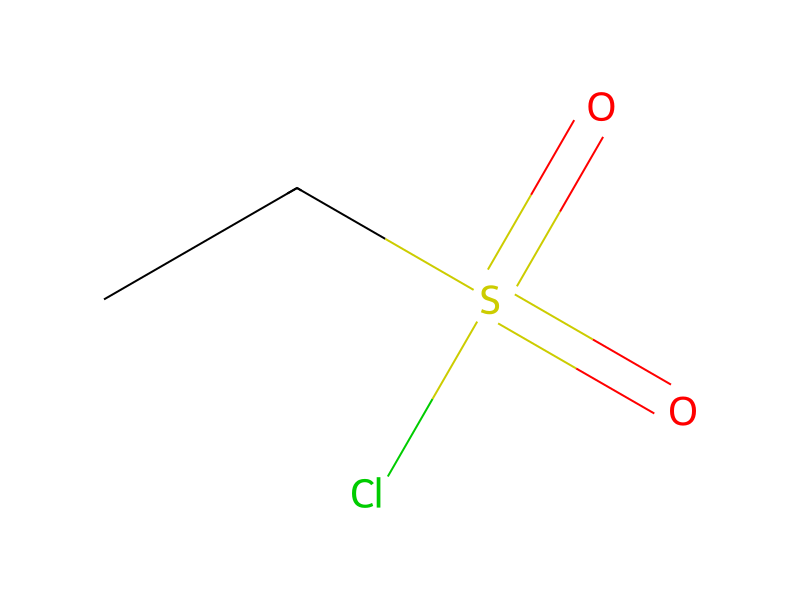
Standard SMILES
CCS(=O)(=O)Cl
InChIKey
FRYHCSODNHYDPU-UHFFFAOYSA-N
Molecular formula
C2H5ClO2S
Average molar mass
128.58 g/mol
Monoisotopic mass
127.9698783

Names & identifiers

Preferred name
Ethanesulfonyl chloride
IUPAC
ethanesulfonyl chloride
English name
Ethanesulfonyl chloride
Molecular formula
C2H5ClO2S
Molecular weight
128.58

Names & synonyms

ETHANESULFONYL CHLORIDEEthylsulfonyl chlorideEthylsulfochloride1-Ethanesulfonyl chlorideEthanesulphonyl chlorideTL 77ethylsulfuryl chlorideEthane sulfochlorideEINECS 209-842-5NSC 8649UNII-B56ZOC898ABRN 0773865
Show more names
ethanesulflonyl chloridetl771,2-Ethane-disulfonicethylsulfurylchlorideTirofiban Impurity 72Ethyl sulfone chloride
B56ZOC898AHSDB 7487NSC-86494-04-00-00034 (Beilstein Handbook Reference)DTXSID0060486EC 209-842-51-Ethanesulfonyl chloride(ChemID)ETHANESULPHONYL CHLORIDE [HSDB]

Database identifiers

CAS
594-44-5
PubChem CID
11667
DTXSID
DTXSID0060486
UNII
B56ZOC898A
EC Number
209-842-5
Nikkaji
J53.955D

Properties

Computed structural properties

XLogP
0.8
Topological polar surface area
42.5 Ų
Hydrogen bond donors
0
Hydrogen bond acceptors
2
Rotatable bonds
1
Heavy atoms
6
Formal charge
0
Complexity
108

Experimental & physicochemical properties

Chemical ClassesToxic Gases & Vapors -> Acid Halides
SpringerMaterials PropertiesBoiling point
Color/Form · 2 items

Oil

Pale yellow

Solubility · 2 items

Soluble in carbon disulfide

Slightly soluble (decomposes) in water and alcohol; very soluble in ether and dichloromethane.

Boiling Point177.5 °C
DecompositionWhen heated to decomposition it emits very toxic fumes of /hydrogen chloride and sulfur oxide/.
Vapor Pressure1.29 [mmHg]
Refractive IndexIndex of refraction: 1.4531 at 20 °C
Physical DescriptionPale yellow liquid; [HSDB] Colorless or yellow liquid; [MSDSonline]

Safety & regulation

Safety information is for reference only and does not replace the supplier’s Safety Data Sheet (SDS), applicable regulations, or professional assessment.

GHS classification

GHS Classification · 4 items

Danger

H302 (96.6%): Harmful if swallowed [Warning Acute toxicity, oral]

P260, P261, P262, P264, P270, P271, P280, P284, P301+P317, P301+P330+P331, P302+P352, P302+P361+P354, P304+P340, P305+P354+P338, P316, P317, P319, P320, P321, P330, P361+P364, P362+P364, P363, P403+P233, P405, and P501 (click each P-code to see the statement)

Aggregated GHS information provided per 58 reports by companies from 11 notifications to the ECHA C&L Inventory. Each notification may be associated with multiple companies.

Hazard information

Regulatory Information · 2 items

REACH registered substance: Ethanesulphonyl chloride (EC: 209-842-5)

Ethanesulphonyl chloride: Does not have an individual approval but may be used under an appropriate group standard

Hazards Summary · 1 item

A lachrymator; All rats exposed to 1273 ppm died within 30 to 130 minutes; 4-hr LC50 (rat) = approximately 86 ppm; Rats exposed to lethal concentrations have lacrimation, salivation, gasping, and pulmonary hemorrhage; [HSDB] Reacts violently with water; A corrosive substance that can cause injury to the skin, eyes, and respiratory tract; Inhalation may cause chemical pneumonitis; Effects in high-dose animal studies include acute pulmonary edema; [MSDSonline]

Hazard Classes and CategoriesAcute Tox. 4 (96.6%)
Skin, Eye, and Respiratory Irritations/Ethanesulfonyl chloride is a/ lachrymator ...

Safety & protection

Chemistry & industry

Uses & manufacturing

Uses · 3 items

Used to make sulfonyl-substituted imides, methide lithium salts, and pentafluoroethanesulfonyl fluoride, a fluorinated surfactant; [HSDB]

Intermediate in the syntheses of new, low-cost, non-fluorinated, sulfonyl-substituted imide and methide lithium salts.

Intermediate in the preparation of the fluorinated surfactant pentafluoroethanesulfonyl fluoride.

U.S. ProductionProduction volumes for non-confidential chemicals reported under the Inventory Update Rule. [Table#7143]
Methods of Manufacturing · 2 items

Alkanesulfonyl chlorides are manufactured from mercaptans or disulfides and chlorine using a loop reactor having an ejector, wherein mercaptan or disulfide is dispersed or dissolved into circulating aqueous solvent before the ejector and alowed to react with chlorine supplied through the aspirator of the ejector.

Mercaptans or disulfide in aqueous solvents are reacted with chlorine gas in dark to produce alkanesulfonyl chloride without chloro chain byproducts. Thus, ... ethyl mercaptan was reacted with ... chlorine gas over 4 hours in /the/ dark in ... pure water keeping the reaction temperature under 20 °C to give ethanesulfonyl chloride.

General Manufacturing InformationEthanesulfonyl chloride: ACTIVE

Applications

UsesChloroethylsulfone was used in discovery of a selective inhibitor of oncogenic B-raf kinase with potent antimelanoma activity.

Upstream & downstream products

Upstream raw materials

Sodium disulfideEthylthiocyanate

Downstream products

Related reactions

704 records
New reaction record
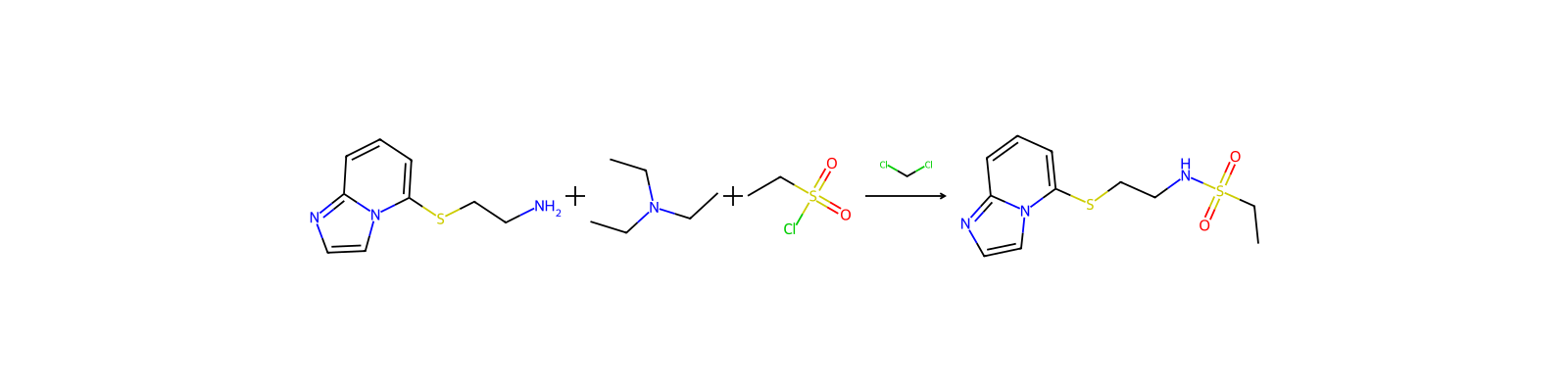
HRID 1069 reaction equation
HRID 1069As reactant
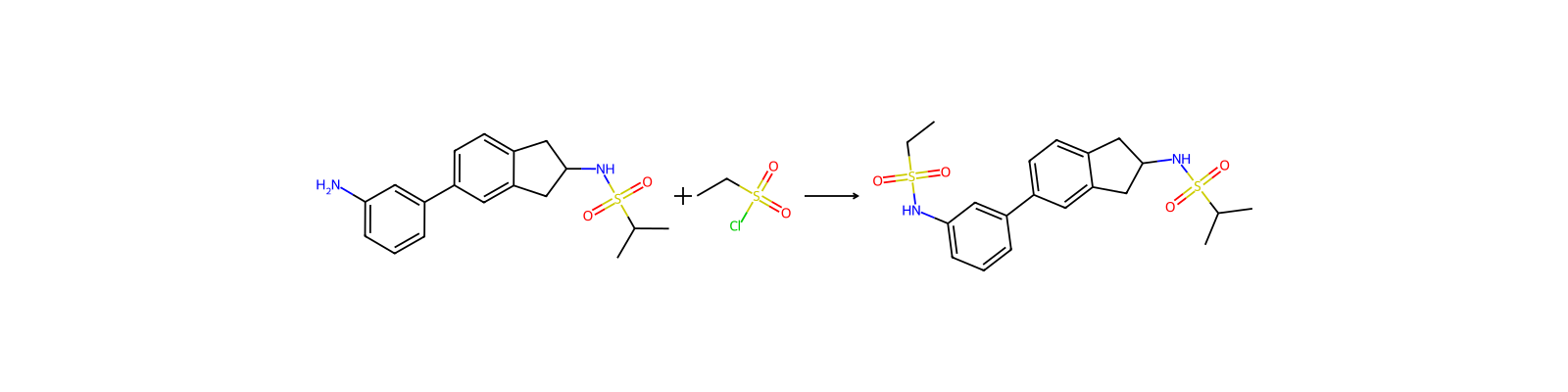
HRID 5440 reaction equation
HRID 5440As reactant
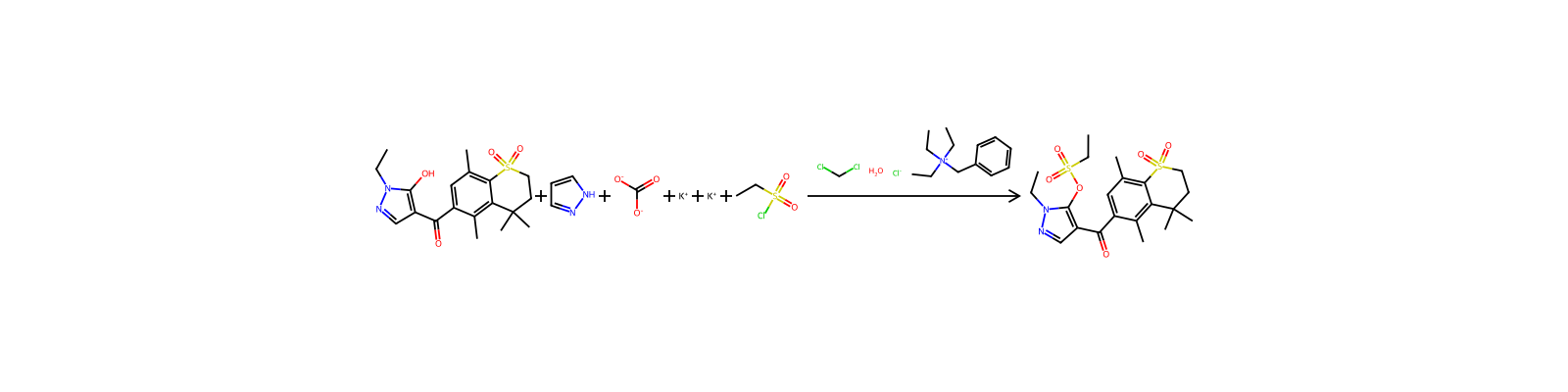
HRID 13717 reaction equation
HRID 13717As reactant
HRID 18425 reaction equation
HRID 18425As reactant
HRID 29304 reaction equation
HRID 29304As reactant
HRID 30110 reaction equation
HRID 30110As reactant
HRID 30121 reaction equation
HRID 30121As reactant
HRID 30604 reaction equation
HRID 30604As reactant
PreviousPage 1 of 88

Compound notes

On this pageBasic informationNames & identifiersPropertiesSafety & regulationChemistry & industryRelated reactionsCompound notes

Physicochemical properties

Melting point
-70 °C · -70°C
Boiling point
171 °C · 171 °C
Density
1.36 · 1.36
refractive index
1.45 · 1.45
Flash point
88 °C · 88 °C
storage temp.
2 · Inert atmosphere,2-8°C
solubility
soluble in dichloromethane,Ether
form
clear liquid
color
Colorless to Almost colorless
Water Solubility
DECOMPOSES
Sensitive
Moisture Sensitive
BRN
773865 · 773865
InChI
1S/C2H5ClO2S/c1-2-6(3,4)5/h2H2,1H3
InChIKey
FRYHCSODNHYDPU-UHFFFAOYSA-N
SMILES
CCS(Cl)(=O)=O
CAS DataBase Reference
594 · 594-44-5(CAS DataBase Reference)
EWG's Food Scores
1 · 1
FDA UNII
56 ZOC898A · B56ZOC898A
NIST Chemistry Reference
Ethanesulfonyl chloride(594-44-5)
EPA Substance Registry System
Ethanesulfonyl chloride (594-44-5)
UNSPSC Code
12352107 · 12352107
NACRES
22 · NA.22
Symbol(GHS)
5 · GHS05,GHS06
Signal word
Danger
Hazard statements
302 · H302+H312-H314-H330-H335
Precautionary statements
260 · P260-P280-P301+P312-P303+P361+P353-P304+P340+P310-P305+P351+P338
target organs
Respiratory system
PPE
Faceshields, Gloves, Goggles, type ABEK (EN14387) respirator filter
Hazard Codes
T
Risk Statements
21 · 21/22-23-34-22
Safety Statements
26 · 26-36/37/39-45
RIDADR
2927 · UN 2927 6.1/PG 2
WGK Germany
3 · 3
RTECS
8050000 · KI8050000
F
19 · 19-21
TSCA
TSCA listed
HazardClass
6.1 · 6.1
PackingGroup
II
HS Code
2904990090 · 2904990090
Storage Class
6.1 A · 6.1A - Combustible acute toxic Cat. 1 and 2very toxic hazardous materials
Hazard Classifications
2 InhalationAcute · Acute Tox. 2 InhalationAcute Tox. 4 DermalAcute Tox. 4 OralEye Dam. 1Skin Corr. 1BSTOT SE 3
Hazardous Substances Data
594 · 594-44-5(Hazardous Substances Data)
REACH Registrations
Active
Disposal Methods · 1 item

SRP: The most favorable course of action is to use an alternative chemical product with less inherent propensity for occupational exposure or environmental contamination. Recycle any unused portion of the material for its approved use or return it to the manufacturer or supplier. Ultimate disposal of the chemical must consider: the material's impact on air quality; potential migration in soil or water; effects on animal, aquatic, and plant life; and conformance with environmental and public health regulations.

Preventive Measures · 1 item

SRP: Contaminated protective clothing should be segregated in such a manner so that there is no direct personal contact by personnel who handle, dispose, or clean the clothing. Quality assurance to ascertain the completeness of the cleaning procedures should be implemented before the decontaminated protective clothing is returned for reuse by the workers. Contaminated clothing should not be taken home at end of shift, but should remain at employee's place of work for cleaning.

Toxicology

Adverse EffectsDermatotoxin - Skin burns.
Human Toxicity Excerpts/SIGNS AND SYMPTOMS/ /Ethanesulfonyl chloride is a/ lachrymator ...
Non-Human Toxicity Excerpts · 3 items

/LABORATORY ANIMALS: Acute Exposure/ A single dermal application of 2000 mg/kg to rabbits killed two of three animals. No deaths occurred following a dermal application of 200 mg/kg to rabbits.

/LABORATORY ANIMALS: Acute Exposure/ Acute (4-hr) inhalation studies indicated an LC50 of approximately 86 ppm in the rat. Clinical signs included eye irritation, lacrimation, salivation, and gasping. Decedents exhibited pulmonary hemorrhage. All rats died within 30 to 130 min during an exposure to 1273 ppm.

/LABORATORY ANIMALS: Acute Exposure/ Ethanesulfonyl chloride is corrosive to rabbit skin and eyes, and the vapor caused irritation of the eyes and respiratory tract. In rabbits, irritation of the eye 20 to 30 sec after instillation did not reduce the conjunctival necrosis, corneal opacity, or iridial changes. Corneal opacity persisted through 7 days.

Toxicity DataLCLo (rat) = 410 mg/m3/4h
Non-Human Toxicity Values · 2 items

LD50 rat oral 360 mg/kg

LC50 rat inhalation 86 ppm/4 hr

Safety data

F
19-21
PPE
Faceshields, Gloves, Goggles, type ABEK (EN14387) respirator filter
wgk
3
tsca
TSCA listed
rtecs
KI8050000
ridadr
UN 2927 6.1/PG 2
hs_code
2904990090
risk_code
21/22-23-34-22
Signal word
Danger
Symbol(GHS)
GHS05,GHS06
hazard_code
T
safety_code
26-36/37/39-45
hazard_class
6.1
Storage Class
6.1A - Combustible acute toxic Cat. 1 and 2very toxic hazardous materials
packing_group
II
target organs
Respiratory system
Hazard statements
H302+H312-H314-H330-H335
REACH Registrations
Active
Hazard Classifications
Acute Tox. 2 InhalationAcute Tox. 4 DermalAcute Tox. 4 OralEye Dam. 1Skin Corr. 1BSTOT SE 3
Precautionary statements
P260-P280-P301+P312-P303+P361+P353-P304+P340+P310-P305+P351+P338
Hazardous Substances Data
594-44-5(Hazardous Substances Data)
1-Ethylsulfonyl-piperazineMethyl ethanesulfonateEthanesulfonamideABBV-075EthylicinMethyl 4-ethanesulfonaMidobenzoate2-(1-(ethylsulfonyl)azetidin-3-ylidene)acetonitrile2-(1-(ethylsulfonyl)-3-(4-(7-((2-(trimethylsilyl)ethoxy)methyl)-7H-pyrrolo[2,3-d]pyrimidin-4-yl)-1H-pyrazol-1-yl)azetidin-3-yl)acetonitrile4-[(Ethylsulfonyl)amino]benzoic acid