2-Bromo-4-fluorobenzonitrile
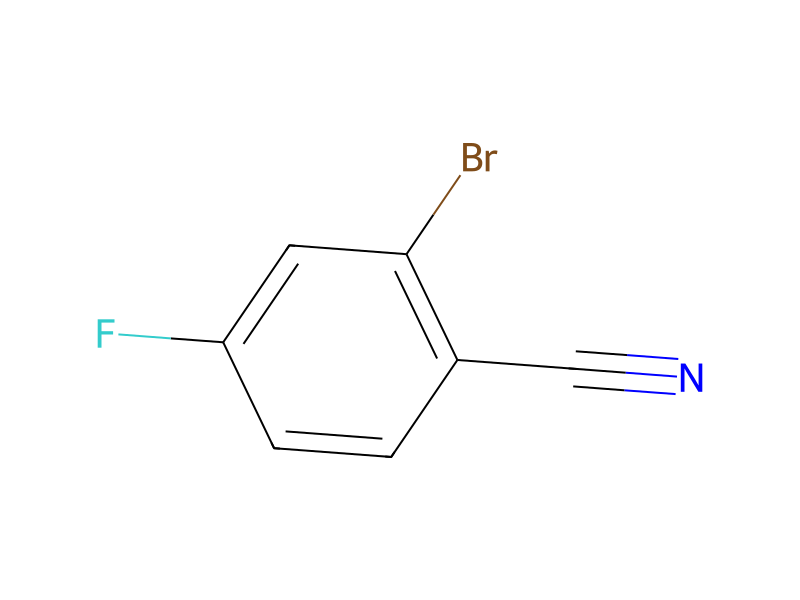
Basic information
- CAS
36282-26-5- Standard SMILES
N#Cc1ccc(F)cc1Br- InChIKey
MNNDREXLRLDWEY-UHFFFAOYSA-N- Molecular formula
- C7H3BrFN
- Average molar mass
- 200.01 g/mol
- Monoisotopic mass
- 198.94328942
Names & identifiers
- Preferred name
- 2-Bromo-4-fluorobenzonitrile
- IUPAC
- 2-bromo-4-fluorobenzonitrile
- English name
- 2-Bromo-4-fluorobenzonitrile
- Molecular formula
- C7H3BrFN
- Molecular weight
- 200.01
Names & synonyms
2-Bromo-4-fluorobenzonitrile36282-26-5EINECS 252-949-7DTXSID40189823RefChem:85727DTXCID00112314252-949-74-fluoro-2-bromobenzonitrile2-bromo-4-fluoro-benzonitrileBenzonitrile, 2-bromo-4-fluoro-MFCD006729242-bromo-4-fluorobenzenecarbonitrile
Show more names
Bromo-4-fluorobenzonitrile2-Bromo-4-fluorobenzonitrile98%2-Bromo-4-fluorobenzonitrile >2-Bromo-4-fluorobenzonitrile 98%
SCHEMBL522042-bromo-4-fluoro benzonitrile2-Bromo-4-fluorobenzonitrile, 97%SBB063649AKOS005255012AB06855AC-4028CS-W010496
Database identifiers
- CAS
36282-26-5- PubChem CID
- 118939
- DTXSID
DTXSID40189823- EC Number
- 252-949-7
- Nikkaji
- J319.622D
Properties
Computed structural properties
- XLogP
- 2.4
- Topological polar surface area
- 23.8 Ų
- Hydrogen bond donors
- 0
- Hydrogen bond acceptors
- 2
- Rotatable bonds
- 0
- Heavy atoms
- 10
- Formal charge
- 0
- Complexity
- 162
Physicochemical properties
- Melting point
- 77 · 77-78°C
- Boiling point
- 262.4 · 262.4±25.0 °C(Predicted)
- Density
- 1.69 · 1.69±0.1 g/cm3(Predicted)
- storage temp.
- Sealed in dry,Room Temperature
- solubility
- soluble in Methanol
- form
- powder to crystal
- color
- White to Gray to Brown
- BRN
- 1940597 · 1940597
- InChI
- InChI=1S/C7H3BrFN/c8-7-3-6(9)2-1-5(7)4-10/h1-3H
- InChIKey
- MNNDREXLRLDWEY-UHFFFAOYSA-N
- SMILES
- C(#N)C1=CC=C(F)C=C1Br
- CAS DataBase Reference
- 36282 · 36282-26-5(CAS DataBase Reference)
- UNSPSC Code
- 12352100 · 12352100
- NACRES
- 22 · NA.22
- Symbol(GHS)
- 7 · GHS07
- Signal word
- Warning
- Hazard statements
- 302 · H302+H312+H332-H315-H319-H335
- Precautionary statements
- 261 · P261-P280-P301+P312-P302+P352+P312-P304+P340+P312-P305+P351+P338
- target organs
- Respiratory system
- Hazard Codes
- T,Xi,Xn
- Risk Statements
- 20 · 20/21/22-36/37/38
- Safety Statements
- 22 · 22-36/37/39-36/37-26-9
- RIDADR
- 3439 · 3439
- WGK Germany
- 3 · 3
- Hazard Note
- Toxic
- HazardClass
- 6.1 · 6.1
- PackingGroup
- III
- HS Code
- 29269090 · 29269090
- Storage Class
- 13 · 13 - Non Combustible Solids
- Hazard Classifications
- 4 DermalAcute · Acute Tox. 4 DermalAcute Tox. 4 InhalationAcute Tox. 4 OralEye Irrit. 2Skin Irrit. 2STOT SE 3
Safety & regulation
Safety information is for reference only and does not replace the supplier’s Safety Data Sheet (SDS), applicable regulations, or professional assessment.
GHS classification
GHS Classification
Warning
H302 (95.7%): Harmful if swallowed [Warning Acute toxicity, oral]
P261, P264, P264+P265, P270, P271, P280, P301+P317, P302+P352, P304+P340, P305+P351+P338, P317, P319, P321, P330, P332+P317, P337+P317, P362+P364, P403+P233, P405, and P501 (click each P-code to see the statement)
Aggregated GHS information provided per 47 reports by companies from 7 notifications to the ECHA C&L Inventory. Each notification may be associated with multiple companies.
Hazard information
Hazard Classes and CategoriesAcute Tox. 4 (95.7%)
Safety data
- wgk
- 3
- ridadr
- 3439
- hs_code
- 29269090
- risk_code
- 20/21/22-36/37/38
- Signal word
- Warning
- Symbol(GHS)
- GHS07
- hazard_code
- T,Xi,Xn
- hazard_note
- Toxic
- safety_code
- 22-36/37/39-36/37-26-9
- hazard_class
- 6.1
- Storage Class
- 13 - Non Combustible Solids
- packing_group
- III
- target organs
- Respiratory system
- Hazard statements
- H302+H312+H332-H315-H319-H335
- Hazard Classifications
- Acute Tox. 4 DermalAcute Tox. 4 InhalationAcute Tox. 4 OralEye Irrit. 2Skin Irrit. 2STOT SE 3
- Precautionary statements
- P261-P280-P301+P312-P302+P352+P312-P304+P340+P312-P305+P351+P338
Chemistry & industry
Applications
Uses2-Bromo-4-fluorobenzonitrile is used as a starting material to prepare 3-benzoyl-4-bromo-2-fluorobenzonitrile via metalation with tmpZnCl·LiCl and subsequent benzoylation[3]. 2-Bromo-4-fluorobenzonitrile serves as a model substrate for photodriven dehalogenation and undergoes light-activated reductive dehalogenation with anion radical materials such as DPBT−• and reduced MOF structures[4].
Upstream & downstream products
Upstream raw materials
Downstream products
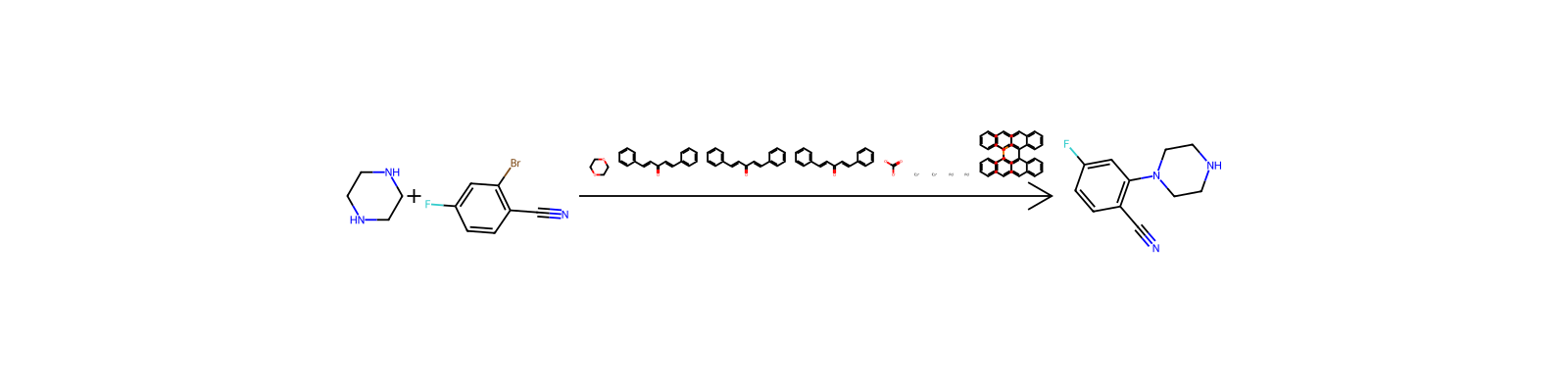
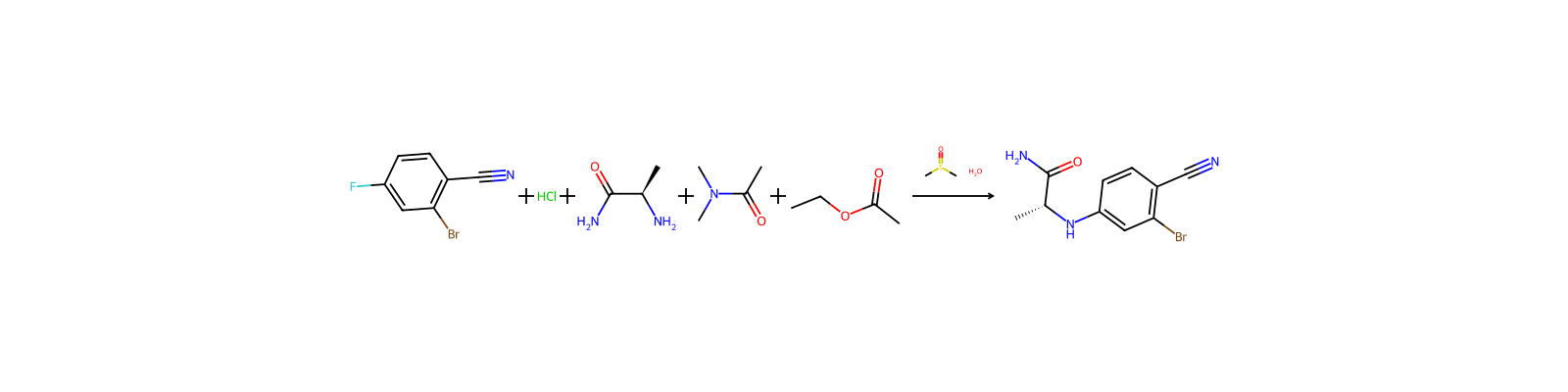
Related reactions
88 records






Compound notes
Loading…