HomeMCPWorkbenchSkills
HomeWorkbenchNotificationsMe
llms.txt · MCP GuidePrivacy Policy · Terms of Service · Supportv1.8.0
  1. Home
  2. /Reaction

1,2-Dimethoxyethane → 2-(Benzofuran-2-yl)-4-fluorobenzonitrile

HRID 82782
Notes
Print preview

Reaction equation

HRID 82782 reaction equation
Br[C:2]1[CH:9]=[C:8]([F:10])[CH:7]=[CH:6][C:3]=1[C:4]#[N:5].[O:11]1[C:15]2[CH:16]=[CH:17][CH:18]=[CH:19][C:14]=2[CH:13]=[C:12]1B(O)O.COCCOC.C([O-])([O-])=O.[Na+].[Na+]>C1C=CC(/C=C/C(/C=C/C2C=CC=CC=2)=O)=CC=1.C1C=CC(/C=C/C(/C=C/C2C=CC=CC=2)=O)=CC=1.C1C=CC(/C=C/C(/C=C/C2C=CC=CC=2)=O)=CC=1.[Pd].[Pd].CCOC(C)=O>[O:11]1[C:15]2[CH:16]=[CH:17][CH:18]=[CH:19][C:14]=2[CH:13]=[C:12]1[C:2]1[CH:9]=[C:8]([F:10])[CH:7]=[CH:6][C:3]=1[C:4]#[N:5]
ParticipantsProcedureWorkupSources & evidenceReaction notes

Participants

7

Reactant 4

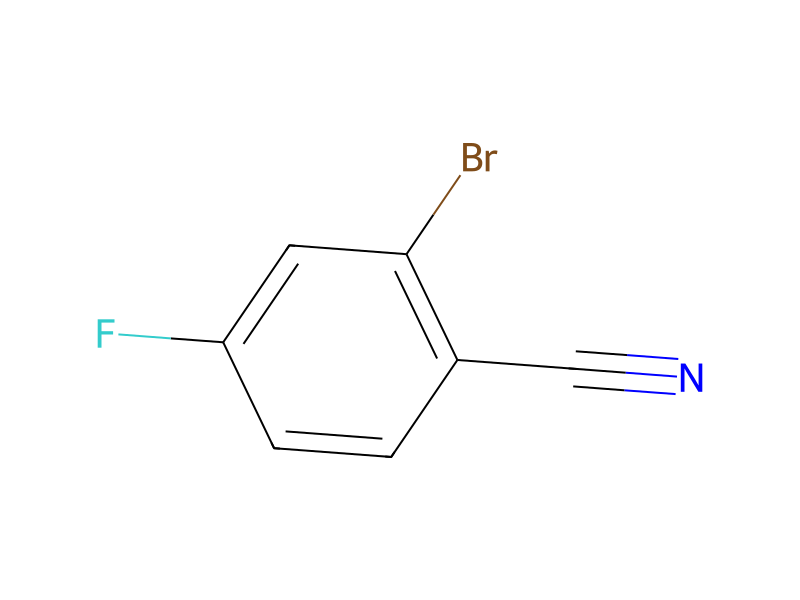
HCID 80711,2-DimethoxyethaneHCID 10340Sodium CarbonateHCID 1189392-Bromo-4-fluorobenzonitrileHCID 2776266Benzo[b]furan-2-boronic acid

Product 1

HCID 670430612-(Benzofuran-2-yl)-4-fluorobenzonitrile

Reagents, catalysts & solvents 2

HCID 9811564
Bis(dibenzylideneacetone)palladium
Catalyst
HCID 8857Ethyl AcetateSolvent

Procedure

A mixture of 2-bromo-4-fluorobenzonitrile (515 g, 25.65 mmol), benzofuran-2-ylboronic acid (5.0 g, 30.8 mmol), 1,2-dimethoxyethane (25 mL) and 2M Na2CO3 (40 mL) was heated to reflux before Pd2(dba)3 (100 mg) was added and heating was continued for 5 h. After cooling to r.t, EtOAc (20 mL) was added to dissolve the product. The mixture was filtered through celite, the organic layer was separated, dried (Na2SO4) and concentrated under reduced pressure. The residue was dissolved in minimum amount of CHCl3 and passed through Silica. Solvent was evaporated and the residue was first purified by crystallisation from a mixture CHCl3/PE (98/2). The filtrate was purified by Combiflash chromatography (40 g column, 13 g Silica, gradient of eluent from PE to PE/EtOac 9/1) to give the title compound as light yellow solid purified by rinsing with PE to give at the end a white solid (5.15 g). This solid had to be purified an ultimate time by drying under vacuum at 80° C. for O/N. Finally, pure expected compound was obtained as a off-white solid in 59% yield (3.6 g); mp 123-124° C.; 1H NMR (270 MHz, CDCl3) 87.13 (1H, td, J=2.5 and 7.3 Hz, ArH), 7.30 (1H, t, J=7.7 Hz, ArH), 7-40 (1H, t, J=77 Hz, ArH), 7.56 (1H, d, J=7.7 Hz, ArH), 7.69 (1H, d, J=73 Hz, ArH), 7.76-7.86 (3H, m, ArH); Anal. Calcd. for C15H8FNO: C, 75.94, H, 3.40, N, 5.90. Found: C, 75 70, H, 3.37, N, 5.97%.


Workup

  1. temperaturewas heated
  2. additionwas added
  3. temperatureheating
  4. temperatureAfter cooling
  5. dissolutionto dissolve the product
  6. filtrationThe mixture was filtered through celite
  7. customthe organic layer was separated
  8. dry with materialdried (Na2SO4)
  9. concentrationconcentrated under reduced pressure
  10. dissolutionThe residue was dissolved in minimum amount of CHCl3
  11. customSolvent was evaporated
  12. customthe residue was first purified by crystallisation from a mixture CHCl3/PE (98/2)
  13. customThe filtrate was purified by Combiflash chromatography (40 g column, 13 g Silica, gradient of eluent from PE to PE/EtOac 9/1)

Sources & evidence

ORD record
ord-8062e50d77df4d378daeaa0e3d6938de
Source dataset
uspto-grants-2014_09
DOI
10.6084/m9.figshare.5104873.v1
Patent number
US08846737B2

Reaction notes

Loading…

On this pageParticipantsProcedureWorkupSources & evidenceReaction notes