HomeMCPWorkbenchSkills
HomeWorkbenchNotificationsMe
llms.txt · MCP GuidePrivacy Policy · Terms of Service · Supportv1.8.0
  1. Home
  2. /Compound

Benzoylhydrazine

HCID 11955
New noteNew reactionRequest quotes
Print preview

Completing data — refresh the page later to see the latest

Basic informationOverviewNames & identifiersPropertiesSafety & regulationChemistry & industryRelated reactionsCompound notes
Substructure searchFind similar structures

Basic information

CAS
613-94-5
Standard SMILES
NNC(=O)c1ccccc1
InChIKey
WARCRYXKINZHGQ-UHFFFAOYSA-N
Molecular formula
C7H8N2O
Average molar mass
136.15 g/mol
Monoisotopic mass
136.06366288

Overview

Benzohydrazide is a carbohydrazide. It is functionally related to a benzoic acid.

Names & identifiers

Preferred name
Benzoylhydrazine
IUPAC
benzohydrazide
English name
Benzoyl hydrazine
Molecular formula
C7H8N2O
Molecular weight
136.15

Names & synonyms

Benzohydrazide613-94-5BenzoylhydrazineBENZHYDRAZIDEBenzoic hydrazideBenzoic acid hydrazideBenzoic acid, hydrazideBenzohydrazineBenzoyl hydrazideHydrazid kyseliny benzooveLLW11ZWZ20CHEBI:38454
Show more names
BENZOIC HYDRAZINEINHd 14NSC 644
NSC-644RefChem:565091210-363-9Benzoyl hydrazinebenzoylhydrazideHydrazine, benzoyl-benzenecarbohydrazideAzelastine EP Impurity A

Database identifiers

CAS
613-94-5
PubChem CID
11955
DTXSID
DTXSID6020149
ChEMBL
CHEMBL125369
ChEBI
CHEBI:38454
UNII
LLW11ZWZ20
EC Number
210-363-9
Nikkaji
J30.698C

Properties

Computed structural propertiesFilling in

XLogP
0.2
Topological polar surface area
55.1 Ų
Hydrogen bond donors
2
Hydrogen bond acceptors
2
Rotatable bonds
1
Heavy atoms
10
Formal charge
0
Complexity
119

Experimental & physicochemical properties

Chemical ClassesNitrogen Compounds -> Hydrazides
SpringerMaterials PropertiesChemical shift
LogP · 2 items

log Kow = 0.19

0.21

Color/FormPlates from water
SolubilitySol in water and alc; slightly sol in ether, acetone, chloroform
Boiling Point267 °C (decomposes)
DecompositionWhen heated to decomposition it emits toxic fumes of /nitrogen oxides/.
Melting Point115 °C
Vapor Pressure · 2 items

0.0000778 [mmHg]

7.8X10⁻⁵ mm Hg at 25 °C /Estimated/

Henry's Law ConstantHenry's Law constant = 9.5X10⁻¹² atm-cu m/mol at 25 °C /Estimated/

Safety & regulation

Safety information is for reference only and does not replace the supplier’s Safety Data Sheet (SDS), applicable regulations, or professional assessment.

GHS classification

GHS Classification · 4 items

Danger

H301 (82.7%): Toxic if swallowed [Danger Acute toxicity, oral]

P203, P261, P264, P264+P265, P270, P271, P280, P301+P316, P302+P352, P304+P340, P305+P351+P338, P318, P319, P321, P330, P332+P317, P337+P317, P362+P364, P403+P233, P405, and P501 (click each P-code to see the statement)

Aggregated GHS information provided per 52 reports by companies from 12 notifications to the ECHA C&L Inventory. Each notification may be associated with multiple companies.

Hazard information

Regulatory InformationBenzoic acid, hydrazide: Does not have an individual approval but may be used under an appropriate group standard
Hazards SummaryIn animal experiments, causes somnolence and seizures after acute exposure and tumors after chronic exposure; [RTECS] May cause liver injury; [HSDB] An irritant; [MSDSonline] See Hydrazine.
Hazard Classes and CategoriesAcute Tox. 3 (82.7%)
Hazardous Reactivities and IncompatibilitiesViolent reaction with benzeneseleninic acid.

Safety & protection

Disposal Methods · 1 item

SRP: The most favorable course of action is to use an alternative chemical product with less inherent propensity for occupational exposure or environmental contamination. Recycle any unused portion of the material for its approved use or return it to the manufacturer or supplier. Ultimate disposal of the chemical must consider: the material's impact on air quality; potential migration in soil or water; effects on animal, aquatic, and plant life; and conformance with environmental and public health regulations.

Chemistry & industry

Pharmacology

Metabolism/Metabolites · 2 items

Benzohydrazide yields benzoic acid in rabbit: El Masri, AM, Smith, JN, & Williams, RT, Biochem J, 68, 587 (1958). /from table/

... Benzohydrazide ... /is/ metabolized by rabbits to yield hippuric acid & hydrazine.

Uses & manufacturing

Uses · 2 items

Used as a chemical intermediate for hydrazine-based products; [HSDB]

Chemical intermediate ... hydrazine-based products

General Manufacturing InformationBenzoic acid, hydrazide: ACTIVE

Applications

UsesBenzoyl Hydrazine is an acyl hydrazide as potent antioxidant.

Upstream & downstream products

Downstream products

ZORUBICIN HCL2-(1-NAPHTHYL)-5-PHENYL-1,3,4-OXADIAZOLE2-(4-BIPHENYLYL)-5-PHENYL-1,3,4-OXADIAZOLE5-(4-METHYLPHENYL)-1,3,4-OXADIAZOLE-2-THIOL2-(4-BROMOPHENYL)-5-PHENYL-1,3,4-OXADIAZOLEBOC-D-Phenylalaninebenzoylazide

Related reactions

288 records
New reaction record
HRID 11226 reaction equation
HRID 11226As reactantuspto-grants-2006_08
HRID 22098 reaction equation
HRID 22098As reactantuspto-grants-1995_06
HRID 42307 reaction equation
HRID 42307As reactantuspto-grants-2013_09
HRID 44219 reaction equation
HRID 44219As reactantuspto-grants-2013_09
HRID 44646 reaction equation
HRID 44646As reactantuspto-grants-2013_09
HRID 45377 reaction equation
HRID 45377As reactantuspto-grants-2013_09
HRID 78585 reaction equation
HRID 78585As reactantuspto-grants-2014_09
HRID 94882 reaction equation
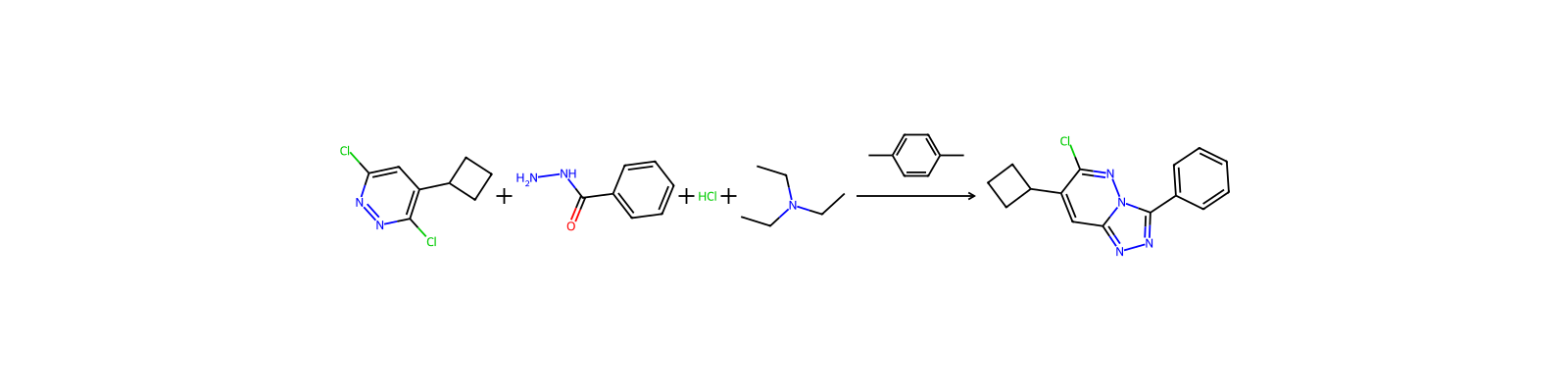
HRID 94882As reactantTraining data from https://doi.org/10.1039/C8SC04228D (2/10)
Page 1 of 36

Compound notes

Loading…

On this pageBasic informationOverviewNames & identifiersPropertiesSafety & regulationChemistry & industryRelated reactionsCompound notes
More actions
New noteNew reactionRequest quotes
Physical DescriptionSolid; Soluble in water; [HSDB] White crystalline powder; [MSDSonline]
Dissociation ConstantspKa = 3.03 at 20 °C (conjugate acid)

Physicochemical properties

Melting point
112 · 112-114 °C (lit.)
Boiling point
250.42 °C · 250.42°C (rough estimate)
Density
1.1778 · 1.1778 (rough estimate)
refractive index
1.546 · 1.5460 (estimate)
storage temp.
Keep in dark place,Inert atmosphere,Room temperature
solubility
DMSO (Slightly), Methanol (Slightly)
form
Needle-Like Crystals or Powder
pka
1 · pK1: 3.03(+2);pK2: 12.45(+1) (25°C)
color
White to beige
BRN
471797 · 471797
InChI
InChI=1S/C7H8N2O/c8-9-7(10)6-4-2-1-3-5-6/h1-5H,8H2,(H,9,10)
InChIKey
WARCRYXKINZHGQ-UHFFFAOYSA-N
SMILES
C(NN)(=O)C1=CC=CC=C1
CAS DataBase Reference
613 · 613-94-5(CAS DataBase Reference)
FDA UNII
11 ZWZ20 · LLW11ZWZ20
NIST Chemistry Reference
Benzoic acid, hydrazide(613-94-5)
EPA Substance Registry System
Benzoic acid, hydrazide (613-94-5)
UNSPSC Code
12352100 · 12352100
NACRES
22 · NA.22
Symbol(GHS)
7 · GHS07,GHS08
Signal word
Warning
Hazard statements
302 · H302-H315-H351
Precautionary statements
201 · P201-P202-P264-P301+P312-P302+P352-P308+P313
PPE
2 · Eyeshields, Faceshields, Gloves, type P2 (EN 143) respirator cartridges
Hazard Codes
T
Risk Statements
25 · 25-36/37/38
Safety Statements
26 · 26-45
RIDADR
2811 · UN 2811 6.1/PG 3
WGK Germany
3 · 3
RTECS
1575000 · DH1575000
TSCA
TSCA listed
HazardClass
IRRITANT
PackingGroup
Ⅲ
HS Code
29280090 · 29280090
Storage Class
13 · 13 - Non Combustible Solids
Hazard Classifications
4 OralCarc · Acute Tox. 4 OralCarc. 2Skin Irrit. 2
Hazardous Substances Data
613 · 613-94-5(Hazardous Substances Data)
Toxicity
50 scu-mus: · LD50 scu-mus: 122 mg/kg JPETAB 122,110,58
Limited Quantities
5 kg · 5.0 kg (11 lbs) (solid)
Excepted Quantities
Max Inner Pack (30g or 30ml) and Max Outer Pack (1Kg or 1L)
Personal Protective Equipment (PPE) · 1 item

... Vinyl coated hand protection, natural or reclaimed rubber protection, rubber aprons, and plastic eye and face protection ... used when working with small quantities. Where possibility of gross splashing exists, full protective clothing made of rubber, neoprene or vinyl-coated materials should be worn. For respiratory protection in situations where recommended tolerance limits ... exceeded, respiratory protective equipment... must be used. /Hydrazine and derivatives/

Toxicology

Interactions · 1 item

Binary mixtures of the osteolathyrogens benzoic hydrazide and beta-aminopropionitrile were tested to determine the joint action for these chemicals, by evaluating induction of malformation and osteolathyrism in developing frog embryos. Exposures, starting with late-blastula stage embryos, were for 96-hr with solution renewal every 24-hr. Five treatments were examined, each chemical alone (i.e., 1:0 and 0:1 solutions) and three mixtures (i.e., 3:1, 1:1, and 1:3). Following exposure, embryos were evaluated grossly and the incidences of all types of malformations and osteolathyrogenic lesions were determined. Toxic unit analysis and isobole diagrams indicated these chemicals were concentration additive in inducing malformations and osteolathyrism. Therefore, benzoic hydrazide and beta-aminopropionitrile induce osteolathyrism, in Xenopus embryos, in a similar manner.

Adverse EffectsNeurotoxin - Other CNS neurotoxin
Ecotoxicity Excerpts · 1 item

/AQUATIC SPECIES/ Binary mixtures of the osteolathyrogens benzoic hydrazide and beta-aminopropionitrile were tested to determine the joint action for these chemicals, by evaluating induction of malformation and osteolathyrism in developing frog embryos. Exposures, starting with late-blastula stage embryos, were for 96-hr with solution renewal every 24-hr. Five treatments were examined, each chemical alone (i.e., 1:0 and 0:1 solutions) and three mixtures (i.e., 3:1, 1:1, and 1:3). Following exposure, embryos were evaluated grossly and the incidences of all types of malformations and osteolathyrogenic lesions were determined. Toxic unit analysis and isobole diagrams indicated these chemicals were concentration additive in inducing malformations and osteolathyrism. Therefore, benzoic hydrazide and beta-aminopropionitrile induce osteolathyrism, in Xenopus embryos, in a similar manner.

Non-Human Toxicity Excerpts · 3 items

/HUMAN EXPOSURE STUDIES/ Large number of ... hydrazine derivatives are convulsants including ... benzhydrazide...

/HUMAN EXPOSURE STUDIES/ .../Benzhydrazide is among/ hydrazine deriv /which/ have been observed to cause alterations in liver function, fatty infiltration, or cellular damage. ... Characteristic liver pathology seen after effective doses of hepatotoxic hydrazines is fatty degeneration ... most marked in center of liver lobules.

/HUMAN EXPOSURE STUDIES/ There may also be damage to other organs, particularly kidney /after effective doses of hepatotoxic hydrazines incl benzhydrazide./ ... Other pathological changes, such as extramedullary hepatopoiesis, pigment (hemosiderin) deposition in cells, and vascular thrombosis, are secondary to blood cell destruction.

Populations at Special Risk · 1 item

Biological half-lives were significantly different among the three acetylation phenotypes (analysis of variance, P < 0.05): 3.94+/-1.70 hours for slow acetylators, 2.25+/-0.37 hours for intermediate acetylators, and 1.86+/-0.67 hours for rapid acetylators. /Hydrazine/

Antidote and Emergency Treatment · 5 items

Basic treatment: Establish a patent airway. Suction if necessary. Watch for signs of respiratory insufficiency and assist ventilations if necessary. Administer oxygen by nonrebreather mask at 10 to 15 L/min. Monitor for pulmonary edema and treat if necessary ... . Anticipate seizures and treat if necessary ... . For eye contamination, flush eyes immediately with water. Irrigate each eye continuously with normal saline during transport ... . Do not use emetics. For ingestion, rinse mouth and administer 5 ml/kg up to 200 ml of water for dilution if the patient can swallow, has a strong gag reflex, and does not drool. Administer activated charcoal ... . Cover skin burns with dry, sterile dressings after decontamination ... . /Hydrazine and Related Compounds/

Advanced treatment: Consider orotracheal or nasotracheal intubation for airway control in the patient who is unconscious, has severe pulmonary edema, or is in respiratory arrest. Positive pressure ventilation techniques with a bag valve mask device may be beneficial. Monitor cardiac rhythm and treat arrhythmias if necessary ... . Start an IV with D5W /SRP: "To keep open", minimal flow rate/. Use lactated Ringer's if signs of hypovolemia are present. Consider drug therapy for pulmonary edema ... . For hypotension with signs of hypovolemia, administer fluid cautiously. Consider vasopressors for hypotension with a normal fluid volume. Watch for signs of fluid overload ... . Treat seizures with diazepam ... . Monitor for signs of hypoglycemia (decreased level of consciousness, tachycardia, pallor, dilated pupils, diaphoresis, and/or a dextrose strip or glucometer reading less than 50 mg/dl) and administer 50% dextrose if necessary. Draw blood sample before administration ... . Administer 1% solution methylene blue if patient is symptomatic with severe hypoxia, cyanosis, and cardiac compromise not responding to oxygen. ... . Use proparacaine hydrochloride to assist eye irrigation ... . /Hydrazine and Related Compounds/

Specific treatment for exposure consists of thorough washing of all exposed skin areas with soap and water, copious irrigation of the eyes, and prompt removal of the patient from the source of exposure. /Hydrazines/

After inhalation, observation for progressive respiratory distress is necessary. Chest X-ray and arterial blood gases should be monitored. Administration of oxygen, intubation, and assisted ventilation may become necessary. Pneumonia and bronchitis need to be excluded. /Hydrazines/

For more Antidote and Emergency Treatment (Complete) data for BENZHYDRAZIDE (6 total), please visit the HSDB record page.

Non-Human Toxicity ValuesLD50 Mouse sc 122 mg/kg

Safety data

PPE
Eyeshields, Faceshields, Gloves, type P2 (EN 143) respirator cartridges
wgk
3
tsca
TSCA listed
rtecs
DH1575000
ridadr
UN 2811 6.1/PG 3
hs_code
29280090
Toxicity
LD50 scu-mus: 122 mg/kg JPETAB 122,110,58
risk_code
25-36/37/38
Signal word
Warning
Symbol(GHS)
GHS07,GHS08
hazard_code
T
safety_code
26-45
hazard_class
IRRITANT
Storage Class
13 - Non Combustible Solids
packing_group
Ⅲ
Hazard statements
H302-H315-H351
Limited Quantities
5.0 kg (11 lbs) (solid)
Excepted Quantities
Max Inner Pack (30g or 30ml) and Max Outer Pack (1Kg or 1L)
Hazard Classifications
Acute Tox. 4 OralCarc. 2Skin Irrit. 2
Precautionary statements
P201-P202-P264-P301+P312-P302+P352-P308+P313
Hazardous Substances Data
613-94-5(Hazardous Substances Data)
N'-benzoyl-3-methylbenzohydrazide
Benzoic acid, ethylidenehydrazide (6CI,7CI,8CI,9CI)
N'-(1-AMINO-2-CYANOVINYL)BENZENECARBOHYDRAZIDE

Additional notes

DefinitionChEBI: Benzohydrazide is a carbohydrazide. It is functionally related to a benzoic acid.