HomeMCPWorkbenchSkills
HomeWorkbenchNotificationsMe
llms.txt · MCP GuidePrivacy Policy · Terms of Service · Supportv1.8.0
  1. Home
  2. /Reaction

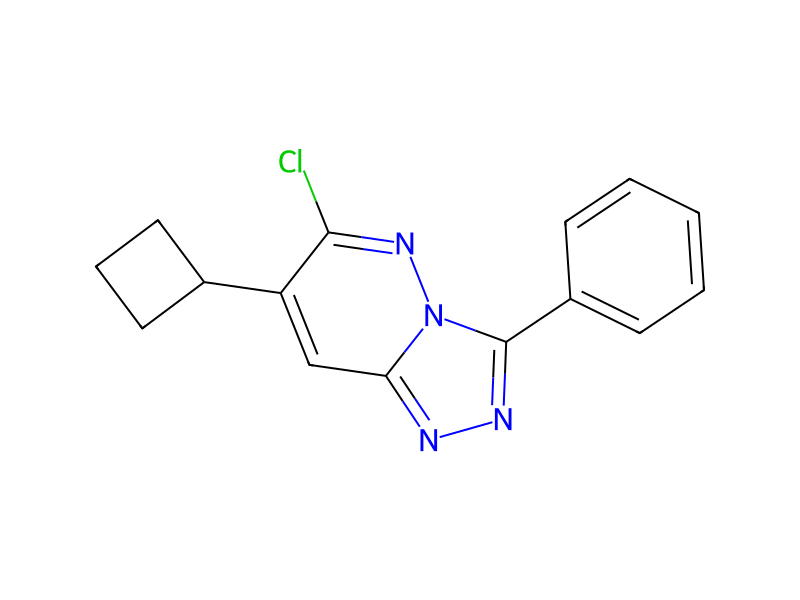
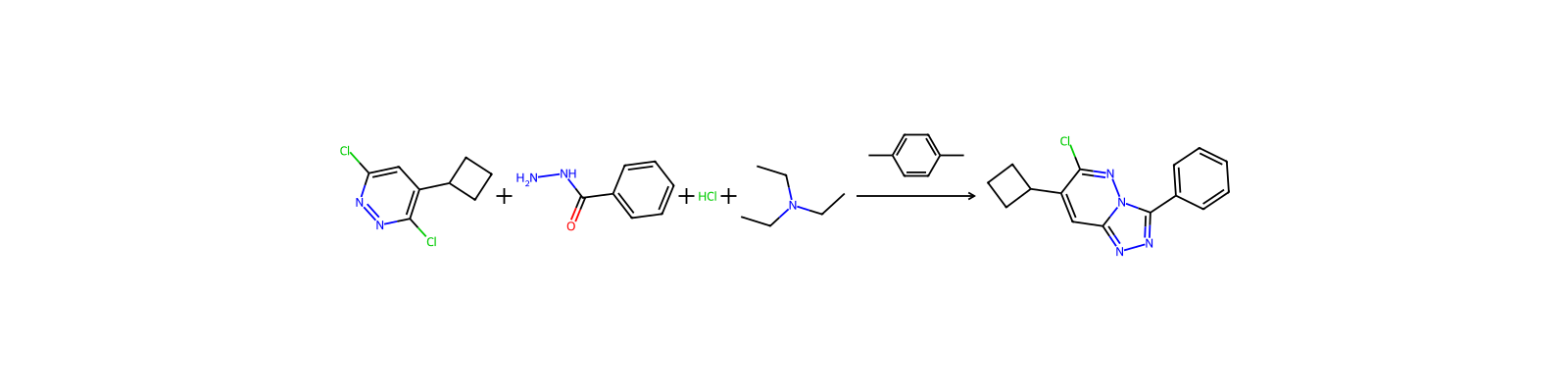
Triethylamine hydrochloride → 6-Chloro-7-cyclobutyl-3-phenyl-1,2,4-triazolo[4,3-b]pyridazine

HRID 11226
Notes
Print preview

Reaction equation

HRID 11226 reaction equation
[Cl:1][C:2]1[N:3]=[N:4][C:5](Cl)=[CH:6][C:7]=1[CH:8]1[CH2:11][CH2:10][CH2:9]1.[C:13]([NH:21][NH2:22])(=O)[C:14]1[CH:19]=[CH:18][CH:17]=[CH:16][CH:15]=1.Cl.C(N(CC)CC)C>CC1C=CC(C)=CC=1>[Cl:1][C:2]1[C:7]([CH:8]2[CH2:11][CH2:10][CH2:9]2)=[CH:6][C:5]2[N:4]([C:13]([C:14]3[CH:19]=[CH:18][CH:17]=[CH:16][CH:15]=3)=[N:21][N:22]=2)[N:3]=1
ParticipantsProcedureWorkupSources & evidenceReaction notes

Participants

5

Reactant 3

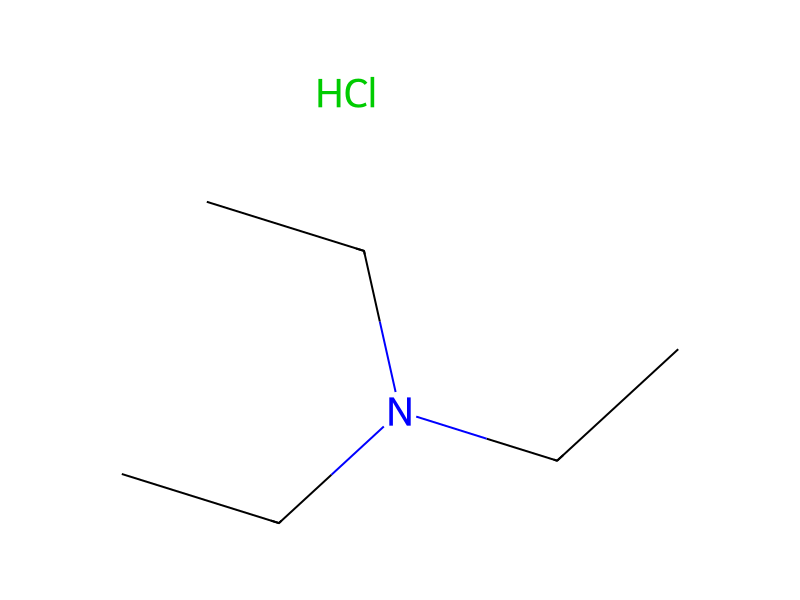
HCID 11130Triethylamine hydrochlorideHCID 11955BenzoylhydrazineHCID 219732193,6-Dichloro-4-cyclobutylpyridazine

Product 1

HCID 110005936-Chloro-7-cyclobutyl-3-phenyl-1,2,4-triazolo[4,3-b]pyridazineYield 34%

Reagents, catalysts & solvents 1

HCID 7809P-XyleneSolvent

Procedure

A mixture of 3,6-dichloro-4-cyclobutylpyridazine from above (55.7 g, 0.27 mol), benzoic hydrazide (41.1 g, 0.30 mol) and triethylamine hydrochloride (41.5 g, 0.30 mol) in p-xylene (0.4 l) was stirred and heated at reflux under a stream of nitrogen for 24 hours. Upon cooling the volatiles were removed in vacuo. The residue was partitioned between dichloromethane and water. The aqueous was basified by the addition of solid potassium carbonate. Some dark insoluble material was removed by filtration at this stage. The aqueous phase was further extracted with dichloromethane (×2). The combined extracts were dried (MgSO4), filtered and evaporated. The residue was purified by chromatography on silica gel eluting with 5%→10%→25% ethyl acetate/dichloromethane to give the title compound, (26.4 g, 34%) as an off-white solid. Data for the title compound: 1H NMR (360 MHz, CDCl3) δ 1.90–2.00 (1H, m), 2.12–2.28 (3H, m), 2.48–2.57 (2H, m), 3.69–3.78 (1H,m), 7.49–7.59 (3H, m), 7.97 (1H, s), 8.45–8.48 (2H, m); MS (ES+) m/e 285 [MH]+, 287 [MH]+.
Workup

  1. temperatureheated
  2. temperatureat reflux under a stream of nitrogen for 24 hours
  3. temperatureUpon cooling the volatiles
  4. customwere removed in vacuo
  5. customThe residue was partitioned between dichloromethane and water
  6. additionThe aqueous was basified by the addition of solid potassium carbonate
  7. customSome dark insoluble material was removed by filtration at this stage
  8. extractionThe aqueous phase was further extracted with dichloromethane (×2)
  9. dry with materialThe combined extracts were dried (MgSO4)
  10. filtrationfiltered
  11. customevaporated
  12. customThe residue was purified by chromatography on silica gel eluting with 5%→10%→25% ethyl acetate/dichloromethane

Sources & evidence

ORD record
ord-26548357d3fb4ca6b89c4b2d9219dad3
Source dataset
uspto-grants-2006_08
DOI
10.6084/m9.figshare.5104873.v1
Patent number
US07098208B2

Reaction notes

Loading…

On this pageParticipantsProcedureWorkupSources & evidenceReaction notes