HomeMCPWorkbenchSkills
HomeWorkbenchNotificationsMe
llms.txt · MCP GuidePrivacy Policy · Terms of Service · Supportv1.8.3
  1. Home
  2. /Compound

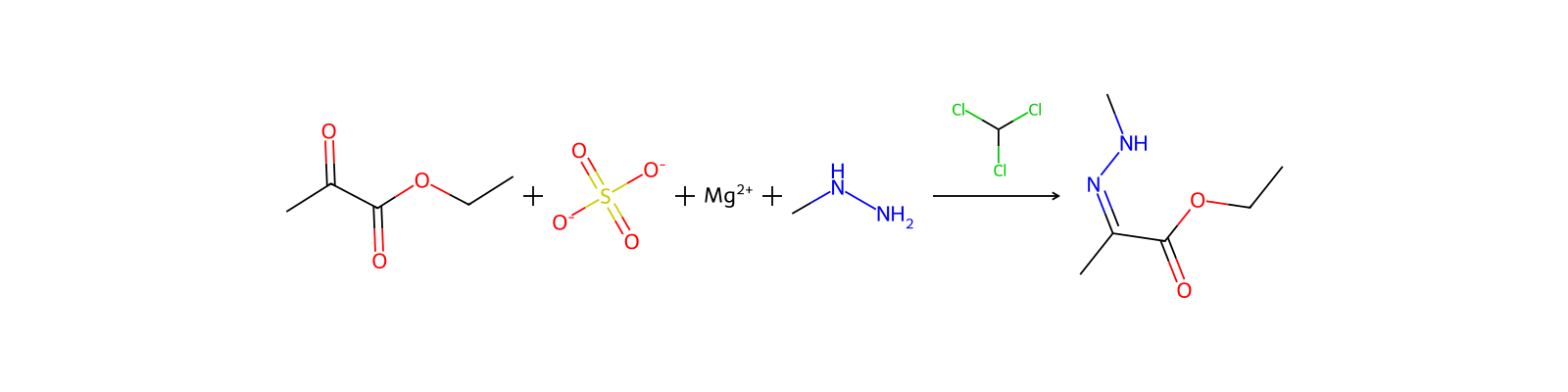
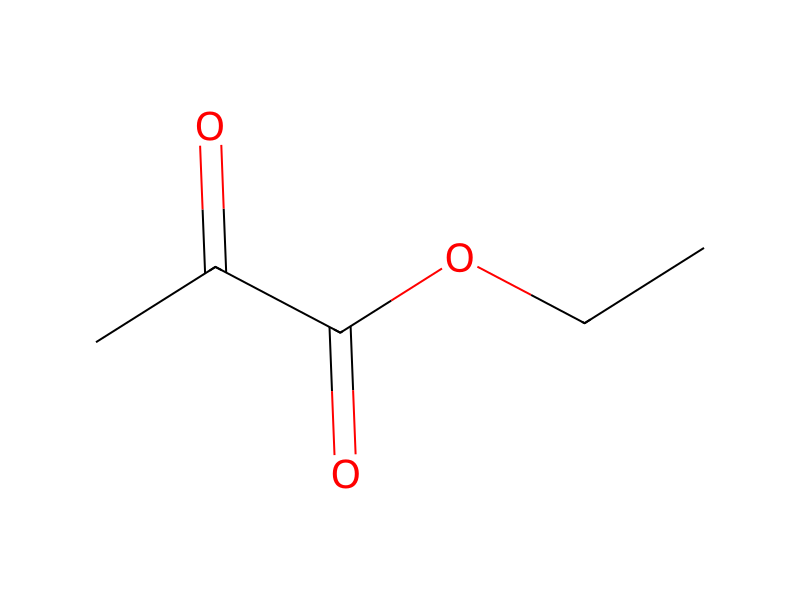
Ethyl pyruvate

HCID 12041
New reaction
Print
Basic informationOverviewNames & identifiersPropertiesSafety & regulationChemistry & industryRelated reactionsCompound notes
Substructure searchFind similar structures

Basic information

CAS
617-35-6
Standard SMILES
CCOC(=O)C(C)=O
InChIKey
XXRCUYVCPSWGCC-UHFFFAOYSA-N
Molecular formula
C5H8O3
Average molar mass
116.11 g/mol
Monoisotopic mass
116.04734411

Overview

Ethyl pyruvate is an oxo carboxylic acid.

Names & identifiers

Preferred name
Ethyl pyruvate
IUPAC
ethyl 2-oxopropanoate
English name
Ethyl pyruvate
Molecular formula
C5H8O3
Molecular weight
116.12

Names & synonyms

ETHYL PYRUVATEEthyl 2-oxopropanoate617-35-6Ethyl 2-oxopropionatePyruvic acid, ethyl esterPYRUVIC ACID ETHYL ESTERPropanoic acid, 2-oxo-, ethyl esterEthyl pyroracemateEthyl acetylformateEthyl methylglyoxylateFEMA No. 24572-oxopropanoic acid ethyl ester
Show more names
Natural Ethyl pyruvatePAEEFEMA 2457ETHYL 2-OXOPROPRIONATEPropanoicacid,2-oxo-,ethylesterPYR ET
CTI-012-oxopropionic acid ethyl esterNSC-48386DTXSID206067403O98E01OBRefChem:139052DTXCID3043104210-511-2

Database identifiers

CAS
617-35-6
PubChem CID
12041
DTXSID
DTXSID2060674
ChEMBL
CHEMBL173373
ChEBI
CHEBI:173421
UNII
03O98E01OB
EC Number
210-511-2
Nikkaji
J1.665I

Properties

Computed structural properties

XLogP
0.4
Topological polar surface area
43.4 Ų
Hydrogen bond donors
0
Hydrogen bond acceptors
3
Rotatable bonds
3
Heavy atoms
8
Formal charge
0
Complexity
106

Experimental & physicochemical properties

Chemical ClassesOther Classes -> Esters, Other
DrugsPharmaceuticals -> Listed in ZINC15
SpringerMaterials PropertiesChemical shift
FragrancesFragrance Ingredient (Ethyl pyruvate) -> IFRA transparency List
Food AdditivesFLAVORING AGENT OR ADJUVANT -> FDA Substance added to food
Density1.044-1.065
Flavoring AgentsEU Flavoring substances
Solubility · 2 items

slightly soluble in water; soluble in organic solvents, oils

miscible at room temperature (in ethanol)

Boiling Point · 2 items

144.00 °C. @ 760.00 mm Hg

144 °C

Melting Point-50 °C

Safety & regulation

Safety information is for reference only and does not replace the supplier’s Safety Data Sheet (SDS), applicable regulations, or professional assessment.

GHS classification

GHS Classification · 4 items

Warning

H226 (> 99.9%): Flammable liquid and vapor [Warning Flammable liquids]

P210, P233, P240, P241, P242, P243, P280, P303+P361+P353, P370+P378, P403+P235, and P501 (click each P-code to see the statement)

Aggregated GHS information provided per 1612 reports by companies from 10 notifications to the ECHA C&L Inventory.

Hazard information

Regulatory Information · 4 items

Chemical: Propanoic acid, 2-oxo-, ethyl ester

Commission Regulation (EC) No 1565/2000 (Repealed by Com. Implementing Reg. (EU) No 872/2012)

REACH registered substance: Ethyl pyruvate (EC: 210-511-2)

Ethyl pyruvate: Does not have an individual approval but may be used under an appropriate group standard

Hazards SummarySafe when used as a flavoring agent in food; [JECFA] May cause irritation; [Alfa Aesar MSDS] See Pyruvic acid.
Hazard Classes and CategoriesFlam. Liq. 3 (> 99.9%)

Safety data

wgk
3
tsca
TSCA listed
ridadr
UN 3272 3/PG 3
hs_code
2918300090
Toxicity
LD50 orally in Rabbit: > 2000 mg/kg LD50 dermal Rat > 2000 mg/kg
risk_code
10
Signal word
Danger
Symbol(GHS)
GHS02,GHS05

Chemistry & industry

Pharmacology

Mechanism of Action · 1 item

CTI-01 inhibits the systemic release of cytokines, such as TNF-alpha and HMGB1, which promote the body's inflammatory response. The over-expression of these cytokines has been linked to diseases that occur in critical care settings, such as severe organ damage following cardiopulmonary bypass (CPB) and post-operative ileus following abdominal surgery.

Uses & manufacturing

UsesUsed as a flavoring agent; [FDA]
Use Classification · 6 items

Fragrance Ingredients

Flavouring Agent -> FLAVOURING_AGENT -> JECFA Functional Classes

Flavoring Agents -> JECFA Flavorings Index

Flavouring Agent -> FLAVOURING_AGENT -> JECFA Functional Classes

Flavouring Agent -> FLAVOURING_AGENT -> JECFA Functional Classes

Flavouring Agent -> FLAVOURING_AGENT -> JECFA Functional Classes

General Manufacturing InformationPropanoic acid, 2-oxo-, ethyl ester: ACTIVE
Applications · 6 items

UsesIt can be used in the manufacture of pharmaceutical pindolol and pesticides thiabendazole. At the same time, it is an important intermediate of pharmaceutical and chemical industry. It is widely applied to various kinds of industries including medicine, pesticides, flavors and fragrances, food additives, air fresheners, fine chemicals and other industries. It can be used in the synthesis of cardiovascular drugs like expansion agent; it can also be applied to cosmetic of skin whitening and nutrition and can promote the healing of the wound, prevention and treatment of skin disease characterized by cracking, spalling and squamous metaplasia; it can be used as the high-efficiency active ingredients in the air fresheners and can effectively eliminate the ammonia and methyl mercaptan in the air; because itself has a special flavor, it can be applied to flavors, fragrance; it is also an important raw material for synthetic resins and plastics.

Related reactions

327 records
New reaction record
HRID 8433 reaction equation
HRID 8433As reactant
HRID 8435 reaction equation
HRID 8435As reactant
HRID 8437 reaction equation
HRID 8437As reactant
HRID 15955 reaction equation
HRID 15955As reactant
HRID 21534 reaction equation
HRID 21534As reactant
HRID 23011 reaction equation
HRID 23011As reactant
HRID 23022 reaction equation
HRID 23022As reactant
HRID 23023 reaction equation
HRID 23023As reactant
PreviousPage 1 of 41

Compound notes

On this pageBasic informationOverviewNames & identifiersPropertiesSafety & regulationChemistry & industryRelated reactionsCompound notes
Refractive Index1.403-1.409
Physical Description · 3 items

Liquid; [Merck Index] Colorless liquid with a pleasant odor; [Alfa Aesar MSDS]

Liquid

colourless liquid with a sweet, floral-fruity, warm odour

Physicochemical properties

Melting point
58 °C · −58 °C (−72 °F; 215 K)
Boiling point
142 °C · 142 °C (288 °F; 415 K) 760
Density
1.045 g · 1.045 g cm−3
vapor pressure
2.36 hPa · 2.36hPa at 25℃
FEMA
2457 · 2457 | ETHYL PYRUVATE
FLAVIS Number
9.442 · 09.442 | Ethyl pyruvate
refractive index
1.4 · 1.40
Flash point
45 °C · 45 °C
storage temp.
2 °C · Store at +2°C to +8°C.
solubility
10 g/l · 10g/l
form
liquid
color
colorless
Odor
10 % · at 10.00 % in dipropylene glycol. ether fruity sweet sharp rum vegetable caramel
Odor Type
ethereal
biological source
synthetic
Water Solubility
Miscible with water, ethanol and ether.
Merck
14 · 14,8021
JECFA Number
938 · 938
BRN
1071466 · 1071466
Stability
Volatile
Major Application
flavors and fragrances
Cosmetics Ingredients Functions
SKIN CONDITIONING
InChI
1S/C5H8O3/c1-3-8-5(7)4(2)6/h3H2,1-2H3
InChIKey
XXRCUYVCPSWGCC-UHFFFAOYSA-N
SMILES
CCOC(=O)C(C)=O
LogP
0.435 at · 0.435 at 22.5℃
CAS DataBase Reference
617 · 617-35-6(CAS DataBase Reference)
Substances Added to Food (formerly EAFUS)
ETHYL PYRUVATE
FDA 21 CFR
172.515 · 172.515
EWG's Food Scores
1 · 1
FDA UNII
3 O98E01OB · 03O98E01OB
NIST Chemistry Reference
2 · Propanoic acid, 2-oxo-, ethyl ester(617-35-6)
EPA Substance Registry System
2 · Propanoic acid, 2-oxo-, ethyl ester (617-35-6)
UNSPSC Code
12352108 · 12352108
NACRES
22 · NA.22
Symbol(GHS)
2 · GHS02,GHS05
Signal word
Danger
Hazard statements
226 · H226-H314
Precautionary statements
210 · P210-P233-P240-P280-P303+P361+P353-P305+P351+P338
Hazard Codes
Xi,F
Risk Statements
10 · 10
Safety Statements
16 · 16
RIDADR
3272 · UN 3272 3/PG 3
WGK Germany
3 · 3
Hazard Note
Flammable/Irritant
TSCA
TSCA listed
HazardClass
3 · 3
PackingGroup
III
HS Code
2918300090 · 2918300090
Storage Class
3 · 3 - Flammable liquids
Hazard Classifications
3 Eye · Aquatic Chronic 3Eye Dam. 1Flam. Liq. 3Skin Corr. 1B
Toxicity
50 orally · LD50 orally in Rabbit: > 2000 mg/kg LD50 dermal Rat > 2000 mg/kg
REACH Registrations
Active
Limited Quantities
5 L · 5.0 L (1.3 gallons) (liquid)
Excepted Quantities
Max Inner Pack (30g or 30ml) and Max Outer Pack (1Kg or 1L)
hazard_code
Xi,F
hazard_note
Flammable/Irritant
safety_code
16
hazard_class
3
Storage Class
3 - Flammable liquids
packing_group
III
Hazard statements
H226-H314
Limited Quantities
5.0 L (1.3 gallons) (liquid)
Excepted Quantities
Max Inner Pack (30g or 30ml) and Max Outer Pack (1Kg or 1L)
REACH Registrations
Active
Hazard Classifications
Aquatic Chronic 3Eye Dam. 1Flam. Liq. 3Skin Corr. 1B
Precautionary statements
P210-P233-P240-P280-P303+P361+P353-P305+P351+P338

OccurrenceReported found in Parmesan cheese, cognac, grape wines, cocoa and mushrooms.

UsesEthyl pyruvate is used as a flavoring agent in food and anti-inflammatory agent for the treatment of critical inflammatory conditions. It is used in the treatment of critical illnesses such as severe sepsis, acute respiratory distress syndrome, burn injury, acute pancreatitis and stroke. It plays an important role in cardiac function after coronary ischemia and reperfusion.

UsesEthyl pyruvate can undergo asymmetric Henry reaction with nitromethane to form α-hydroxy β-nitro esters. It can be used as the model compound for α-ketoesters to study the mechanism of enantioselective hydrogenation reactions.

UsesEthyl pyruvate (EP) has demonstrated neuroprotective effects against acute brain injury through its anti-inflammatory action.

General DescriptionEthyl pyruvate is a volatile aliphatic ester of the pyruvate metabolite. It is present as a food additive/odor-active component in various food and beverage products. It is also used as an inhibitory odorant to repel the insects from human proximity.

Preparation methods

PreparationBy direct esterification of pyruvic acid with absolute ethyl alcohol at the boil and subsequent vacuum distillation; by esterification via oxidation of vapors of ethyl lactate in the presence of V2O5 at 155°C

Upstream & downstream products

Upstream raw materials

Lactic acid ester(R)-LactatePyruvic acidEthyl lactate6-BenzylaminopurineDichloromethaneTEOMetallic oxides

Downstream products

5-Bromoindole-2-carboxylic acid5-tert-Butyl-1H-indole-2-carboxylic acid ethyl ester2-(4-Methylpiperazin-1-yl)-6-(trifluoromethyl)pyrimidine-4-carbonitrile5-Aminoindole1-Methyl-5-nitro-1H-indole2-(4-Methylpiperazin-1-yl)-6-(trifluoromethyl)pyrimidine-4-carboxamide(2-(4-Methylpiperazin-1-yl)-6-(trifluoromethyl)pyrimidin-4-yl)methanamine5-NitroindoleEthyl 2-(4-hydroxypiperidin-1-yl)-6-(trifluoromethyl)pyrimidine-4-carboxylateEthyl 2-(4-(ethoxycarbonyl)piperidin-1-yl)-6-(trifluoromethyl)pyrimidine-4-carboxylateEthyl 2-(4-(hydroxymethyl)piperidin-1-yl)-6-(trifluoromethyl)pyrimidine-4-carboxylateEthyl 5-nitroindole-2-carboxylate(2-(4-Methylpiperazin-1-yl)-6-(trifluoromethyl)pyrimidin-4-yl)methanol5-Bromo-1H-indole-2-carbaldehydeEthyl 5-chloro-2-indolecarboxylate5-Chloroindole-2-carboxylic acid5-Chloro-1H-indole-2-carbaldehydePyruvic acidEthyl 1,2,3-thiadiazole-4-carboxylate2-(4-Hydroxypiperidin-1-yl)-6-(trifluoromethyl)pyrimidine-4-carboxamideEthyl 2-(4-methylpiperazin-1-yl)-6-(trifluoromethyl)pyrimidine-4-carboxylate5-amino-1H-Indole-2-carboxylic acid ethyl ester2-(4-(Hydroxymethyl)piperidin-1-yl)-6-(trifluoromethyl)pyrimidine-4-carboxamideImidazo[1,2-a]pyridine-2-carboxylic acid2-(4-Methylpiperazin-1-yl)-6-(trifluoromethyl)pyrimidine-4-carbaldehydeEthyl 5-amino-1H-indole-2-carboxylate3-Methyl-2-quinoxalinol1-(4-(Hydroxymethyl)-6-(trifluoromethyl)pyrimidin-2-yl)piperidin-4-ol2-(4-Methylpiperazin-1-yl)-6-(trifluoromethyl)pyrimidine-4-carboxylic acid2-(4-Methylpiperazin-1-yl)-6-(trifluoromethyl)pyrimidin-4-amineEthyl 5-Bromoindole-2-carboxylateEthyl 4,6-dichloro-3-formyl-1H-indole-2-carboxylateImidazo[1,2-a]pyridine-2-carboxylic acid ethyl ester(1,2,3-Thiadiazol-4-yl)methanol(1-(4-(Hydroxymethyl)-6-(trifluoromethyl)pyrimidin-2-yl)piperidin-4-yl)methanol(5-Bromo-1H-indol-2-yl)methanol

Additional notes

DefinitionChEBI: Ethyl pyruvate is an oxo carboxylic acid.