
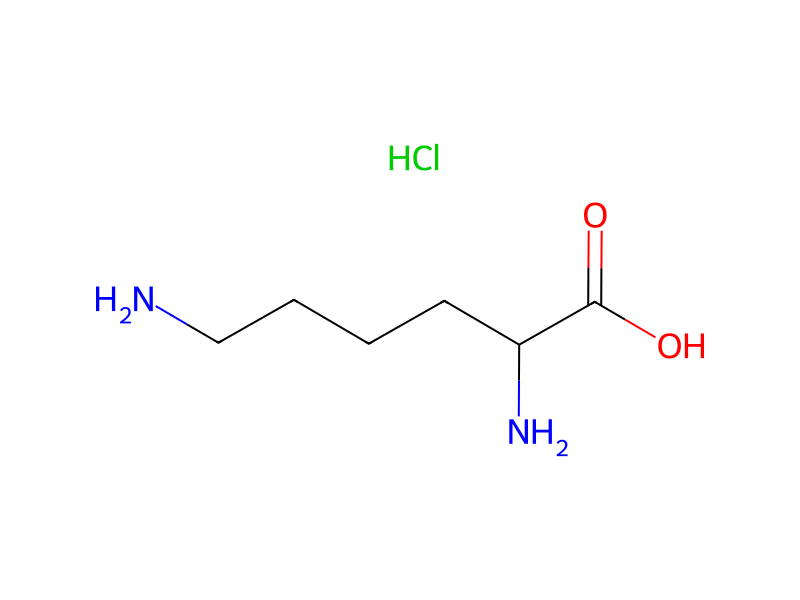
Basic information
- CAS
10098-89-2- Standard SMILES
Cl.NCCCCC(N)C(=O)O- InChIKey
BVHLGVCQOALMSV-UHFFFAOYSA-N- Molecular formula
- C6H14N2O2.ClH
- Average molar mass
- 182.65 g/mol
- Monoisotopic mass
- 182.0822054
Overview
See also: L-Lysine monohydrochloride (annotation moved to).
Names & identifiers
- Preferred name
- Lysine hydrochloride, DL-
- IUPAC
- 2,6-diaminohexanoic acid;hydrochloride
- English name
- DL-Lysine monohydrochloride
- Molecular formula
- C6H14N2O2.ClH
- Molecular weight
- 182.65
Names & synonyms
DL-Lysine monohydrochloride70-53-1DL-LYSINE HYDROCHLORIDELysine hydrochloride, DL-Lysine, hydrochloride (1:1)DL-Lysine hydrochloride (VAN)EINECS 200-739-0NSC 46705NSC-4670581478P92RJLysine, monohydrochlorideAI3-18306
Show more names
DL-Lys·HClDL-lysisneDL-LYS-OHHCLDL-LYSINE HCLH-DL-LYS-OH HCLDL - Lysine HCIDL-LYSINEMONOHYDROCHORIDE
EC 200-739-0DTXSID601014484LYSINE, DL-, HYDROCHLORIDEDLLysine hydrochlorideLysine hydrochloride, DLRefChem:800206Lysine monohydrochloride, dlDLLysine hydrochloride (VAN)
Database identifiers
- CAS
10098-89-2、22834-80-6、617-68-5、657-27-2、70-53-1、7274-88-6- PubChem CID
- 12047
- DTXSID
DTXSID601014484- UNII
- 81478P92RJ
- EC Number
- 200-739-0、245-258-7
Properties
Computed structural properties
- Topological polar surface area
- 89.3 Ų
- Hydrogen bond donors
- 4
- Hydrogen bond acceptors
- 4
- Rotatable bonds
- 5
- Heavy atoms
- 11
- Formal charge
- 0
- Complexity
- 106
Experimental & physicochemical properties
Chemical ClassesBiological Agents -> Amino Acids and Derivatives
Physical DescriptionWhite powder; [Sigma-Aldrich MSDS]
Physicochemical properties
- Melting point
- 267 °C · 267 °C (dec.)(lit.)
- alpha
- 20 · [α]D20 -0.5~+0.5゜ (c=8, HCl)
- storage temp.
- Keep in dark place,Inert atmosphere,Room temperature
- solubility
- 2 O: · H2O: soluble
- form
- Powder, Granules or Chunks
- color
- White
- optical activity
- -0.42 ° · -0.42°(C=0.57g/100mI, 5N HCL, 20°C, 589nm)
- Water Solubility
- Soluble in water. Insoluble in ethanol, ethyl ether, acetone, benzene and common neutral solvents.
- BRN
- 4711993 · 4711993
- Stability
- Stable. Incompatible with strong oxidizing agents.
- Major Application
- peptide synthesis
- InChI
- InChI=1S/C6H14N2O2.ClH/c7-4-2-1-3-5(8)6(9)10;/h5H,1-4,7-8H2,(H,9,10);1H
- InChIKey
- BVHLGVCQOALMSV-UHFFFAOYSA-N
- SMILES
- C(O)(=O)C(CCCCN)N.[H]Cl
- CAS DataBase Reference
- 70 · 70-53-1(CAS DataBase Reference)
- FDA UNII
- 81478 P92RJ · 81478P92RJ
- EPA Substance Registry System
- Lysine monohydrochloride (70-53-1)
- UNSPSC Code
- 12352209 · 12352209
- NACRES
- 26 · NA.26
- Symbol(GHS)
- 7 · GHS07
- Signal word
- Warning
- Hazard statements
- 319 · H319
- Precautionary statements
- 305 · P305+P351+P338
- PPE
- 95 · dust mask type N95 (US), Eyeshields, Gloves
- Hazard Codes
- Xi
- Risk Statements
- 36 · 36
- Safety Statements
- 26 · 26
- WGK Germany
- 3 · 3
- TSCA
- TSCA listed
- HS Code
- 29224100 · 29224100
- Storage Class
- 11 · 11 - Combustible Solids
- REACH Registrations
- Active
Safety & regulation
GHS classification
GHS Classification
This chemical does not meet GHS hazard criteria for 2.5% (1 of 40) of reports.
Warning
H319 (97.5%): Causes serious eye irritation [Warning Serious eye damage/eye irritation]
P264+P265, P280, P305+P351+P338, and P337+P317 (click each P-code to see the statement)
Aggregated GHS information provided per 40 reports by companies from 2 notifications to the ECHA C&L Inventory.
Hazard information
Regulatory Information
Chemical: DL-Lysine, monohydrochlorid-
Chemical: L-Lysine, hydrochloride
Status: Active Update: 19-01-2011 https://echa.europa.eu/registration-dossier/-/registered-dossier/6319
Other Safety Information
IMAP assessments - DL-Lysine, monohydrochlorid-: Environment tier I assessment
IMAP assessments - L-Lysine, hydrochloride: Environment tier I assessment
Hazards SummaryA strong eye irritant; [Sigma-Aldrich MSDS] See Lysine.
Hazard Classes and CategoriesEye Irrit. 2 (97.5%)
Safety data
- PPE
- dust mask type N95 (US), Eyeshields, Gloves
- wgk
- 3
- tsca
- TSCA listed
- hs_code
- 29224100
- risk_code
- 36
- Signal word
- Warning
- Symbol(GHS)
- GHS07
- hazard_code
- Xi
- safety_code
- 26
- Storage Class
- 11 - Combustible Solids
- Hazard statements
- H319
- REACH Registrations
- Active
- Precautionary statements
- P305+P351+P338
Chemistry & industry
Uses & manufacturing
UsesUsed as an intermediate; [ExPub: ECHA REACH Registrations]
Household ProductsInformation on 23 consumer products that contain Lysine HCL in the following categories is provided:
General Manufacturing InformationLysine, hydrochloride (1:1): ACTIVE
Applications
UsesDL-Lysine monohydrochloride acts as an intermediate in the preparation of 3-amino-azepan-2-one. It also serves as an essential amino acid. It is used as animal feed. In addition to this, it is used in the construction of polylysine polymers, which finds application in lysine-based polypeptide gels and films.
Suppliers100 total
国药集团化学试剂有限公司86-21-63210123 · [email protected]
北京华美互利生物化工010-56205725 · [email protected]
梯希爱(上海)化成工业发展有限公司021-67121386 · [email protected]
上海阿拉丁生化科技股份有限公司400-6206333 13167063860 · [email protected]
Syntechem Co.,Ltd[email protected]
上海迈瑞尔生化科技有限公司4006356688 18621169109 · [email protected]
武汉易泰科技有限公司上海分公司18930552037 · [email protected]
宁波亿诺化学品有限公司86-574-27787657 · [email protected]
阿法埃莎(中国)化学有限公司400-6106006 · [email protected]
安耐吉化学&3A(安徽泽升科技股份有限公司)400-0056266 · [email protected]
上海瀚鸿科技股份有限公司021-54306202 13764082696 · [email protected]
上海泰坦科技股份有限公司400-6009262 15618770481 · [email protected]
凯试(上海)科技有限公司021-50135380 · [email protected]
张家港市思普生化有限公司512-0512-58992291,58992287 18606280718 · [email protected]
孝感深远化工有限公司15527621225; 15527621225 · [email protected]
山东西亚化学有限公司13355009207 13355009207 · [email protected]
玛雅试剂+86 (573) 82222445 (0)18006601000 452520369 · [email protected]
四川库利南科技有限公司400-1166-196 18981987031 · [email protected]
天津希恩思生化科技有限公司400 638 7771 · [email protected]
湖南汇百侍生物科技有限公司0731-85526065 13308475853 · [email protected]
斯百全化学(上海)有限公司021-021-021-67601398-809-809-809 15221380277 · [email protected]
艾科试剂4008-755-333 18080918076 · [email protected]
上海思域化工科技有限公司86-21-34053660 · [email protected]
赛默飞世尔科技(中国)有限公司800-810-5118 · [email protected]
北京伊诺凯科技有限公司400-810-7969 010-59572699 · [email protected]
上海特伯化学科技有限公司+86-21-60341587 · [email protected]
江苏艾康生物医药研发有限公司025-66113011 13913916777 · [email protected]
TCI AMERICA800-4238616 · [email protected]
TOKYO CHEMICAL INDUSTRY CO., LTD.03-36680489 · [email protected]
TCI Europe320-37350700 · [email protected]
Shanghai Witofly Chemical Co.,Ltd[email protected]
上海睿升化工科技有限公司+86-021-50935922
上海倍卓生物科技有限公司021-61119791,13386096464 · [email protected]
北京环宇世纪化学科技有限公司hysj_bj.com
上海将来实业股份有限公司400-0066400 13621662912 · [email protected]
上海将来实业股份有限公司021-61552785 · [email protected]
HBCChem, Inc.+1-510-219-6317 · [email protected]
上海毕得医药科技股份有限公司400-164-7117 18317119277 · [email protected]
日照力德士化工有限公司010-51268198 · [email protected]
苏州纳美特生物科技有限公司0512-62388427 18012730781 · [email protected]
上海爱蝶实业有限公司021-58957966 18930537195 · [email protected]
四川省维克奇生物科技有限公司028-81700200 18116577057 · [email protected]
广拓化学(上海)有限公司021-60899189-8001 18918189673 · [email protected]
雷丁试剂0510-85629785 18013409632 · [email protected]
上海御略医药科技有限公司021-60345187 13671753212 · [email protected]
杭州杰恒化工有限公司0571-87396432 · [email protected]
上海洽凡生化科技有限公司+86-021-61654350 · [email protected]
上海有朋化工有限公司021-69005955 13701776567 · [email protected]
北京海力扬化学科技有限公司13718199399 · [email protected]
北京欣赛维化学科技有限公司010-56218822 13717722232 · [email protected]
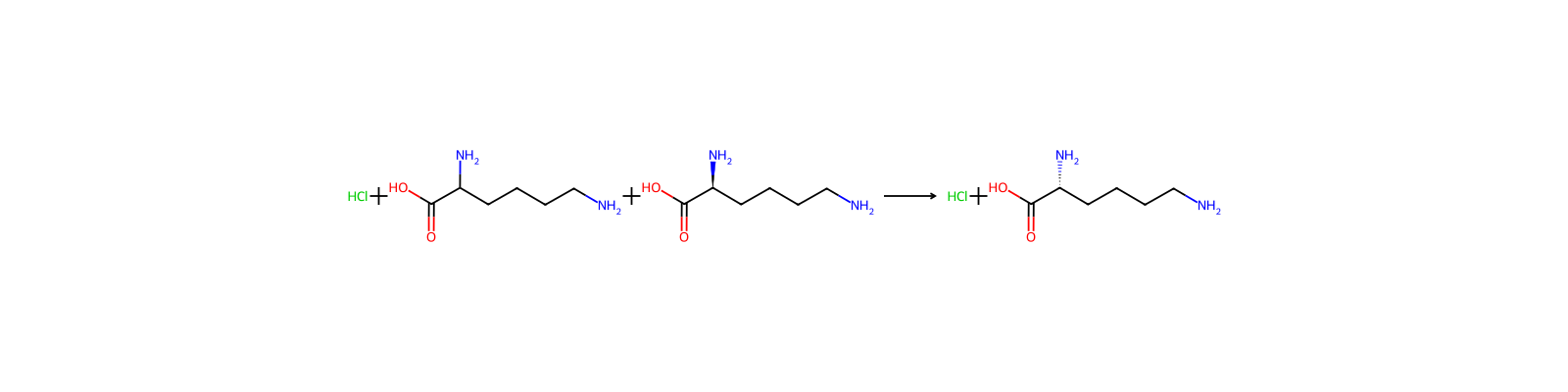
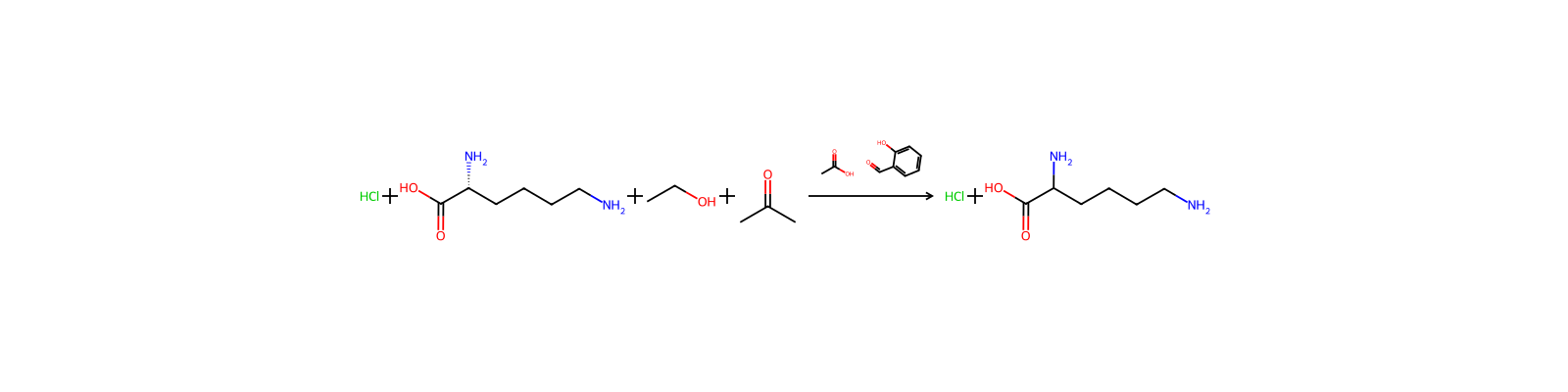
Related reactions
5 records


Compound notes
Loading…