

Basic information
- CAS
624-51-1- Standard SMILES
CCCCCCC(O)CC- InChIKey
GYSCXPVAKHVAAY-UHFFFAOYSA-N- Molecular formula
- C9H20O
- Average molar mass
- 144.25 g/mol
- Monoisotopic mass
- 144.15141526
Overview
Nonan-3-ol is a secondary alcohol that is nonane substituted by a hydroxy group at position 3. It has a role as a rat metabolite. It is a nonanol and a secondary alcohol.
Names & identifiers
- Preferred name
- 3-Nonanol
- IUPAC
- nonan-3-ol
- English name
- 3-NONANOL
- Molecular formula
- C9H20O
- Molecular weight
- 144.25
Names & synonyms
3-NONANOL624-51-1HexylethylcarbinolEthylhexylcarbinolEthyl hexyl carbinolNONANOL-3EINECS 210-850-6UNII-047779Z489DL-NONAN-3-OLAI3-37211DTXSID50862317047779Z489
Show more names
DL-3-NONANOL3-Nonanol>3-Nonanol,98%3-NONYL ALCOHOL3-HydroxynonaneN-HEXYLETHYLCARBINOLETHYL HEXYL CARBINEL
RefChem:95068(+-)-3-NONANOLDTXCID908111023-NONANOL, (+-)-210-850-6GYSCXPVAKHVAAY-UHFFFAOYSA-Nnonan-3-olMFCD00014411
Database identifiers
- CAS
624-51-1- PubChem CID
- 12216
- DTXSID
DTXSID50862317- ChEMBL
CHEMBL487999- ChEBI
CHEBI:165508- UNII
- 047779Z489
- EC Number
- 210-850-6
- Nikkaji
- J96.507C
Properties
Computed structural properties
- XLogP
- 3.3
- Topological polar surface area
- 20.2 Ų
- Hydrogen bond donors
- 1
- Hydrogen bond acceptors
- 1
- Rotatable bonds
- 6
- Heavy atoms
- 10
- Formal charge
- 0
- Complexity
- 61.7
Experimental & physicochemical properties
LipidsFatty Acyls [FA] -> Fatty alcohols [FA05]
Flavoring AgentsEU Flavoring substances
Solubility0.315 mg/mL at 25 °C
Boiling Point195.00 °C. @ 760.00 mm Hg
Physicochemical properties
- Melting point
- 22 °C · 22°C
- Boiling point
- 192 · 192-194 °C(lit.)
- Density
- 0.824 g/mL · 0.824 g/mL at 20 °C(lit.)
- refractive index
- 20 · n20/D 1.431
- FLAVIS Number
- 2.19 · 02.190 | Nonan-3-ol
- Flash point
- 79 °C · 79°C
- storage temp.
- 30 °C · Store below +30°C.
- solubility
- Very slightly soluble in water, soluble in alcohol and oils.
- pka
- 15.44 · 15.44±0.20(Predicted)
- Appearance
- Colorless to light yellow Liquid
- Odor
- Herbaceous, mildly spicy-earthy, but overall sweet and oily odor
- Odor Type
- herbal
- Water Solubility
- 288.4 mg/L · 288.4mg/L(temperature not stated)
- BRN
- 1719453 · 1719453
- Henry's Law Constant
- 5.2 · 5.2×10-2 mol/(m3Pa) at 25℃, Yaws (2003)
- Cosmetics Ingredients Functions
- PERFUMING
- InChI
- 1S/C9H20O/c1-3-5-6-7-8-9(10)4-2/h9-10H,3-8H2,1-2H3
- InChIKey
- GYSCXPVAKHVAAY-UHFFFAOYSA-N
- SMILES
- OC(CCCCCC)CC
- LogP
- 3.23 · 3.230 (est)
- CAS DataBase Reference
- 624 · 624-51-1(CAS DataBase Reference)
- EWG's Food Scores
- 1 · 1
- FDA UNII
- 47779 Z489 · 047779Z489
- EPA Substance Registry System
- 3 · 3-Nonanol (624-51-1)
- UNSPSC Code
- 12352104 · 12352104
- NACRES
- 22 · NA.22
- Signal word
- Warning
- Hazard statements
- 319 · H319
- Precautionary statements
- 264 · P264-P280-P305+P351+P338-P337+P313P
- Hazard Codes
- N
- Risk Statements
- 51 · 51/53
- Safety Statements
- 61 · 61
- RIDADR
- 3082 · UN 3082 9/PG 3
- WGK Germany
- 3 · 3
- TSCA
- TSCA listed
- HS Code
- 2905 · 2905 19 00
- Storage Class
- 10 · 10 - Combustible liquids
Safety & regulation
GHS classification
GHS Classification
This chemical does not meet GHS hazard criteria for 97.8% (89 of 91) of all reports.
Not Classified
Aggregated GHS information provided per 91 reports by companies from 3 notifications to the ECHA C&L Inventory.
Hazard information
Regulatory Information
Chemical: 3-Nonanol
Commission Regulation (EC) No 1565/2000 (Repealed by Com. Implementing Reg. (EU) No 872/2012)
3-Nonanol: Does not have an individual approval but may be used under an appropriate group standard
Other Safety InformationIMAP assessments - 3-Nonanol: Human health tier I assessment
Hazard Classes and CategoriesNot Classified
Safety data
- wgk
- 3
- tsca
- TSCA listed
- ridadr
- UN 3082 9/PG 3
- hs_code
- 2905 19 00
- risk_code
- 51/53
- Signal word
- Warning
- hazard_code
- N
- safety_code
- 61
- Storage Class
- 10 - Combustible liquids
- Hazard statements
- H319
- Precautionary statements
- P264-P280-P305+P351+P338-P337+P313P
Chemistry & industry
Pharmacology
Cellular LocationsExtracellular
Uses & manufacturing
General Manufacturing Information3-Nonanol: ACTIVE
Applications
Uses3-nonanol has been used in perfume compositions mainly because it was inexpensive, derived from a large-scale manufactured industrial chemical, but it has also served as intermediate in the manufacture of a number of new perfume chemicals, including the hydroxylated alcohols for Lavender and Jasmin type odors.As long as this material is available at a very low cost, it can probably find use in low-cost detergent perfumes, etc. as supporting note for fresh-herbaceous fragrances, for odor power and in fantasy fragrances.
Suppliers58 total
梯希爱(上海)化成工业发展有限公司021-67121386 · [email protected]
上海阿拉丁生化科技股份有限公司400-6206333 13167063860 · [email protected]
Hebei Zhuanglai Chemical Trading Co Ltd+86-16264648883 · [email protected]
毕佳索(上海毕得医药科技股份有限公司)400-6005915 · [email protected]
上海麦克林生化科技股份有限公司021-50706066 15221275939 · [email protected]
苏州市森菲达化工有限公司18796480002 18796480002 · [email protected]
Dayang Chem (Hangzhou) Co.,Ltd.+86-0571-88938639 17705817739 · [email protected]
上海药诚医药科技合伙企业(有限合伙)400-6181121 18616381138 · [email protected]
上海迈瑞尔生化科技有限公司4006356688 18621169109 · [email protected]
北京索莱宝科技有限公司010-50973130 17801761073 · [email protected]
武汉易泰科技有限公司上海分公司18930552037 · [email protected]
武汉市聚舜化工有限公司027-02783261126 18971318572 · [email protected]
阿法埃莎(中国)化学有限公司400-6106006 · [email protected]
安耐吉化学&3A(安徽泽升科技股份有限公司)400-0056266 · [email protected]
湖北微斯汀科技有限公司027-61182895 13367240285 · [email protected]
山东李比希生物医药科技有限公司15318973357; 15318973357 · [email protected]
广东大小化工有限公司1866-171603 18666171603 · [email protected]
玛雅试剂+86 (573) 82222445 (0)18006601000 452520369 · [email protected]
上海皓鸿生物医药科技有限公司400-8210725 4008210725 · [email protected]
TargetMol 中国(陶术生物)400-821-0310 15002144251 · [email protected]
TCI AMERICA800-4238616 · [email protected]
天成化工(江苏)有限公司0512-66387919 18662433356 · [email protected]
上海倍卓生物科技有限公司021-61119791,13386096464 · [email protected]
石家庄琪跃化工有限公司15369111890 · [email protected]
上海湄水化工科技有限公司021-60549325 18616193163
成都零六生物科技有限公司400-1166-196 13458535857 · [email protected]
北京福源坊科技有限公司010-57903446 15869909019 · [email protected]
Sigma-Aldrich西格玛奥德里奇(上海)贸易有限公司021-61415566 800-8193336 · [email protected]
Henan Alfa Chemical Co., Ltd+8618339805032 · [email protected]
郑州九亿时光新材料有限公司+86-15225627621 +86-13213167925 · [email protected]
广东翁江化学试剂有限公司0751-2815987 13927875076 · [email protected]
Alfa Chemistry+1-5166625404 · [email protected]
陕西缔都医药化工有限公司029-029-81120477 17792793610 · [email protected]
启源(广东)医药化工有限公司18026564465 · [email protected]
上海源叶生物科技有限公司13636370518 · [email protected]
山东西亚化学有限公司4009903999 13395398332 · [email protected]
BOC Sciences[email protected]
广州市金华大化学试剂有限公司020-84383047 · [email protected]
上海贤鼎生物科技有限公司021-021-52271985 17721149837 · [email protected]
湖北东曹化学科技有限公司027-83238443 13343438265 · [email protected]
杭州洁汉化工有限公司+86-571-86217390; +8618058761490 · [email protected]
江苏艾康生物医药研发有限公司025-58859352 15955137747 · [email protected]
厦门盈融达化工有限公司+86-0592-6210733 · [email protected]
career henan chemical co+86-0371-86658258 · [email protected]
大连锐盈科技有限公司0411-86907150 15940963210 · [email protected]
TCI Chemicals (India) Pvt. Ltd.[email protected]
Hebei Chuanghai Biotechnology Co., Ltd+86-15350571055 · [email protected]
Aladdin Scientific[email protected]
XIAMEN AMITY INDUSTRY AND TRADE CO., LTD.+8618950047208 · [email protected]
上海有集材料有限公司13052376889 13681663468 · [email protected]
Additional notes
DefinitionChEBI: 3-Nonanol is an aliphatic alcohol.
Related reactions
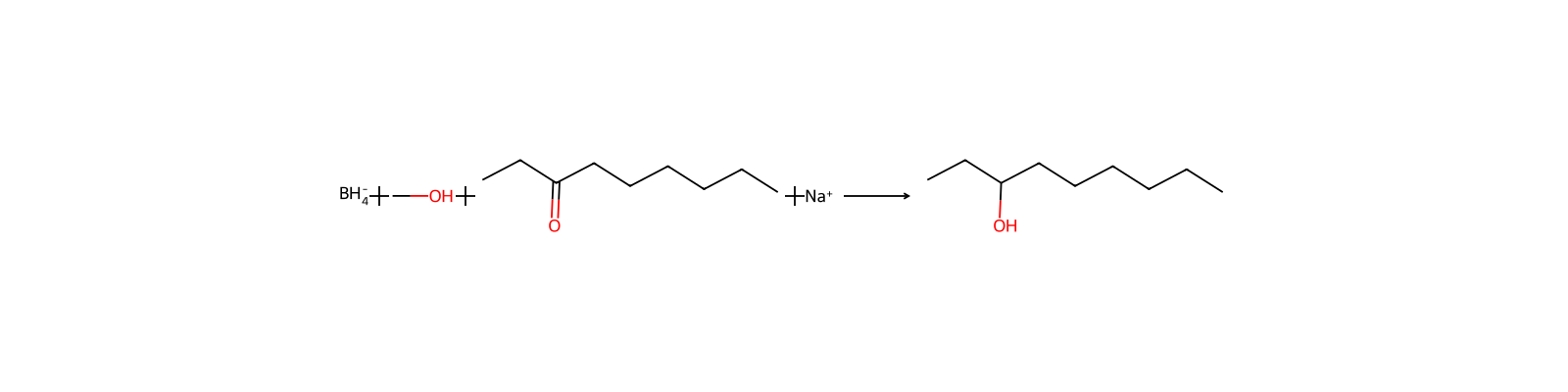
13 records


Compound notes
Loading…