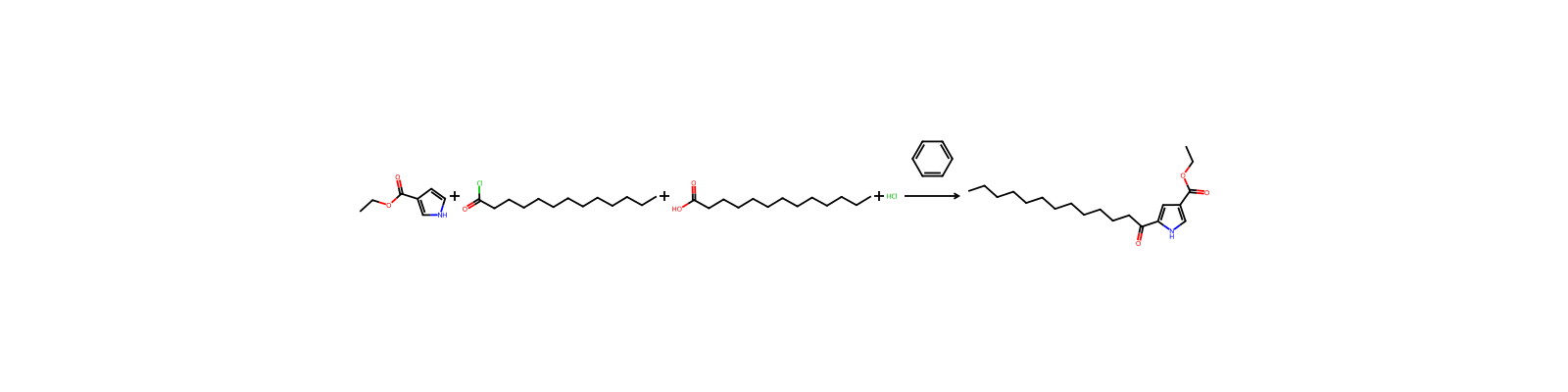

Basic information
- CAS
638-53-9- Standard SMILES
CCCCCCCCCCCCC(=O)O- InChIKey
SZHOJFHSIKHZHA-UHFFFAOYSA-N- Molecular formula
- C13H26O2
- Average molar mass
- 214.34 g/mol
- Monoisotopic mass
- 214.19328007
Names & identifiers
- Preferred name
- Tridecanoic acid
- IUPAC
- tridecanoic acid
- English name
- Tridecanoic acid
- Molecular formula
- C13H26O2
- Molecular weight
- 214.34
Names & synonyms
TRIDECANOIC ACID638-53-9n-Tridecanoic acidTridecylic acidn-Tridecoic acidTridecanoicacidMFCD00002741NSC 25955NSC 69131BRN 0508317DTXSID4021684NSC-69131
Show more names
CH?(CH?)??COOHTridecanlic acidTridecanoic Acid(C13:0)TridecylsαureTridecansαureridecanoicaci
FA 13:0NCIOpen2_003250CHEBI:4591919936LIY2VHY-Y1718NSC69131BDBM50511038NSC-25955
Database identifiers
- CAS
638-53-9、68002-90-4- PubChem CID
- 12530
- DTXSID
DTXSID4021684- ChEBI
CHEBI:45919- UNII
- 19936LIY2V
- EC Number
- 211-341-1
- Nikkaji
- J1.715I
Properties
Computed structural properties
- XLogP
- 4.7
- Topological polar surface area
- 37.3 Ų
- Hydrogen bond donors
- 1
- Hydrogen bond acceptors
- 2
- Rotatable bonds
- 11
- Heavy atoms
- 15
- Formal charge
- 0
- Complexity
- 143
Experimental & physicochemical properties
Solubility
33
0.033 mg/mL
Boiling Point312.4
Melting Point
44.5
44.5 °C
Physical Description
White to off-white solid; [Acros Organics MSDS]
Solid
Kovats Retention Index
1666;1668;1659;1647;1651;1660;1668;1645;1648;1669
1667.2;1662;1664;1678;1662;1680;278.19;277.6
2573;2603;2617;2617;2651;2617;2617.1;2617;2570;2664
Collision Cross Section
157.9 Ų [M-H]- [CCS Type: DT; Buffer gas: N2; Sample Type: Human bronchoalveolar lavage fluid (BALF); Dataset: Unambiguous Lipids]
155.16 Ų [M-H]- [CCS Type: DT; Method: single field calibrated with Agilent tune mix (Agilent)]
Physicochemical properties
- Melting point
- 41 · 41-42 °C(lit.)
- Boiling point
- 236 °C100 · 236 °C100 mm Hg(lit.)
- Density
- 0.9582 g/cm3 · 0.9582 g/cm3 (20 ºC)
- refractive index
- 1.4498 · 1.4498 (589.3 nm 20℃)
- FEMA
- 4336 · 4336 | TRIDECANOIC ACID
- Flash point
- 230 °F · >230 °F
- storage temp.
- room temp
- solubility
- Chloroform (Slightly)
- pka
- 4.78 · 4.78±0.10(Predicted)
- form
- Crystalline Chunks, Flakes or Powder
- color
- White to pale yellow
- Odor
- 100 % · at 100.00 %. waxy woody
- Odor Type
- waxy
- biological source
- synthetic (organic)
- Water Solubility
- 33 mg/L · 33mg/L(20 ºC)
- JECFA Number
- 2301 · 2301
- BRN
- 508317 · 508317
- Henry's Law Constant
- 8 · 8.0×100 mol/(m3Pa) at 25℃, Yaws (2003)
- Stability
- Stable. Incompatible with bases, oxidizing agents, reducing agents.
- InChI
- 1S/C13H26O2/c1-2-3-4-5-6-7-8-9-10-11-12-13(14)15/h2-12H2,1H3,(H,14,15)
- InChIKey
- SZHOJFHSIKHZHA-UHFFFAOYSA-N
- SMILES
- CCCCCCCCCCCCC(O)=O
- LogP
- 5.56 · 5.56
- CAS DataBase Reference
- 638 · 638-53-9(CAS DataBase Reference)
- Substances Added to Food (formerly EAFUS)
- TRIDECANOIC ACID
- EWG's Food Scores
- 1 · 1
- FDA UNII
- 19936 LIY2V · 19936LIY2V
- EPA Substance Registry System
- Tridecanoic acid (638-53-9)
- UNSPSC Code
- 85151701 · 85151701
- NACRES
- 25 · NA.25
- Symbol(GHS)
- 7 · GHS07
- Signal word
- Warning
- Hazard statements
- 315 · H315-H319-H335
- Precautionary statements
- 261 · P261-P264-P271-P280-P302+P352-P305+P351+P338
- target organs
- Respiratory system
- PPE
- 95 · dust mask type N95 (US), Eyeshields, Gloves
- Hazard Codes
- Xi
- Risk Statements
- 36 · 36/37/38
- Safety Statements
- 26 · 26-36
- WGK Germany
- 3 · 3
- RTECS
- 3850000 · YD3850000
- TSCA
- TSCA listed
- HS Code
- 29159000 · 29159000
- Storage Class
- 11 · 11 - Combustible Solids
- Hazard Classifications
- 2 Skin · Eye Irrit. 2Skin Irrit. 2STOT SE 3
Safety & regulation
GHS classification
GHS Classification
This chemical does not meet GHS hazard criteria for 1.3% (2 of 159) of reports.
Warning
H315 (98.7%): Causes skin irritation [Warning Skin corrosion/irritation];H319 (98.7%): Causes serious eye irritation [Warning Serious eye damage/eye irritation];H335 (98.1%): May cause respiratory irritation [Warning Specific target organ toxicity, single exposure; Respiratory tract irritation]
P261, P264, P264+P265, P271, P280, P302+P352, P304+P340, P305+P351+P338, P319, P321, P332+P317, P337+P317, P362+P364, P403+P233, P405, and P501 (click each P-code to see the statement)
Aggregated GHS information provided per 159 reports by companies from 9 notifications to the ECHA C&L Inventory. Each notification may be associated with multiple companies.;Reported as not meeting GHS hazard criteria per 2 of 159 reports by companies.;There are 8 notifications provided by 157 of 159 reports by companies with hazard statement code(s).;Information may vary between notifications depending on impurities, additives, and other factors. The percentage value in parenthesis indicates the notified classification ratio from companies that provide hazard codes. Only hazard codes with percentage values above 10% are shown. For more detailed information, please visit ECHA C&L website.
Hazard information
Regulatory Information
Chemical: Tridecanoic acid
Tridecanoic acid: Does not have an individual approval but may be used under an appropriate group standard
Other Safety InformationIMAP assessments - Tridecanoic acid: Human health tier I assessment;Evaluation - Chemicals that are unlikely to require further regulation to manage risks to environment
Hazards SummaryCauses convulsions in intravenous lethal-dose studies of mice (LD50 = 130 mg/kg); [RTECS] A skin and eye irritant; [Acros Organics MSDS] See Undecanoic acid.
Hazard Classes and CategoriesSkin Irrit. 2 (98.7%);Eye Irrit. 2 (98.7%);STOT SE 3 (98.1%)
Regulatory information
Regulatory Information
Chemical: Tridecanoic acid
Tridecanoic acid: Does not have an individual approval but may be used under an appropriate group standard
Safety data
- PPE
- dust mask type N95 (US), Eyeshields, Gloves
- wgk
- 3
- tsca
- TSCA listed
- rtecs
- YD3850000
- hs_code
- 29159000
- risk_code
- 36/37/38
- Signal word
- Warning
- Symbol(GHS)
- GHS07
- hazard_code
- Xi
- safety_code
- 26-36
- Storage Class
- 11 - Combustible Solids
- target organs
- Respiratory system
- Hazard statements
- H315-H319-H335
- Hazard Classifications
- Eye Irrit. 2Skin Irrit. 2STOT SE 3
- Precautionary statements
- P261-P264-P271-P280-P302+P352-P305+P351+P338
Chemistry & industry
Pharmacology
Cellular LocationsExtracellular;Membrane
Uses & manufacturing
Use ClassificationFlavouring Agent -> FLAVOURING_AGENT -> JECFA Functional Classes
General Manufacturing InformationTridecanoic acid: ACTIVE
Applications
DescriptionTridecanoic acid , or tridecylic acid, is a 13-carbon saturated fatty acid with the chemical formula CH3(CH2)11COOH. It is commonly found in dairy products. It is also found in some plants, such as nutmeg, muskmelon, black elderberry, and coconut.
OccurrenceReported found in star fruit oil Cuba (0.30%) and rue oil Cuba (0.07%).
UsesTridecanoic acid is a metabolite found in the aging mouse brain. It can be used in organic synthesis which is used to synthesize Testosterone Tridecanoate. It can also be used in wastewater treatment as a glycol ester and to reduce the presence of organic molecules such as caproic acid, alkanoic acid, and multivariate logistic regression.
General DescriptionTridecanoic acid is an aliphatic monoacid. It is complexed to β-cyclodextrin (β-CD) for structural studies. It can exist in three polymeric forms(A′, B′ and C′) when crystallized.
Upstream & downstream products
Upstream raw materials
Downstream products
Suppliers100 total
国药集团化学试剂有限公司86-21-63210123 · [email protected]
梯希爱(上海)化成工业发展有限公司021-67121386 · [email protected]
湖北永阔科技有限公司027-59223108 15972152991 · [email protected]
上海阿拉丁生化科技股份有限公司400-6206333 13167063860 · [email protected]
湖北万得化工有限公司15377098680 15377098680 · [email protected]
上海康朗生物科技有限公司021-61998208 18217752821 · [email protected]
武汉欣扬瑞和化学科技有限公司153-07155313 15307155313 · [email protected]
Hunan Jibang Biological Technology Co., LTD13776644403 · [email protected]
上海如吉生物科技发展有限公司+86-21-65211385-8001 36031160 · [email protected]
Hebei Yanxi Chemical Co., Ltd.+86-17531190177 · [email protected]
宜昌众意泰贸易有限公司0717-6449896 13886658719 · [email protected]
Syntechem Co.,Ltd[email protected]
南通萧畅医药贸易有限公司0513-82104991 18862997351 · [email protected]
上海迈瑞尔生化科技有限公司4006356688 18621169109 · [email protected]
大连美仑生物技术有限公司0411-62910999 13889544652 · [email protected]
安耐吉化学&3A(安徽泽升科技股份有限公司)400-0056266 · [email protected]
北京绿百草科技发展有限公司010-61136123 · [email protected]
山东洛克化工有限公司17653113209 13065062079 · [email protected]
MedBio脉铂医药021-69568360 18916172912 · [email protected]
湖北广奥生物科技有限公司027-02702759223056 18162699093 · [email protected]
南京蓝白化工有限公司025-85499326 15366059326;13813836665 · [email protected]
苏州润森药物科技有限公司0512-65885589 18751140360 · [email protected]
苏州启航生物科技有限公司18662190603;18151111370 · [email protected]
山东西亚化学有限公司13355009207 13355009207 · [email protected]
玛雅试剂+86 (573) 82222445 (0)18006601000 452520369 · [email protected]
四川库利南科技有限公司400-1166-196 18981987031 · [email protected]
天津希恩思生化科技有限公司400 638 7771 · [email protected]
斯百全化学(上海)有限公司021-021-021-67601398-809-809-809 15221380277 · [email protected]
艾科试剂4008-755-333 18080918076 · [email protected]
上海思域化工科技有限公司86-21-34053660 · [email protected]
赛默飞世尔科技(中国)有限公司800-810-5118 · [email protected]
TOKYO CHEMICAL INDUSTRY CO., LTD.03-36680489 · [email protected]
卡迪亚医药科技有限公司0371-86615086 18203638366 0371-86159066 13526786601
石家庄琪跃化工有限公司15369111890 · [email protected]
上海将来实业股份有限公司400-0066400 13621662912 · [email protected]
天津阿尔塔科技有限公司022-65378550-8551 · [email protected]
Labnetwork lnc.+86-27-50766799 +86-18062016861 · [email protected]
重庆星灿医药科技有限公司13594048950 19923294409 · [email protected]
四川省维克奇生物科技有限公司028-81700200 18116577057 · [email protected]
上海麦克林生化科技股份有限公司15221275939 15221275939 · [email protected]
杭州杰恒化工有限公司0571-87396432 · [email protected]
陕西缔都医药化工有限公司+86-29-87569262 +86-15003564040 · [email protected]
上海兴鲁化工科技有限公司02120970332 · [email protected]
Sigma-Aldrich西格玛奥德里奇(上海)贸易有限公司021-61415566 800-8193336 · [email protected]
天津阿尔塔科技有限公司022-6537-8550 15522853686 · [email protected]
TargetMol中国(陶术生物)021-021-33632979 15002134094 · [email protected]
山东智尚新材料有限公司+8617653113209 · [email protected]
南京世洲生物科技有限公司025-85563444 18351873721 · [email protected]
上海珞珐生化科技有限公司021-51111890 15317326293 · [email protected]
南通华祥医药科技有限公司+86-15716293042 15716293042 · [email protected]
Additional notes
DefinitionChEBI: Tridecanoic acid is a C13 straight-chain saturated fatty acid. It has a role as a plant metabolite. It is a long-chain fatty acid and a straight-chain saturated fatty acid. It is a conjugate acid of a tridecanoate.
Related reactions
37 records


Compound notes
Loading…