HomeMCPWorkbenchSkills
HomeWorkbenchNotificationsMe
llms.txt · MCP GuidePrivacy Policy · Terms of Service · Supportv1.8.0
  1. Home
  2. /Compound

Diisopropylcarbodiimide

HCID 12734
New noteNew reactionRequest quotes
Print preview

Completing data — refresh the page later to see the latest

Basic informationOverviewNames & identifiersPropertiesSafety & regulationChemistry & industryRelated reactionsCompound notes
Substructure searchFind similar structures

Basic information

CAS
693-13-0
Standard SMILES
CC(C)N=C=NC(C)C
InChIKey
BDNKZNFMNDZQMI-UHFFFAOYSA-N
Molecular formula
C7H14N2
Average molar mass
126.2 g/mol
Monoisotopic mass
126.11569845

Overview

1,3-diisopropylcarbodiimide is a carbodiimide compound having an isopropyl substituent on both nitrogen atoms. It has a role as a peptide coupling reagent.

Names & identifiers

Preferred name
Diisopropylcarbodiimide
IUPAC
N,N'-di(propan-2-yl)methanediimine
English name
N,N'-Diisopropylcarbodiimide
Molecular formula
C7H14N2
Molecular weight
126.2

Names & synonyms

N,N'-Diisopropylcarbodiimide693-13-0Diisopropylcarbodiimide1,3-Diisopropylcarbodiimide2-Propanamine, N,N'-methanetetraylbis-DIPCN,N'-METHANETETRAYLBIS-2-PROPANAMINEDTXSID4025086CHEBI:53092OQO20I6TWHdipropan-2-ylmethanediimineNSC-42080
Show more names
DICDIEDDIPCIPCIDICI
DTXCID305086CARBODIIMIDE, DIISOPROPYLRefChem:72688211-743-7N,N-DiisopropylcarbodiimideCarbodiimide, diisopropyl-N,N'-Methanediylidenebis(propan-2-amine)DIPCDI

Database identifiers

CAS
693-13-0
PubChem CID
12734
DTXSID
DTXSID4025086
ChEMBL
CHEMBL1332992
ChEBI
CHEBI:53092
UNII
OQO20I6TWH
EC Number
211-743-7
Nikkaji
J48.450D

Properties

Computed structural propertiesFilling in

XLogP
2.6
Topological polar surface area
24.7 Ų
Hydrogen bond donors
0
Hydrogen bond acceptors
2
Rotatable bonds
2
Heavy atoms
9
Formal charge
0
Complexity
101

Experimental & physicochemical properties

Chemical ClassesNitrogen Compounds -> Other Nitrogen Compounds
SpringerMaterials PropertiesSurface tension
Density0.806 g/cu cm at 25 °C
Color/FormColorless liquid
SolubilitySoluble in chloroform, methylene chloride, acetonitrile, dioxane, dimethylformamide, and tetrahydrofuran
Boiling Point147 °C
DecompositionWhen heated to decomposition it emits toxic fumes of /oxides of nitrogen/.
Vapor Pressure · 2 items

9.79 [mmHg]

5.1 mm Hg at 25 °C

Refractive IndexIndex of Refraction = 1.4320 at 20 °C
Physical DescriptionColorless liquid; [Merck Index]

Safety & regulation

Safety information is for reference only and does not replace the supplier’s Safety Data Sheet (SDS), applicable regulations, or professional assessment.

GHS classification

GHS Classification · 6 items

Danger

H226 (100%): Flammable liquid and vapor [Warning Flammable liquids]

P210, P233, P240, P241, P242, P243, P260, P261, P264, P264+P265, P271, P272, P273, P280, P284, P302+P352, P303+P361+P353, P304+P340, P305+P354+P338, P316, P317, P319, P320, P321, P332+P317, P333+P317, P342+P316, P362+P364, P370+P378, P391, P403, P403+P233, P403+P235, P405, and P501 (click each P-code to see the statement)

Aggregated GHS information provided per 217 reports by companies from 25 notifications to the ECHA C&L Inventory. Each notification may be associated with multiple companies.

Danger

H318: Causes serious eye damage [Danger Serious eye damage/eye irritation]

Hazard information

Regulatory Information · 2 items

Status: Active Update: 13-03-2023 https://echa.europa.eu/registration-dossier/-/registered-dossier/22047

1,3-Diisopropylcarbodiimide: Does not have an individual approval but may be used under an appropriate group standard

Hazards Summary · 1 item

An irritant; May cause skin and respiratory sensitization; [Merck Index] No evidence of carcinogenicity in dermal studies of mice and rats; Clinical and histological evidence of neurotoxicity observed in male rats; [NTP] A mild skin irritant; Causes cutaneous sensitization, convulsions, coma, lachrymation, ataxia, changes in thymus and kidney weights, weight loss, spermatogenesis, and allergic dermatitis in repeated-dose dermal studies of mice; [RTECS] Reacts with water producing 1,3-diisopropylurea; [HSDB] An irritant that may cause serious eye injury; May cause skin and respiratory sensitization; Highly toxic by inhalation; [Alfa Aesar MSDS]

Hazard Classes and Categories · 3 items

Flam. Liq. 3 (100%)

Flammable liquids - Category 3

Serious eye damage/eye irritation - Category 1

Chemistry & industry

Uses & manufacturing

Uses · 5 items

Used as a reagent in synthetic organic chemistry; [Merck Index] Used as a chemical intermediate and as a stabilizer for Sarin (chemical weapon); [HSDB]

Diisopropylcarbodiimide is used as a reagent for peptide syntheses and as a chemical intermediate. ... /Used/ in chemical, pharmaceutical, and recombinant DNA industries.

Diisopropylcarbodiimide is a useful reagent for peptide syntheses, especially solid-phase peptide synthesis. In addition, diisopropylcarbodiimide is used as a chemical intermediate in the synthesis of N-silylformamides and in the preparation of polyimide precursor coatings for electrophoretic image display fabrication. Also used as a stabilizer for the military nerve agent Sarin.

A peptide coupler commonly used in biotechnology.

The current link for Diisopropylcarbodiimide is used as a reagent for peptide syntheses … is broken. The link and wording could be updated as follows: "Available from, as of November 12, 2025: https://ntpsearch.niehs.nih.gov/?orderby=r&rpp=50&pageNum=1&query=693-13-0 ."

General Manufacturing Information2-Propanamine, N,N'-methanetetraylbis-: ACTIVE
Applications · 3 items

DescriptionDiisopropylcarbodiimide (DIC) is a clear liquid that can be easily dispensed by volume. It slowly reacts with moisture from the air, so for long term storage the bottle should be flushed with dry air or inert gas and sealed tightly. It is used in peptide chemistry as a coupling reagent. It is very toxic and caused contact dermatitis in a laboratory worker.

UsesN,N'-Diisopropylcarbodiimide is used as a reagent in synthetic organic chemistry. It serves as a chemical intermediate and as a stabilizer for Sarin (chemical weapon). It is also used in the synthesis of peptide and nucleic acid. Further, it is used as an antineoplastic and involved in the treatment of malignant melanoma and sarcomas. It is mainly used in amikacin, glutathione dehydrants, as well as in synthesis of acid anhydride, aldehyde, ketone, isocyanate; when it is used as dehydrating condensing agent, it reacts to dicyclohexylurea through short-time reaction under normal temperature.

Related reactions

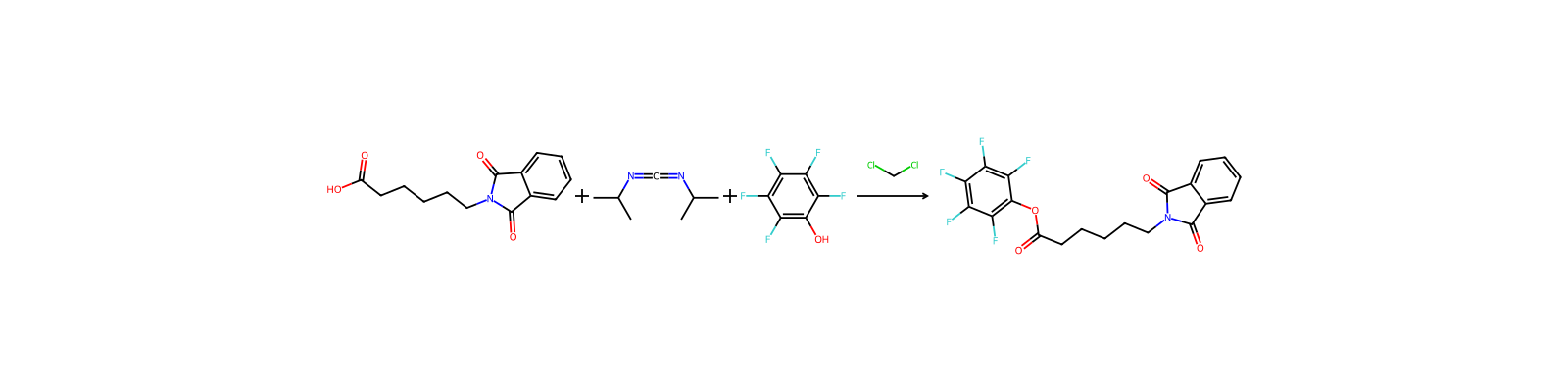
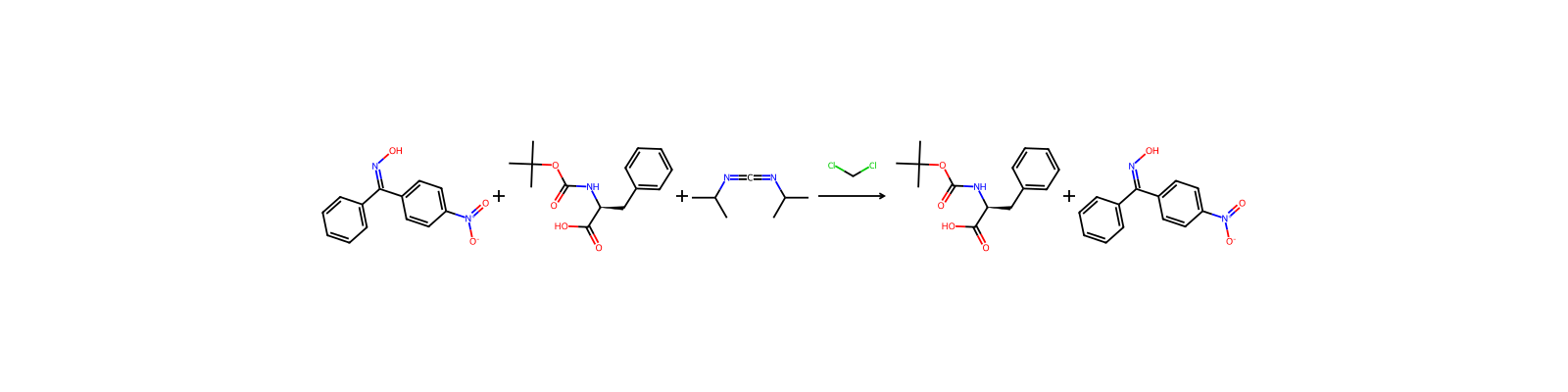
3,886 records
New reaction record
HRID 1749 reaction equation
HRID 1749As reactantuspto-grants-1998_03
HRID 6593 reaction equation
HRID 6593As solventuspto-grants-2006_08
HRID 6599 reaction equation
HRID 6599As solventuspto-grants-2006_08
HRID 10756 reaction equation
HRID 10756As reactantuspto-grants-2006_08
HRID 12007 reaction equation
HRID 12007As reactantuspto-grants-2010_06
HRID 12013 reaction equation
HRID 12013As reactantuspto-grants-2010_06
HRID 20905 reaction equation
HRID 20905As reactantuspto-grants-2010_06
HRID 34687 reaction equation
HRID 34687As reactantuspto-grants-1988_08
Page 1 of 486

Compound notes

Loading…

On this pageBasic informationOverviewNames & identifiersPropertiesSafety & regulationChemistry & industryRelated reactionsCompound notes
More actions
New noteNew reactionRequest quotes
Other Experimental PropertiesFlammable; Reacts with water to form 1,3-diisopropylurea

Physicochemical properties

Melting point
210 · 210-2120C (dec)
Boiling point
145 · 145-148 °C(lit.)
Density
0.815 g/mL · 0.815 g/mL at 20 °C(lit.)
vapor pressure
34.9 hPa · 34.9hPa at 55.46℃
refractive index
20 · n20/D 1.433(lit.)
Flash point
93 °F · 93 °F
storage temp.
30 °C · Store below +30°C.
solubility
Soluble in chloroform, methylene chloride, acetonitrile, dioxane, dimethylformamide andtetrahydrofuran.
form
Liquid
color
Clear colorless to yellow
Sensitive
Moisture Sensitive
BRN
878281 · 878281
Henry's Law Constant
9.9 · 9.9×10-3 mol/(m3Pa) at 25℃, HSDB (2015)
Stability
Volatile
Major Application
peptide synthesis
InChI
1S/C7H14N2/c1-6(2)8-5-9-7(3)4/h6-7H,1-4H3
InChIKey
BDNKZNFMNDZQMI-UHFFFAOYSA-N
SMILES
CC(C)N=C=NC(C)C
LogP
4.11 at · 4.11 at 20℃
Toxicology and Carcinogenesis
Toxicology and Carcinogenesis Studies of Diisopropylcarbodiimide (CASRN 693-13-0) in F344/N Rats and B6C3F1 Mice (Dermal Studies)
CAS DataBase Reference
693 · 693-13-0(CAS DataBase Reference)
EWG's Food Scores
1 · 1
FDA UNII
20 I6TWH · OQO20I6TWH
NIST Chemistry Reference
2 · 2-Propanamine, N,N'-methanetetraylbis-(693-13-0)
EPA Substance Registry System
2 · 2-Propanamine, N,N'-methanetetraylbis- (693-13-0)
UNSPSC Code
12352200 · 12352200
NACRES
22 · NA.22
Symbol(GHS)
2 · GHS02,GHS05,GHS06,GHS08
Signal word
Danger
Hazard statements
226 · H226-H317-H318-H330-H334
Precautionary statements
210 · P210-P233-P280-P303+P361+P353-P304+P340+P310-P305+P351+P338
PPE
Eyeshields, Faceshields, Gloves, type ABEK (EN14387) respirator filter
Hazard Codes
T+,T,F,Xn
Risk Statements
10 · 10-26-36/37/38-41-42/43-37/38
Safety Statements
26 · 26-36/37/39-45-38-28A-16-22
RIDADR
2929 · UN 2929 6.1/PG 1
WGK Germany
3 · 3
RTECS
2175000 · FF2175000
F
10 · 10-21
Hazard Note
Flammable/Highly Toxic/
TSCA
TSCA listed
HazardClass
6.1 · 6.1
PackingGroup
II
HS Code
29252000 · 29252000
Storage Class
3 · 3 - Flammable liquids
Hazard Classifications
1 InhalationEye · Acute Tox. 1 InhalationEye Dam. 1Flam. Liq. 3Resp. Sens. 1Skin Sens. 1
Hazardous Substances Data
693 · 693-13-0(Hazardous Substances Data)
REACH Registrations
Active
Limited Quantities
100 ml · 100ml (liquid) or 0.5 Kg (solid)
Excepted Quantities
Max Inner Pack (1g or 1ml) and Max Outer Pack (500g or 500ml)

Safety & protection

Disposal Methods · 1 item

SRP: The most favorable course of action is to use an alternative chemical product with less inherent propensity for occupational harm/injury/toxicity or environmental contamination. Recycle any unused portion of the material for its approved use or return it to the manufacturer or supplier. Ultimate disposal of the chemical must consider: the material's impact on air quality; potential migration in soil or water; effects on animal and plant life; and conformance with environmental and public health regulations.

Toxicology

Environmental Fate · 3 items

TERRESTRIAL FATE: Based on a classification scheme(1), an estimated Koc value of 560(SRC), determined from a structure estimation method(2), indicates that 1,3-diisopropylcarbodiimide is expected to have low mobility in soil(SRC). However, 1,3-diisopropylcarbodiimide reacts with water(3); in moist soils, dicyclohexylcarbodiimide can hydrate to form diisopropylurea which has an estimated Koc of about 30(2,SRC) indicating high mobility in soil(1) for this degradation product(SRC). Volatilization of 1,3-diisopropylcarbodiimide from moist soil surfaces is expected to occur given an estimated Henry's Law constant of 9.92X10⁻⁴ atm-cu m/mole(SRC), using a fragment constant estimation method(2). 1,3-Diisopropylcarbodiimide is expected to volatilize from dry soil surfaces(SRC) based upon a vapor pressure of 5.1 mm Hg at 25 °C(3).

AQUATIC FATE: Based on a classification scheme(1), an estimated Koc value of 560(SRC), determined from a structure estimation method(2), indicates that 1,3-diisopropylcarbodiimide is expected to adsorb to suspended solids and sediment(SRC). However, 1,3-diisopropylcarbodiimide reacts with water to form diisopropylurea(3). Therefore, adsorption to sediment is not expected to be an important fate processes(SRC). 1,3-Diisopropylcarbodiimide hydration with water is a pseudo-first reaction and is both acid and base catalyzed(3); depending upon conditions (pH, buffering agents, etc), the hydration half-life may vary from less than one hour to several days(3,SRC). At slow hydration rates, some volatilization from water may occur(SRC) based upon an estimated Henry's Law constant of 9.92X10⁻⁴ atm-cu m/mole(SRC), developed using a fragment constant estimation method(2). Using this Henry's Law constant and an estimation method(4), volatilization half-lives for a model river and model lake are 4 hours and 5 days, respectively(SRC). According to a classification scheme(6), an estimated BCF of 240(SRC), from an estimated log Kow of 4.11(2) and a regression-derived equation(2), suggests the potential for bioconcentration in aquatic organisms is high(SRC).

ATMOSPHERIC FATE: According to a model of gas/particle partitioning of semivolatile organic compounds in the atmosphere(1), 1,3-diisopropylcarbodiimide, which has a vapor pressure of 5.1 mm Hg at 25 °C(2), is expected to exist solely as a vapor in the ambient atmosphere. Vapor-phase 1,3-diisopropylcarbodiimide is degraded in the atmosphere by reaction with photochemically-produced hydroxyl radicals(SRC); the half-life for this reaction in air is estimated to be 3.5 days(SRC), calculated from its rate constant of 4.55X10⁻¹² cu cm/molecule-sec at 25 °C(SRC) that was derived using a structure estimation method(3). 1,3-Diisopropylcarbodiimide reacts with water(2); therefore, removal from air may occur through contact with water vapor or precipitation(SRC).

Adverse EffectsNeurotoxin - Other CNS neurotoxin
Toxicity Summary · 1 item

A 2025 retrospective study about accidental exposures to diisopropylcarbodiimide described three male workers who experienced similar dermal, respiratory, and neurological effects. They were exposed by inhalation and dermal contact via a presumed single high level exposure from a leaking barrel. All three workers developed contact dermatitis, occupational asthma, neurological effects (persistent headaches, neuropathic pain and hand/foot paraesthesia, fatigue and cognitive impairment), and sleep disturbances. The authors concluded that the close temporal association to a single exposure suggested a possible causal relationship when including inforamtion about neurological toxicity from animal studies.

Ongoing Test Status · 2 items

The following link will take the user to the National Toxicology Program (NTP) Test Agent Search Results page, which tabulates all of the "Standard Toxicology & Carcinogenesis Studies", "Developmental Studies", and "Genetic Toxicity Studies" performed with this chemical. Clicking on the "Testing Status" link will take the user to the status (i.e., in review, in progress, in preparation, on test, completed, etc.) and results of all the studies that the NTP has done on this chemical.[Available from, as of June 21, 2012: http://ntp-apps.niehs.nih.gov/ntp_tox/index.cfm?fuseaction=ntpsearch.searchresults&searchterm=693-13-0]

The current link is broken and the link and wording could be updated as follows: https://ntpsearch.niehs.nih.gov/?query=693-13-0 The following link will take the user to the National Toxicology Program (NTP) Test Agent Search Results page, e.g., the "Standard Toxicology & Carcinogenesis Studies", "Developmental Studies", and "Genetic Toxicity Studies" performed with this chemical. The most recent update for this chemical was in May, 2025 (Evaluation of Substances of Regulatory Interest Using Non-Animal Skin Sensitization Test Methods). Content available as of November 12, 2025.

Soil Adsorption/Mobility · 1 item

Using a structure estimation method based on molecular connectivity indices(1), the Koc of 1,3-diisopropylcarbodiimide can be estimated to be 560(SRC). According to a classification scheme(2), this estimated Koc value suggests that 1,3-diisopropylcarbodiimide is expected to have low mobility in soil. 1,3-Diisopropylcarbodiimide hydrates in water(3); in moist soils, 1,3-diisopropylcarbodiimide can hydrate to form diisopropylurea which has an estimated Koc of about 30(1) indicating very high mobility in soil for the hydration product(2).

Artificial Pollution Sources1,3-Diisopropylcarbodiimide's production and use as a reagent for peptide syntheses, chemical intermediate, and stabilizer for military nerve agents(1) may result in its release to the environment through various waste streams.
Carcinogen Classification · 6 items

Diisopropylcarbodiimide

TR-523: Toxicology and Carcinogenesis Studies of Diisopropylcarbodiimide (CASRN 693-13-0) in F344/N Rats and B6C3F1 Mice (Dermal Studies) (2007 )

09/28/05

No Evidence

No Evidence

No Evidence

Environmental Bioconcentration · 1 item

An estimated BCF of 240 was calculated in fish for 1,3-diisopropylcarbodiimide(SRC), using an estimated log Kow of 4.11(1) and a regression-derived equation(1). According to a classification scheme(2), this BCF suggests the potential for bioconcentration in aquatic organisms is high(SRC), provided the compound is not metabolized by the organism(SRC). 1,3-Diisopropylcarbodiimide hydrolyzes (hydrates) in water to form diisopropylurea(3), therefore, bioconcentration in aquatic organisms is not expected to be an important fate process(SRC).

Volatilization from Water/Soil · 1 item

The Henry's Law constant for 1,3-diisopropylcarbodiimide is estimated as 9.92X10⁻⁴ atm-cu m/mole(SRC) using a fragment constant estimation method(1). This Henry's Law constant indicates that 1,3-diisopropylcarbodiimide is expected to volatilize from water surfaces(2). Based on this Henry's Law constant, the volatilization half-life from a model river (1 m deep, flowing 1 m/sec, wind velocity of 3 m/sec)(2) is estimated as 4 hours(SRC). The volatilization half-life from a model lake (1 m deep, flowing 0.05 m/sec, wind velocity of 0.5 m/sec)(2) is estimated as 5 days(SRC). The importance of volatilization from water will be lessened because 1,3-Diisopropylcarbodiimide hydrolyzes (hydrates) in water to form diisopropylurea(3) with a half-life that may vary from less than one hour to several days(SRC). 1,3-Diisopropylcarbodiimide's Henry's Law constant indicates that volatilization from moist soil surfaces may occur(SRC). 1,3-Diisopropylcarbodiimide is expected to volatilize from dry soil surfaces(SRC) based upon a vapor pressure of 5.1 mm Hg at 25 °C(3).

Non-Human Toxicity Excerpts · 3 items

/LABORATORY ANIMALS: Acute Exposure/ ...The objectives of this study were to determine the irritation and sensitizing potential of these two compounds when applied topically to B6C3F1 mice. Sensitization potential was assessed by the Mouse Ear Swelling Test (MEST) and the murine Local Lymph Node Assay (LLNA). Concentrations used in the contact hypersensitivity assays were determined by primary irritancy studies. DCC and DIC were identified as both irritants and contact sensitizers with the MEST being a more sensitive indicator of sensitization potential. The MEST identified DCC as a sensitizer at concentrations as low as 0.006% (w/v) 24 hr and 48 hr post challenge and DIC at 0.3% (w/v) and 1.5% (w/v) 24 and 48 hr post challenge, respectively. In the LLNA, the lowest concentrations yielding a significant response were 0.06% (w/v) for DCC and 10% (w/v) for DIC.

/LABORATORY ANIMALS: Chronic Exposure or Carcinogenicity/ Dermal administration of DCC and DIC in F344/N rats and B6C3F1 mice for 90-days induced skin irritation at the site of application in a dose-dependent manner. Microscopically, dose-dependent increases in epidermal hyperplasia and chronic inflammation were observed. We further evaluated the effects of dermal exposure of DCC and DIC in p53 haploinsufficient and Tg.AC mouse models. Results revealed the skin as the primary target of DCC and DIC exposure as indicated by dose ? dependent skin lesions (hyperplasia, inflammation and necrosis). DCC induced squamous cell papillomas in Tg.AC mice but did not induce any neoplastic lesions in p53 haploinsufficient mice. Dermal application of DIC did not induce any neoplastic lesions in Tg.AC mice and p53 haploinsufficient mice. Based on these studies, it was predicted that DIC would be negative and DCC positive for carcinogenic activity in the traditional two-year bioassay. In the subsequent studies, the carcinogenic potential of DIC only in F344 rats and B6C3F1 mice in a traditional 2-year chronic carcinogenicity bioassay was evaluated by the dermal route. Findings revealed the skin as the major target organ of toxicity in both sexes in rats and in male mice. There were no neoplastic lesions observed in rats or mice with the administration of DIC. In rats, there were clinical signs of toxicity in the highest dose-group which included ataxia, excitability, impaired gait, low muscle tone, abnormal breathing, lethargy, and seizures. This was accompanied by non-neoplastic lesions in the brain and lung only at the highest dose level. In conclusion, both DIC and DCC are dermal toxicants. DIC did not have any carcinogenic activity in transgenic mouse models or in the traditional NTP two-year carcinogenicity studies in F344 rats and B6C3F1 mice. DCC was positive in the Tg.AC mouse model.

/GENOTOXICITY/ ... Analysis of peripheral blood smears from male and female B6C3F1 mice exposed to 17.5-140.0 mg DIC/kg/day by skin painting for 13 weeks revealed dose-related increases in the frequency of micronucleated normochromatic erythrocytes (MN-NCE) in both sexes. Results of a similar 13-week peripheral blood micronucleus (MN) test with DCC (1.5-12.0 mg/kg/day) were also positive, although the increases in MN-NCE were not as great as those observed with DIC. In contrast to the positive results of the subchronic skin-painting studies in mice, acute bone marrow MN studies with DIC and DCC in male F344 rats, using intraperitoneal (i.p.) injection, yielded negative results. Both the acute and the subchronic exposures included doses that produced clinical signs of toxicity. Acute mouse bone marrow MN tests with DIC administered in single or triple i.p. injection protocols were subsequently conducted to determine if the differing responses between mice and rats were due to species or protocol differences. The results of these acute tests were negative or equivocal. Because the subchronic studies produced positive results, it was hypothesized that these carbodiimides required multiple treatments over an extended period of time to produce an increase in MN-erythrocytes. To confirm the original response, a second dermal subchronic study was conducted with DIC; the protocol was modified to include sequential blood samplings to permit monitoring MN frequencies over time. The data demonstrated a small but consistent induction of micronucleated erythrocytes in mice treated with DIC by skin painting.

Environmental Abiotic Degradation · 1 item

The rate constant for the vapor-phase reaction of 1,3-diisopropylcarbodiimide with photochemically-produced hydroxyl radicals has been estimated as 4.55X10⁻¹² cu cm/molecule-sec at 25 °C(SRC) using a structure estimation method(1). This corresponds to an atmospheric half-life of about 3.5 days at an atmospheric concentration of 5X10+5 hydroxyl radicals per cu cm(1). 1,3-Diisopropylcarbodiimide hydrolyzes (hydrates) in water to form diisopropylurea(2); the hydration is a pseudo-first reaction that is both acid and base catalyzed(2); depending upon conditions (pH, buffering agents, etc), the hydration half-life may vary from less than one hour to several days(SRC).

Probable Routes of Human Exposure · 1 item

Occupational exposure to 1,3-diisopropylcarbodiimide may occur primarily through dermal contact with this compound at workplaces where diisopropylcarbodiimide is produced or used, but exposure through inhalation of vapor can also occur(SRC). Human exposure to diisopropylcarbodiimide could occur during the extensive handling of the compound that occurs during the synthesis of peptides and other compounds in the chemical, pharmaceutical, and recombinant DNA industries(1).

Safety data

F
10-21
PPE
Eyeshields, Faceshields, Gloves, type ABEK (EN14387) respirator filter
wgk
3
tsca
TSCA listed
rtecs
FF2175000
ridadr
UN 2929 6.1/PG 1
hs_code
29252000
risk_code
10-26-36/37/38-41-42/43-37/38
Signal word
Danger
Symbol(GHS)
GHS02,GHS05,GHS06,GHS08
hazard_code
T+,T,F,Xn
hazard_note
Flammable/Highly Toxic/
safety_code
26-36/37/39-45-38-28A-16-22
hazard_class
6.1
Storage Class
3 - Flammable liquids
packing_group
II
Hazard statements
H226-H317-H318-H330-H334
Limited Quantities
100ml (liquid) or 0.5 Kg (solid)
Excepted Quantities
Max Inner Pack (1g or 1ml) and Max Outer Pack (500g or 500ml)
REACH Registrations
Active
Hazard Classifications
Acute Tox. 1 InhalationEye Dam. 1Flam. Liq. 3Resp. Sens. 1Skin Sens. 1
Precautionary statements
P210-P233-P280-P303+P361+P353-P304+P340+P310-P305+P351+P338
Hazardous Substances Data
693-13-0(Hazardous Substances Data)

General DescriptionN,N′-Diisopropylcarbodiimide (DIC) is a carbodiimide used as a coupling reagent in the synthesis of amides, peptides, ureas, heterocycles, and unsymmetrical carbodiimides. It is also used in the polymerization reactions as an activator.

Upstream & downstream products

Upstream raw materials

MOLECULAR SIEVES PACK 4A1,2-DiethoxydisulfaneLead carbonateBenzeneDichloromethaneN,N'-Diisopropylthiourea

Downstream products

4-(Piperidine-1-carbonyl)phenylboronic acid4-(2-Cyanoethylaminocarbonyl)phenylboronic acid3-(2-Cyanoethylaminocarbonyl)phenylboronic acid4-(3-tert-Butyl-1,2,4-oxadiazol-5-yl)phenylboronic acid3-tert-Butyl-5-(4-bromophenyl)-1,2,4-oxadiazole4-(3-tert-Butyl-1,2,4-oxadiazol-5-yl)benzaldehyde2-tert-Butyl-1,3-diisopropylisourea4,5-Imidazolidinedione, 2,2-dichloro-1,3-bis(1-methylethyl)-Bis(N N'-diisopropylacetamidinato)nicke&

Additional notes

DefinitionChEBI: A carbodiimide compound having an isopropyl substituent on both nitrogen atoms.