
Basic information
- CAS
814-49-3- Standard SMILES
CCOP(=O)(Cl)OCC- InChIKey
LGTLXDJOAJDFLR-UHFFFAOYSA-N- Molecular formula
- C4H10ClO3P
- Average molar mass
- 172.55 g/mol
- Monoisotopic mass
- 172.00560849
Overview
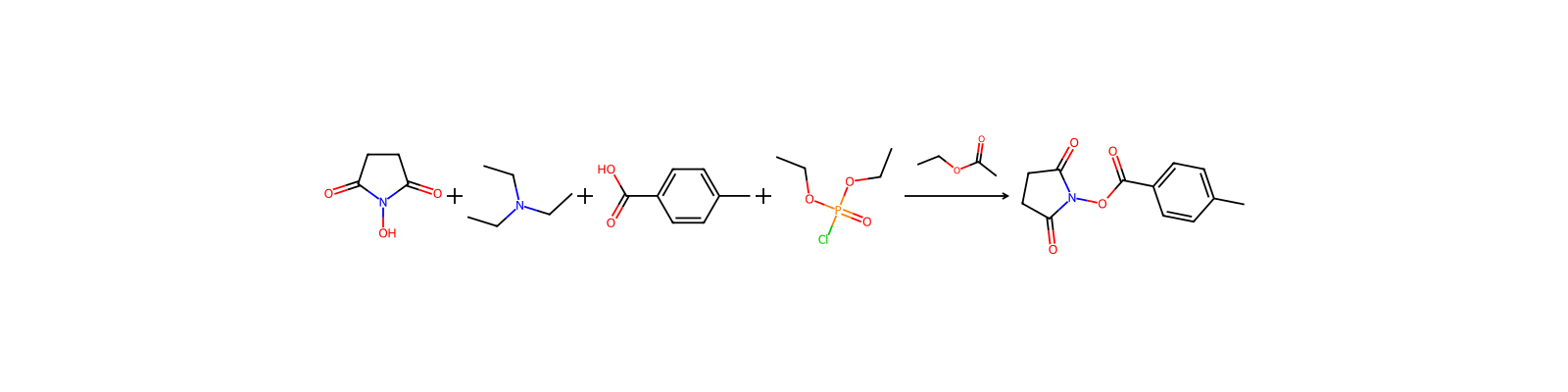
Diethyl chlorophosphate is a clear liquid. This material is used as an intermediate in organic synthesis. (EPA, 1998)
Names & identifiers
- Preferred name
- Diethyl chlorophosphate
- IUPAC
- 1-[chloro(ethoxy)phosphoryl]oxyethane
- English name
- Diethyl chlorophosphate
- Molecular formula
- C4H10ClO3P
- Molecular weight
- 172.55
Names & synonyms
DIETHYL CHLOROPHOSPHATE814-49-3Diethyl phosphorochloridateDiethyl chlorophosphonateDiethoxyphosphoryl chlorideDiethyl phosphorochlorideO,O-Diethyl chlorophosphateDiethoxyphosphorus oxychlorideO,O-Diethyl chloridophosphateDiethylchlorfosfatDIETHYLCHLOROPHOSPHATEPhosphorochloridic acid, diethyl ester
Show more names
ChlorodiethylphosphateCHLOROPHOSPHORIC ACID DIETHYL ESTERai3-18557[qr]AURORA KA-1634Diethyl chlorophosphe
O,O-Diethyl chlorophosphonateDiethylphosphoric acid chlorideO,O-Diethylphosphoryl chlorideO,O-Diethyl phosphorochloridate1-[chloro(ethoxy)phosphoryl]oxyethaneChlorophosphoric acid, diethyl esterEthyl phosphorochloridate (EtO)2ClPOEthyl phosphorochloridate (Cl(EtO)2PO)
Database identifiers
- CAS
814-49-3- PubChem CID
- 13139
- DTXSID
DTXSID4052556
Properties
Computed structural properties
- XLogP
- 1
- Topological polar surface area
- 35.5 Ų
- Hydrogen bond donors
- 0
- Hydrogen bond acceptors
- 3
- Rotatable bonds
- 4
- Heavy atoms
- 9
- Formal charge
- 0
- Complexity
- 106
Experimental & physicochemical properties
Chemical ClassesOther Classes -> Organophosphates, Other
SpringerMaterials PropertiesNuclear quadrupole resonance spectroscopy
Density
1.1915 at 77 °F (EPA, 1998) - Denser than water; will sink
1.1915 @ 25 °C
1.21 @ 20°C
Color/FormWater-white liquid
SolubilitySol in alcohols
Boiling Point
140 °F at 2 mmHg (EPA, 1998)
60 °C @ 2 mm Hg
DecompositionWhen heated to decomposition it emits ... very toxic fumes of /hydrogen chloride and phosphorous oxides/.
Vapor Density
5.94 (EPA, 1998) - Heavier than air; will sink (Relative to Air)
5.94
Refractive IndexIndex of refraction: 1.4153 @ 25 °C
Safety & regulation
GHS classification
GHS Classification
Danger
H300+H310+H330 (74.5%): Fatal if swallowed, in contact with skin or if inhaled [Danger Acute toxicity, oral; acute toxicity, dermal; acute toxicity, inhalation]
P260, P261, P262, P264, P270, P271, P280, P284, P301+P316, P302+P352, P304+P340, P316, P320, P321, P330, P361+P364, P403+P233, P405, and P501 (click each P-code to see the statement)
Aggregated GHS information provided per 51 reports by companies from 5 notifications to the ECHA C&L Inventory. Each notification may be associated with multiple companies.
Hazard information
Regulatory Information
Status: Active Update: 21-03-2018 https://echa.europa.eu/registration-dossier/-/registered-dossier/23013
Phosphorochloridic acid, diethyl ester: Does not have an individual approval but may be used under an appropriate group standard
The New Jersey Worker and Community Right to Know Act requires public and private employers to provide information about hazardous substances at their workplaces. (N.J.S.A. 34:5A-1 et. seq.)
DOT LabelPoison
Fire HazardsEmits very toxic fumes of chloride and phosphorus oxides when heated to decomposition. (EPA, 1998)
Fire PotentialCombustible
Health HazardsThis material is a cholinesterase inhibitor. It has high oral and very high dermal toxicity. It is a skin irritant. It is also toxic by inhalation. (EPA, 1998)
Hazards Summary
A cholinesterase inhibitor; [Hawley] A cholinesterase inhibitor and skin irritant; Highly toxic by ingestion and skin absorption; [CAMEO] A mild skin irritant; Somnolence and convulsions observed in lethal-dose feeding studies of mice; [RTECS]
Chemistry & industry
Pharmacology
Mechanism of ActionCholinesterase inhibitor
Absorption, Distribution and ExcretionSkin absorption.
Uses & manufacturing
Uses
Used as intermediate in organic synthesis; [Hawley]
Intermediate in organic synthesis
Impurities95% minimum purity grade
Formulations/PreparationsGrade: Technical
General Manufacturing Information
Phosphorochloridic acid, diethyl ester: ACTIVE
Available in 55 gallon drums
Applications
DescriptionDiethyl chlorophosphate is a combustible,clear liquid with an unpleasant odor. Molecularweight=172.76; Boiling point=60℃ at 2.0 mmHg; 81℃at 6.0 mmHg. Freezing/Melting point=0℃. HazardIdentification (based on NFPA-704 M Rating System):Health 4, Flammability 2, Reactivity 2 . Reacts withwater.
UsesA phosphorous halide used for biochemical research. Also used as an intermediate in organic synthesis.
General DescriptionClear liquid. Diethyl chlorophosphate is used as an intermediate in organic synthesis.
Upstream & downstream products
Upstream raw materials
Related reactions
531 records


Compound notes
Loading…