Reaction equation
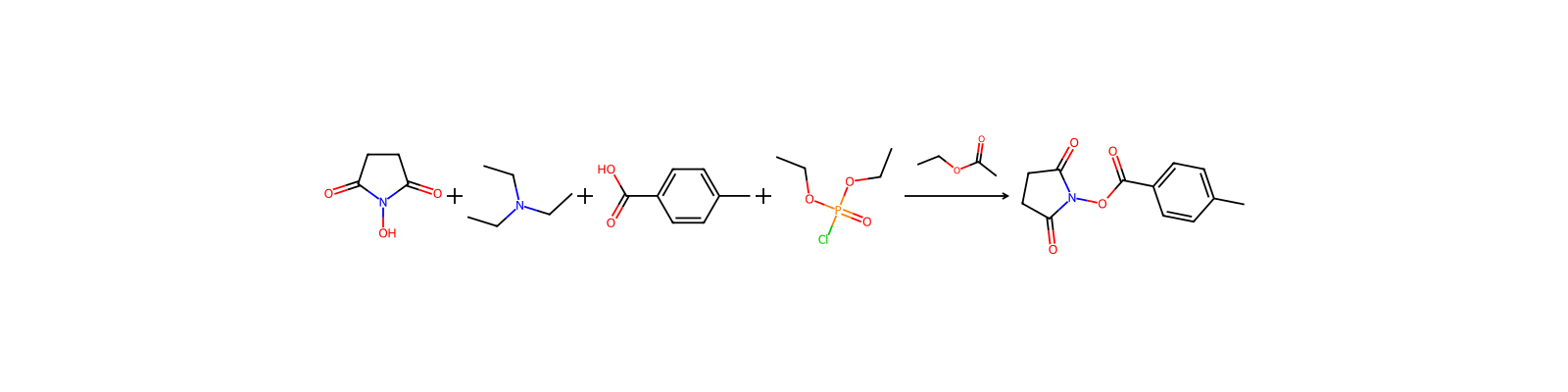
[OH:1][N:2]1[C:6](=[O:7])[CH2:5][CH2:4][C:3]1=[O:8].C(N(CC)CC)C.[C:16]1([CH3:25])[CH:21]=[CH:20][C:19]([C:22](O)=[O:23])=[CH:18][CH:17]=1.P(Cl)(OCC)(OCC)=O>C(OCC)(=O)C>[C:6]1(=[O:7])[N:2]([O:1][C:22]([C:19]2[CH:20]=[CH:21][C:16]([CH3:25])=[CH:17][CH:18]=2)=[O:23])[C:3](=[O:8])[CH2:4][CH2:5]1Participants
6
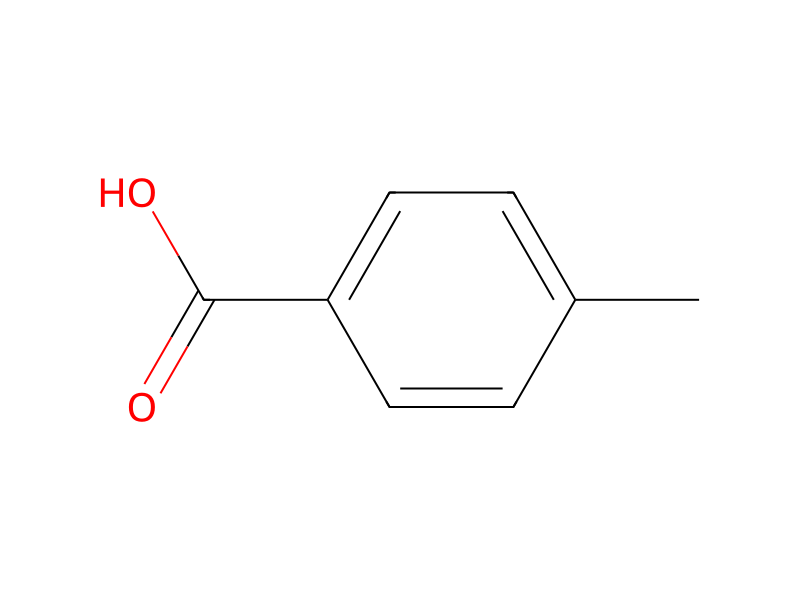
Reactant 4



Product 1

Reagents, catalysts & solvents 1

Procedure
Analogous example 3 2,76 g (0.024 mol) of N-hydroxysuccinimide and 5.06 g (0,050 mol) of triethylamine were initially introduced into 5 ml of ethyl acetate and stirred at room temperature. 2.72 g (0.020 mol) of solid 4-toluic acid were added to this suspension in the course of 5 min. and then a solution of 3.47 g (0,020 mol) of diethyl chlorophosphate was added dropwise in the course of 20 min., the reaction mixture warming to about 35° C. The mixture was stirred at room temperature for 3 hours until the reaction was complete. The further proceeding was performed analogous example 3. 2.8 g of crude 4-toluic acid succinimidyl ester were isolated.
Workup
- temperaturethe reaction mixture warming to about 35° C
- stirringThe mixture was stirred at room temperature for 3 hours until the reaction
Sources & evidence
- ORD record
- ord-dd19c881eac941828954e215ecddc363
- Source dataset
- uspto-grants-1998_03
- Patent number
- US05734064
Linked notes
Loading…