

Basic information
- Standard SMILES
C1CCC(PC2CCCCC2)CC1- InChIKey
HDULBKVLSJEMGN-UHFFFAOYSA-N- Molecular formula
- C12H23P
- Average molar mass
- 198.28 g/mol
- Monoisotopic mass
- 198.15373737
Names & identifiers
- Preferred name
- Dicyclohexylphosphine
- IUPAC
- dicyclohexylphosphane
- English name
- Dicyclohexylphosphine
- Molecular formula
- C12H23P
- Molecular weight
- 198.28
Names & synonyms
DICYCLOHEXYLPHOSPHINEPhosphine, dicyclohexyl-EINECS 212-590-9DTXSID7061190RefChem:133251DTXCID7048322212-590-9HDULBKVLSJEMGN-UHFFFAOYSA-Ndicyclohexylphosphane829-84-5MFCD00014296C12H23P
Show more names
Dicyclohexylphosphino98% Cy2PHicyclohexylphosphanedicyclohexyl-phosphinPhosphine,dicyclohexyl-Bis(cyclohexyl)phosphineDicyclohexylphosphine,98%Dicyclohexylphosphine,98% Cy2PH
Dicyclohexyl phosphineCy2PHF7LBQ7EZ7ZDicyclohexylphosphine, 97%SCHEMBL303960SCHEMBL303961AAA82984AKOS015840836
Database identifiers
- CAS
829-84-5- PubChem CID
- 13239
- DTXSID
DTXSID7061190- UNII
- F7LBQ7EZ7Z
- EC Number
- 212-590-9
- Nikkaji
- J79.979C
Properties
Computed structural properties
- XLogP
- 3.5
- Topological polar surface area
- 0 Ų
- Hydrogen bond donors
- 0
- Hydrogen bond acceptors
- 0
- Rotatable bonds
- 2
- Heavy atoms
- 13
- Formal charge
- 0
- Complexity
- 116
Physicochemical properties
- Melting point
- 2 °C · 2°C
- Boiling point
- 129 °C · 129 °C 8 mm Hg
- Density
- 0 · 0,98 g/cm3
- refractive index
- 20 · n 20/D 1.516
- Flash point
- 2 °C · 2 °C
- storage temp.
- 20 · 20-25°C
- form
- liquid
- Specific Gravity
- 0.98 · 0.98
- color
- colorless to light yellow
- Hydrolytic Sensitivity
- 9 · 9: reacts extremely rapidly with atmospheric moisture - may be pyrophoric - glove box or sealed system required
- Sensitive
- air sensitive
- InChI
- InChI=1S/C12H23P/c1-3-7-11(8-4-1)13-12-9-5-2-6-10-12/h11-13H,1-10H2
- InChIKey
- HDULBKVLSJEMGN-UHFFFAOYSA-N
- SMILES
- P(C1CCCCC1)C1CCCCC1
- CAS DataBase Reference
- 829 · 829-84-5
- EPA Substance Registry System
- Phosphine, dicyclohexyl- (829-84-5)
- UNSPSC Code
- 12350000 · 12350000
- NACRES
- 22 · NA.22
- Symbol(GHS)
- 2 · GHS02,GHS06
- Signal word
- Danger
- Hazard statements
- 225 · H225-H250-H301+H311+H331-H319
- Precautionary statements
- 210 · P210-P222-P231-P261-P280
- PPE
- Eyeshields, Faceshields, Gloves, type ABEK (EN14387) respirator filter
- Hazard Codes
- F,T
- Risk Statements
- 17 · 17-23/24/25
- Safety Statements
- 17 · 17-36/37/39-45
- RIDADR
- 2845 · UN 2845 4.2/PG 1
- WGK Germany
- 3 · WGK 3
- TSCA
- TSCA listed
- Storage Class
- 4.2 · 4.2 - Pyrophoric and self-heating hazardous materials
- Hazard Classifications
- 3 DermalAcute · Acute Tox. 3 DermalAcute Tox. 3 InhalationAcute Tox. 3 OralEye Irrit. 2Pyr. Liq. 1
Safety & regulation
GHS classification
GHS Classification
Danger
H225 (70.4%): Highly Flammable liquid and vapor [Danger Flammable liquids]
P210, P222, P231, P233, P240, P241, P242, P243, P260, P261, P262, P264, P264+P265, P270, P271, P273, P280, P301+P316, P301+P330+P331, P302+P335+P334, P302+P352, P302+P361+P354, P303+P361+P353, P304+P340, P305+P351+P338, P305+P354+P338, P316, P321, P330, P337+P317, P361+P364, P363, P370+P378, P391, P403+P233, P403+P235, P405, and P501 (click each P-code to see the statement)
Aggregated GHS information provided per 54 reports by companies from 4 notifications to the ECHA C&L Inventory. Each notification may be associated with multiple companies.
Hazard information
Hazard Classes and CategoriesFlam. Liq. 2 (70.4%)
Safety data
- PPE
- Eyeshields, Faceshields, Gloves, type ABEK (EN14387) respirator filter
- wgk
- WGK 3
- tsca
- TSCA listed
- ridadr
- UN 2845 4.2/PG 1
- risk_code
- 17-23/24/25
- Signal word
- Danger
- Symbol(GHS)
- GHS02,GHS06
- hazard_code
- F,T
- safety_code
- 17-36/37/39-45
- Storage Class
- 4.2 - Pyrophoric and self-heating hazardous materials
- Hazard statements
- H225-H250-H301+H311+H331-H319
- Hazard Classifications
- Acute Tox. 3 DermalAcute Tox. 3 InhalationAcute Tox. 3 OralEye Irrit. 2Pyr. Liq. 1
- Precautionary statements
- P210-P222-P231-P261-P280
Chemistry & industry
Uses & manufacturing
General Manufacturing InformationPhosphine, dicyclohexyl-: ACTIVE
Applications
UsesWang et al. developed a novel fluorescent probe based on dicyclohexylphosphine for rapid and sensitive detection of HOCl in an aqueous solution. The probe exhibits a significant fluorescence turn-on response to HOCl through the specific oxidative reaction between dicyclohexylphosphine and HOCl[1].
Upstream & downstream products
Downstream products
Suppliers50 total
湖北永阔科技有限公司027-59223108 15972152991 · [email protected]
湖北万得化工有限公司15377098680 15377098680 · [email protected]
武汉欣扬瑞和化学科技有限公司13720274133 · [email protected]
武汉欣扬瑞和化学科技有限公司153-07155313 15307155313 · [email protected]
河南多贝化工有限公司0370-6999054 17550096163 · [email protected]
上海遐瑞医药科技有限公司+86-021-61551413 · [email protected]
T&W GROUP021-61551611 13296011611 · [email protected]
Dayang Chem (Hangzhou) Co.,Ltd.+86-0571-88938639 17705817739 · [email protected]
郑州鸿晟医药科技有限公司0371-55695890 15637198702 · [email protected]
武汉绿景丰华生物科技有限公司19972070065 · [email protected]
Syntechem Co.,Ltd[email protected]
上海迈瑞尔生化科技有限公司4006356688 18621169109 · [email protected]
武汉易泰科技有限公司上海分公司18930552037 · [email protected]
上海德默医药科技有限公司400-021-7337 2355568890 · [email protected]
安耐吉化学&3A(安徽泽升科技股份有限公司)400-0056266 · [email protected]
上海瀚鸿科技股份有限公司021-54306202 13764082696 · [email protected]
上海钰康生物科技有限公司+86-18930848214 +86-021-56762820 · [email protected]
上海景颜化工科技有限公司13817811078 · [email protected]
郑州研德生物科技有限公司0371-63682289 15538176268 · [email protected]
湖北广奥生物科技有限公司027-02702759223056 18162699093 · [email protected]
湖北成海化工有限公司027-59220433 18327245847 · [email protected]
上海钰康生物科技有限公司15618758386 15618758386 · [email protected]
河南多贝化工有限公司0370-2785118 17550508557 · [email protected]
艾科试剂4008-755-333 18080918076 · [email protected]
北京格林凯默科技有限公司131-21959385 18804271668 · [email protected]
上海倍卓生物科技有限公司021-61119791,13386096464 · [email protected]
北京国方鼎盛科技有限公司18610472091 · [email protected]
成都零六生物科技有限公司400-1166-196 13458535857 · [email protected]
上海创赛科技有限公司400-6087598 15021221957 · [email protected]
上海麦克林生化科技股份有限公司15221275939 15221275939 · [email protected]
杭州杰恒化工有限公司0571-87396432 · [email protected]
南京多隆生物科技有限公司18905173768 · [email protected]
新乡市润宇新材料科技有限公司166-166-37336996 15690792173 · [email protected]
AN PharmaTech Co Ltd86(21)68097365 · [email protected]
铜陵恒优生物科技有限公司021-50426030 13856289449;13124863828 · [email protected]
郑州海阔光电材料有限公司67759225 13526468238 · [email protected]
Henan Alfa Chemical Co., Ltd+8618339805032 · [email protected]
武汉沃轩科技有限公司13322067656 · [email protected]
湖北中隆康盛精细化工有限公司027-027-83850368 18140587623 · [email protected]
河南瑞斯奇新材料有限公司86-18903931531 18903931628 · [email protected]
上海阿拉丁生化科技股份有限公司6206333 13167063860 · [email protected]
深圳市大物科技有限责任公司0752-5555973 13923768523 · [email protected]
郑州阿尔法化工有限公司0371-53765687 18937137882 · [email protected]
成都润泽本土化工有限公司028-88469284 18000562381 · [email protected]
南京艾比克斯生化科技有限公司025-87193546 18652950785 · [email protected]
北京华威锐科化工科技有限公司89508211 18501085097 · [email protected]
石家庄斯迪亚诺精细化工有限公司0311-89250318 031166536426 · [email protected]
郑州金一化工科技有限公司0371-65511006 18625597674 · [email protected]
上海源叶生物科技有限公司13636370518 · [email protected]
武汉市承天精细化工有限公司18164098996 · [email protected]
Related reactions
13 records
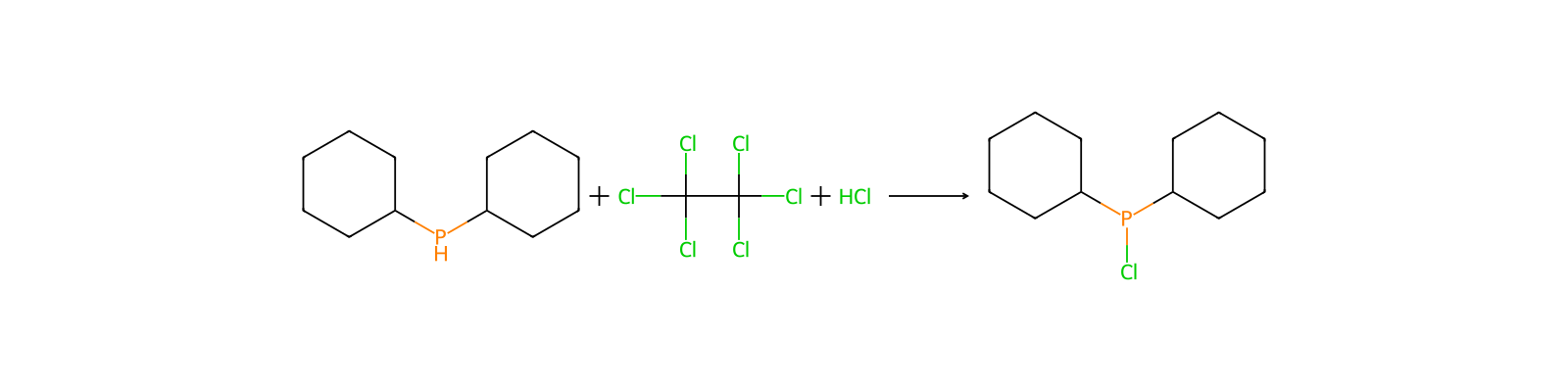


Linked notes
Loading…