Hydrochloric Acid → Chlorodicyclohexylphosphine
Reaction equation
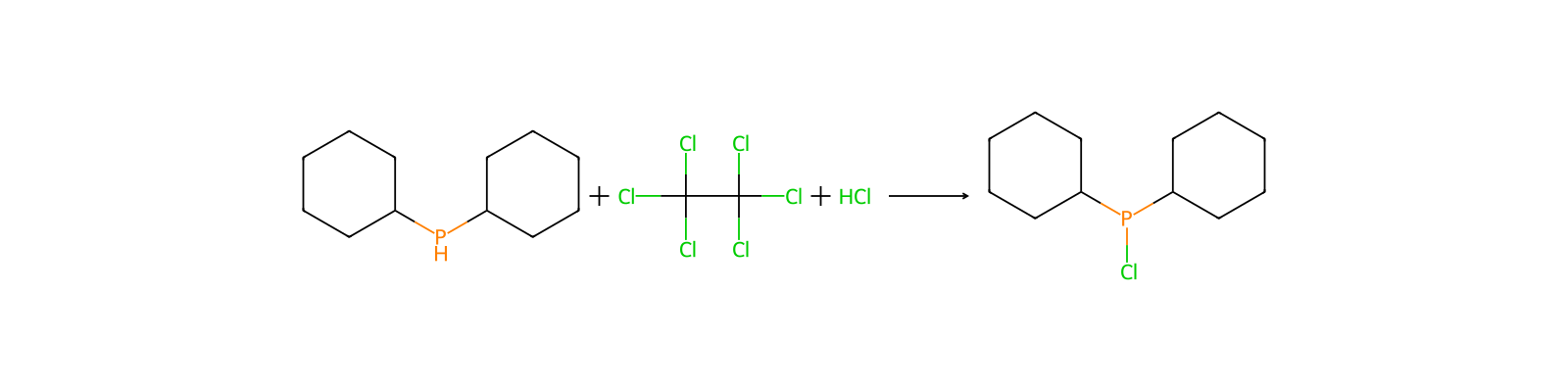
[CH:1]1([PH:7][CH:8]2[CH2:13][CH2:12][CH2:11][CH2:10][CH2:9]2)[CH2:6][CH2:5][CH2:4][CH2:3][CH2:2]1.[Cl:14]C(Cl)(Cl)C(Cl)(Cl)Cl.Cl>>[CH:8]1([P:7]([CH:1]2[CH2:2][CH2:3][CH2:4][CH2:5][CH2:6]2)[Cl:14])[CH2:9][CH2:10][CH2:11][CH2:12][CH2:13]1Participants
4


Conditions
- Temperature
- 100 °C
Procedure
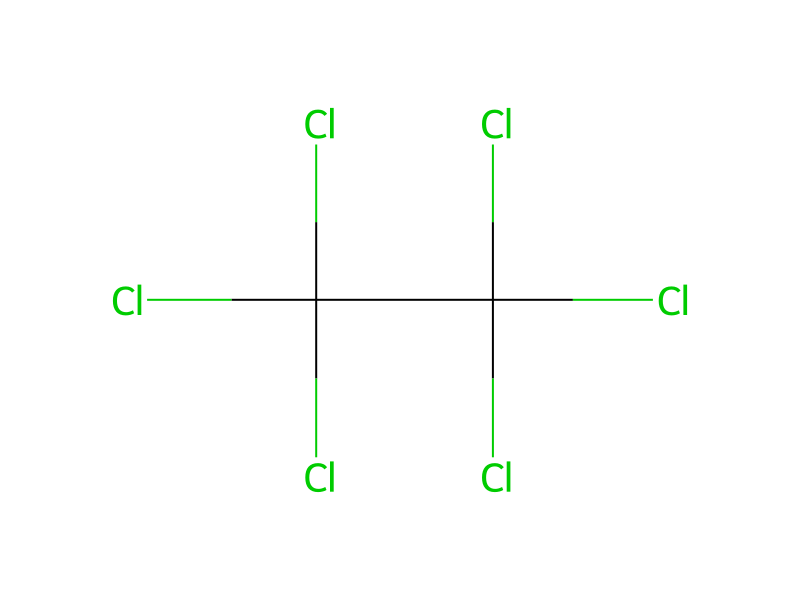
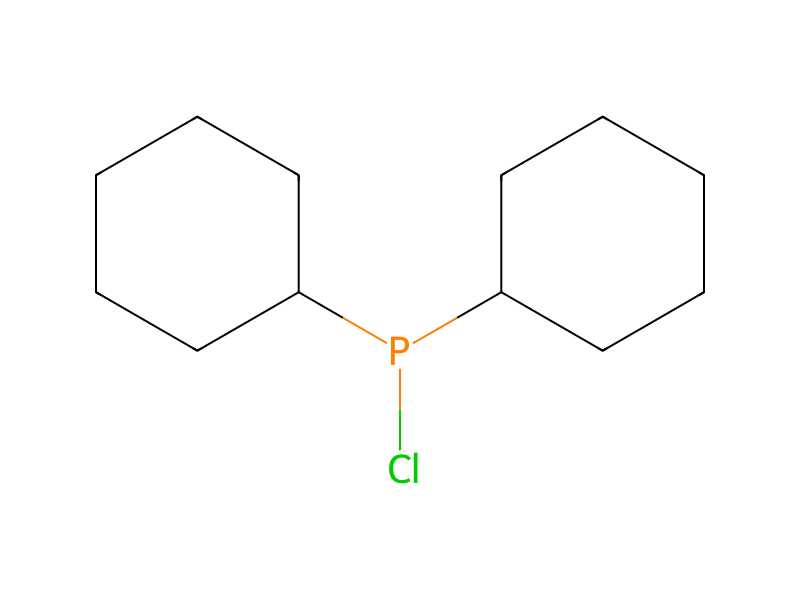
19.8 g (0.1 mol) dicyclohexylphosphane was added dropwise at room temperature to 26.1 g (0.11 mol) hexachloroethane. After the exothermal reaction which took place with evolution of HCl was terminated, the reaction mixture was stirred for 3 hours at 100° C. The yields (31 -P-NMR) were as follows: δ P=125.2 ((C6H11)2PCl, 94 wgt %); δ P=194.4 (C6H11PCl2, 2 wgt %); δ P=76.7 ((C6H11)2P(O)Cl, 4 wgt %). The crude product was distilled and 13.7 g (59 wgt %) dicyclohexylchlorophosphane (bp.: 136°-138° C./4 millibars) was obtained.