HomeMCPWorkbenchSkills
HomeWorkbenchNotificationsMe
llms.txt · MCP GuidePrivacy Policy · Terms of Service · Supportv1.8.3
  1. Home
  2. /Compound

Methacryloyl chloride

HCID 13528
New reaction
Print
Basic informationOverviewNames & identifiersPropertiesSafety & regulationChemistry & industryRelated reactionsCompound notes
Substructure searchFind similar structures

Basic information

CAS
920-46-7
Standard SMILES
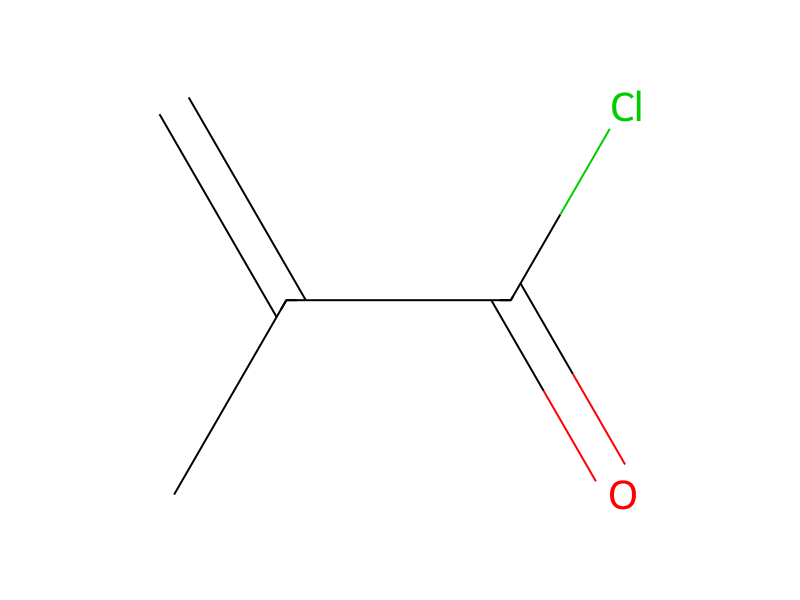
C=C(C)C(=O)Cl
InChIKey
VHRYZQNGTZXDNX-UHFFFAOYSA-N
Molecular formula
C4H5ClO
Average molar mass
104.53 g/mol
Monoisotopic mass
104.0028925

Overview

Methacryloyl chloride appears as a liquid of density 1.07 g / cm3, boiling point 95-96 °C, and flash point 55 °F. Highly toxic. Supplied in technical grades of varying purity.

Names & identifiers

Preferred name
Methacryloyl chloride
IUPAC
2-methylprop-2-enoyl chloride
English name
Methacryloyl chloride
Molecular formula
C4H5ClO
Molecular weight
104.53

Names & synonyms

METHACRYLOYL CHLORIDE920-46-7Methacrylyl chloride2-Methyl-2-propenoyl chlorideMethacryl chlorideMethacrylic acid chlorideMethacrylic chloride2-Propenoyl chloride, 2-methyl-Methylacryloyl chloride2-Methylpropenoyl chloride2-Methylpropenoic acid chloridealpha-Methylacryloyl chloride
Show more names
Methacryloyl chlorid2-METHYL-ACRYLOYL CHLORIDEmethylacryloylchloridemethacrylchloridemethacrylolchloridemethacrylicchloride
L76O6653IODTXSID6061280RefChem:811289DTXCID8048785213-058-9Methacryloylchloride2-methylprop-2-enoyl chloride.alpha.-Methylacryloyl chloride

Database identifiers

CAS
920-46-7
PubChem CID
13528
DTXSID
DTXSID6061280
UNII
L76O6653IO
EC Number
213-058-9
Nikkaji
J38.880G

Properties

Computed structural properties

XLogP
1.7
Topological polar surface area
17.1 Ų
Hydrogen bond donors
0
Hydrogen bond acceptors
1
Rotatable bonds
1
Heavy atoms
6
Formal charge
0
Complexity
85.5

Experimental & physicochemical properties

Chemical Classes · 2 items

Toxic Gases & Vapors -> Other Toxic Gases & Vapors

Corrosives

SpringerMaterials PropertiesSchoenflies notation
Density · 2 items

1.0871 at 68 °F (EPA, 1998) - Denser than water; will sink

1.0871 g/cu cm @ 20 °C

SolubilitySol in ether, acetone, chloroform
Boiling Point · 3 items

205 °F at 760 mmHg (EPA, 1998)

96 °C

96 °C @760 [mm Hg]

DecompositionWhen heated to decomposition it emits toxic fumes of /hydrogen chloride/.
Melting Point · 2 items

-60 °C

-60 °C

Vapor Pressure · 2 items

45.5 [mmHg]

40 [mm Hg] @25 °C

Refractive Index

Safety & regulation

Safety information is for reference only and does not replace the supplier’s Safety Data Sheet (SDS), applicable regulations, or professional assessment.

GHS classification

GHS Classification · 6 items

Danger

H225 (100%): Highly Flammable liquid and vapor [Danger Flammable liquids]

P210, P233, P240, P241, P242, P243, P260, P261, P264, P270, P271, P272, P273, P280, P284, P301+P317, P301+P330+P331, P302+P352, P302+P361+P354, P303+P361+P353, P304+P340, P305+P354+P338, P316, P320, P321, P330, P333+P317, P362+P364, P363, P370+P378, P403+P233, P403+P235, P405, and P501 (click each P-code to see the statement)

Aggregated GHS information provided per 53 reports by companies from 6 notifications to the ECHA C&L Inventory. Each notification may be associated with multiple companies.

Danger

H225: Highly Flammable liquid and vapor [Danger Flammable liquids]

Hazard information

Regulatory Information · 2 items

REACH registered substance: Methacryloyl chloride (EC: 213-058-9)

The New Jersey Worker and Community Right to Know Act requires public and private employers to provide information about hazardous substances at their workplaces. (N.J.S.A. 34:5A-1 et. seq.)

DOT LabelFlammable Liquid Poison Corrosive
Fire HazardsExcerpt from ERG Guide 131 [Flammable Liquids - Toxic]:
Health HazardsExcerpt from ERG Guide 131 [Flammable Liquids - Toxic]:
Hazards Summary · 1 item

Flammable and corrosive; [Hawley] A strong skin irritant; [HSDB] Reacts with water evolving hydrogen chloride gas; Highly flammable and toxic; [CAMEO] A corrosive substance that can cause injury to the skin, eyes, and respiratory tract; Inhalation may cause chemical pneumonitis; [MSDSonline]

Chemistry & industry

Uses & manufacturing

Uses · 2 items

Used in the production of hydrogel for contact lenses; [HSDB]

A hydrogel with 80% water absorption was obtained from reaction of 2-hydroxyethyl methacrylate, containing small amounts of ethylene glycol dimethacrylate with the reaction product of poly(vinylpyrrolidinone) & methacryloyl chloride /contact lenses/

Formulations/PreparationsAvailable forms: Technical 90% stabilized with phenothiazine
General Manufacturing Information2-Propenoyl chloride, 2-methyl-: ACTIVE
Applications · 2 items

UsesMethacryloyl chloride is used in the preparation of polymeric materials. It reacts with L-histidine and forms functional monomer. It is also used to prepare monomer 2-methacrylamido-caprolactam, amide monomers by amidation.

General DescriptionMethacryloyl chloride is the clear to slightly colored acid chloride of methacrylic acid. It appears as a liquid of density 1.07g/cm3, boiling point 95-96°C, and flash point 55°F. Highly toxic. Supplied in technical grades of varying purity. Monomethyl ether hydroquinone is added as a stabilizer to prevent auto polymerization. Reaction with diisopropyl ether in presence of metal salts is rigorous.

Upstream & downstream products

Downstream products

BINAPACRYLCHLORANOCRYLoptical plastics based on coplymer of diene macromoleculeBenzyl methacrylate

Related reactions

674 records
New reaction record
HRID 2679 reaction equation
HRID 2679As reactant
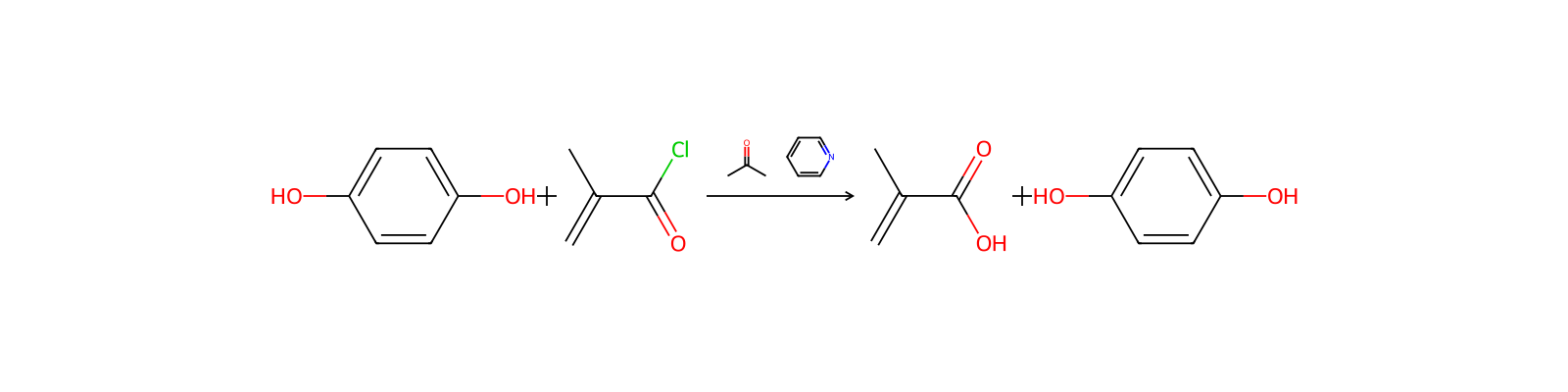
HRID 3078 reaction equation
HRID 3078As reactant
HRID 5050 reaction equation
HRID 5050As reactant
HRID 41846 reaction equation
HRID 41846As reactant
HRID 41848 reaction equation
HRID 41848As reactant
HRID 44126 reaction equation
HRID 44126As reactant
HRID 45411 reaction equation
HRID 45411As reactant
HRID 45706 reaction equation
HRID 45706As reactant
PreviousPage 1 of 85

Compound notes

On this pageBasic informationOverviewNames & identifiersPropertiesSafety & regulationChemistry & industryRelated reactionsCompound notes
Index of refraction: 1.4435 at 20 °C/D
Physical Description · 2 items

Methacryloyl chloride appears as a liquid of density 1.07 g / cm3, boiling point 95-96 °C, and flash point 55 °F. Highly toxic. Supplied in technical grades of varying purity.

Liquid; [Hawley] Colorless liquid; [MSDSonline]

Other Experimental PropertiesHydrolyzed by water

Physicochemical properties

Melting point
-60 °C · -60°C
Boiling point
95 to · 95 to 96 °C (203 to 205 °F; 368 to 369 K)
Density
1.07 g/mL · 1.07 g/mL
refractive index
1.45 · 1.45
Flash point
12.8 °C · 12.8 °C
storage temp.
2 · 2-8°C
solubility
Chloroform
form
clear liquid
color
Colorless to Red to Green
Water Solubility
Miscible with alcohols, ethers and organic solvents. Slightly miscible with water.
Sensitive
Moisture Sensitive
BRN
878175 · 878175
Stability
Light and Moisture Sensitive
InChIKey
VHRYZQNGTZXDNX-UHFFFAOYSA-N
CAS DataBase Reference
920 · 920-46-7(CAS DataBase Reference)
EWG's Food Scores
1 · 1
FDA UNII
76 O6653IO · L76O6653IO
NIST Chemistry Reference
Methacryloyl chloride(920-46-7)
EPA Substance Registry System
Methacryloyl chloride (920-46-7)
Symbol(GHS)
2 · GHS02,GHS05,GHS06
Signal word
Danger
Hazard statements
225 · H225-H302-H314-H317-H330-H412
Precautionary statements
210 · P210-P273-P280-P303+P361+P353-P304+P340+P310-P305+P351+P338
Hazard Codes
F,T+,Xi
Risk Statements
11 · 11-26/27/28-34-26-22-43-52/53
Safety Statements
26 · 26-28-36/37/39-45-27-16-33-29
RIDADR
3383 · UN 3383 6.1/PG 1
WGK Germany
3 · 3
RTECS
5791000 · OZ5791000
F
21 · 21
Hazard Note
Irritant
TSCA
TSCA listed
HazardClass
6.1 · 6.1
PackingGroup
I
HS Code
2916190090 · 2916190090
Hazardous Substances Data
920 · 920-46-7(Hazardous Substances Data)
REACH Registrations
Active
Excepted Quantities
Forbidden
Reactive Group
Acyl Halides, Sulfonyl Halides, and Chloroformates
Reactivity AlertsHighly Flammable
Reactivity Profile · 1 item

METHACRYLOYL CHLORIDE is incompatible with strong oxidizing agents, alcohols, bases (including amines). Can polymerize violently; but the polymerization reaction can be inhibited by the addition of phenolthiazine. May react vigorously or explosively if mixed with diisopropyl ether or other ethers in the presence of trace amounts of metal salts [J. Haz. Mat., 1981, 4, 291].

Air and Water ReactionsHighly flammable. Reacts with water to produce gaseous hydrogen chloride (corrosive and toxic).
Highly Hazardous SubstanceChemical: Methacryloyl Chloride
CERCLA Reportable Quantities · 1 item

Releases of CERCLA hazardous substances are subject to the release reporting requirement of CERCLA section 103, codified at 40 CFR part 302, in addition to the requirements of 40 CFR part 355. Methacryloyl chloride is an extremely hazardous substance (EHS) subject to reporting requirements when stored in amounts in excess of its threshold planning quantity (TPQ) of 100 lbs.

Hazard Classes and Categories · 3 items

Flam. Liq. 2 (100%)

Flammable liquids - Category 2

Corrosives, Flammable agents - 3rd degree, Reactive agents - 1st degree

Safety & protection

Fire FightingExcerpt from ERG Guide 131 [Flammable Liquids - Toxic]:
First AidNote: No information on specific clinical effects of acute exposure to methacryloyl chloride was found.
Nonfire Spill ResponseExcerpt from ERG Guide 131 [Flammable Liquids - Toxic]:
Disposal Methods · 1 item

SRP: At the time of review, criteria for land treatment or burial (sanitary landfill) disposal practices are subject to significant revision. Prior to implementing land disposal of waste residue (including waste sludge), consult with environmental regulatory agencies for guidance on acceptable disposal practices.

Isolation and EvacuationExcerpt from ERG Guide 131 [Flammable Liquids - Toxic]:
Protective Action Criteria (PAC) · 3 items

0.055 [mg/m3]

0.60 [mg/m3]

2.6 [mg/m3]

Personal Protective Equipment (PPE) · 1 item

For emergency situations, wear a positive pressure, pressure-demand, full facepiece self-contained breathing apparatus (SCBA) or pressure- demand supplied air respirator with escape SCBA and a fully-encapsulating, chemical resistant suit. (EPA, 1998)

Toxicology

Adverse EffectsDermatotoxin - Skin burns.
Human Toxicity ExcerptsConcn of up to 113 ppm were found in a plant handling the material. Medical reports of acute exposures revealed no resp symptoms, but skin toxicity and a severe corneal burn. /Methacrylic acid/
Non-Human Toxicity Excerpts · 2 items

... severe corneal burns have been reported after acute exposure to methacrylic acid. /Methacrylic acid/

Direct contact with liquid methacrylic acid can result in blindness ... /Methacrylic acid/

Antidote and Emergency Treatment · 2 items

Basic treatment: Establish a patent airway. Suction if necessary. Watch for signs of respiratory insufficiency and assist ventilations if needed. Administer oxygen by nonrebreather mask at 10 to 15 L/min. Monitor for pulmonary edema and treat if necessary ... . Monitor for shock and treat if necessary ... . Anticipate seizures and treat if necessary ... . For eye contamination, flush eyes immediately with water. Irrigate each eye continuously with normal saline during transport ... . Do not use emetics. For ingestion, rinse mouth and administer 5 mL/kg up to 200 mL of water for dilution if the patient can swallow, has a strong gag reflex, and does not drool ... . Cover skin burns with dry sterile dressings after decontamination ... . /Poisons A and B/

Advanced treatment: Consider orotracheal or nasotracheal intubation for airway control in the patient who is unconscious, has severe pulmonary edema, or is in respiratory arrest. Positive-pressure ventilation techniques with a bag-valve-mask device may be beneficial. Monitor cardiac rhythm and treat arrhythmias as necessary ... . Start an IV with D5W TKO /SRP: "To keep open", minimal flow rate/. Use lactated Ringer's if signs of hypovolemia are present. Watch for signs of fluid overload. Consider drug therapy for pulmonary edema ... . For hypotension with signs of hypovolemia, administer fluid cautiously. Watch for signs of fluid overload ... . Treat seizures with diazepam (Valium) ... . Use proparacaine hydrochloride to assist eye irrigation ... . /Poisons A and B/

Toxicity DataLC50 (rat) = 60 mg/m3/4h
Non-Human Toxicity Values · 2 items

LC50 Rat ihl 60 mg/cu m/4 hr

LC50 Mouse ihl 115 mg/cu m/2 hr

Regulatory information

CERCLA Reportable Quantities · 1 item

Releases of CERCLA hazardous substances are subject to the release reporting requirement of CERCLA section 103, codified at 40 CFR part 302, in addition to the requirements of 40 CFR part 355. Methacryloyl chloride is an extremely hazardous substance (EHS) subject to reporting requirements when stored in amounts in excess of its threshold planning quantity (TPQ) of 100 lbs.

Safety data

F
21
wgk
3
tsca
TSCA listed
rtecs
OZ5791000
ridadr
UN 3383 6.1/PG 1
hs_code
2916190090
risk_code
11-26/27/28-34-26-22-43-52/53
Signal word
Danger
Symbol(GHS)
GHS02,GHS05,GHS06
hazard_code
F,T+,Xi
hazard_note
Irritant
safety_code
26-28-36/37/39-45-27-16-33-29
hazard_class
6.1
packing_group
I
Hazard statements
H225-H302-H314-H317-H330-H412
Excepted Quantities
Forbidden
REACH Registrations
Active
Precautionary statements
P210-P273-P280-P303+P361+P353-P304+P340+P310-P305+P351+P338
Hazardous Substances Data
920-46-7(Hazardous Substances Data)
4-Benzoylphenyl Methacrylate
Methyltriglycolmethacrylate
2-Methyl-N-(4-sulfaMoyl-phenyl)-acrylaMide
Decyl methacrylate
Isopropyl methacrylate
TEMPO Methacrylate
N-Succinimidyl Methacrylate
2-Ethyl-2-adamantyl methacrylate
3-Chloro-2-hydroxypropyl methacrylate
2-Ethoxyethyl Methacrylate
12-hydroxydodecyl methacrylate